
Your bedroom should be a personal sanctuary, but design flaws, clutter, and poor lighting often turn it into a source of daily stress. Finding the right balance of comfort and utility requires a thoughtful approach to layout, storage, and textiles. By addressing these common pain points systematically, you can easily transform an uninspiring room into a deeply restorative retreat.
Quick Answer:
Invest in structural comfort: Prioritize a supportive mattress and a sturdy frame from reliable retailers like West Elm or John Lewis to eliminate sleep disruptions.
Layer your lighting: Combine dimmable ambient fixtures with focused bedside reading lamps to control the mood and reduce eye strain.
Maximize vertical space: Utilize floating shelves, tall wardrobes, and under-bed containers to clear floor clutter and expand your layout.
- Control the environment: Install thermal blackout curtains and soft area rugs to regulate temperature and dampen unwanted household noise.
How Can You Fix a Restless Night? Bed & Mattress Solutions
The bed is the absolute centerpiece of your sanctuary, yet it is often the primary source of hidden discomfort. If you find yourself waking up with a stiff lower back or tossing and turning all night, your sleep surface is actively working against you. Over time, foam sags, springs weaken, and frames begin to creak with every shift.
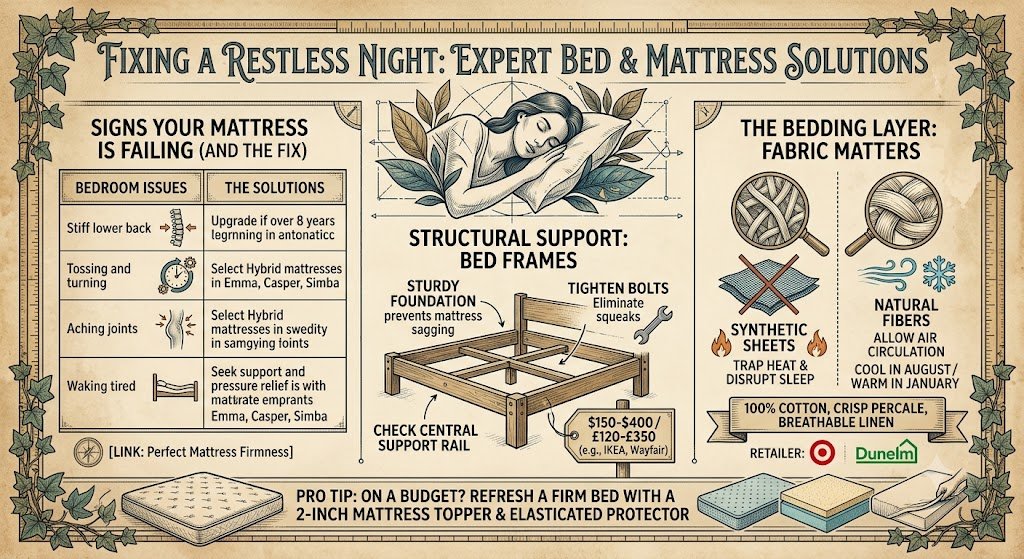
Here is the thing: most people wait far too long to replace a failing mattress, enduring years of poor sleep. If your mattress is over eight years old or shows visible dips, it is time for an upgrade. When shopping for a replacement, look for options that balance pressure relief with structural support. Brands like Emma, Casper, and Simba offer excellent hybrid options that combine responsive pocket springs with body-contouring memory foam. These can be easily ordered online across the US and Europe, often with generous trial periods.
[INTERNAL LINK: Choosing the perfect mattress firmness — Sleep Health]
Now here is where it gets interesting: the frame itself can cause significant sleep disruptions. A flimsy slatted base allows a mattress to sag prematurely, ruining its supportive properties. If you hear an annoying squeak every time you roll over, check the central support rail and tighten any loose bolts. For an affordable yet incredibly sturdy fix, consider the minimalist metal or wooden frames from IKEA or Wayfair ($150 / £120 to $400 / £350). They provide a rock-solid foundation that prevents mattress shifting.
Don’t neglect your bedding layer when tackling these structural bedroom issues and their solution. Synthetic sheets trap heat, leading to night sweats that disrupt your deep sleep cycles. Switch to 100% long-staple cotton, crisp percale, or breathable linen sheets from Target or Dunelm. These natural fibers allow air to circulate freely, keeping you cool in August and warm in January.
PRO TIP: If a new mattress isn’t in the budget right now, a 2-inch memory foam or latex topper can breathe new life into a firm bed. Pair it with a fully elasticated mattress protector to keep it from sliding around.
What Is the Secret to Perfect Bedroom Lighting & Electrical Layouts?
Harsh, blinding overhead light is an instant mood killer when you are trying to wind down after a long day. Many bedrooms suffer from a single, central pendant fixture that casts deep shadows and mimics an office environment. This lack of lighting control makes it incredibly difficult for your brain to transition into sleep mode.
The secret to a relaxing atmosphere lies in creating distinct layers of light that you can adjust throughout the day. Start by swapping out your main switch for a trailing-edge dimmer system, allowing you to soften the overhead glow. Next, introduce warm accent lighting at eye level using elegant table lamps or sleek floor fixtures. Look for stylish, affordable ceramic or brass options at H&M Home, Next Home, or HomeGoods ($30 / £25 to $90 / £80).
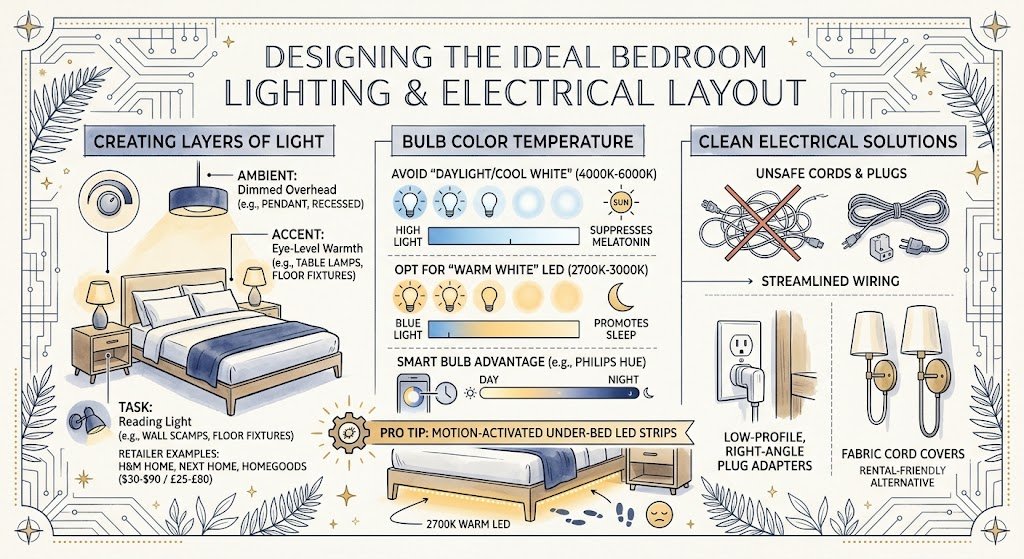
And this is the part most people overlook: the color temperature of your lightbulbs matters immensely. Avoid “daylight” or “cool white” bulbs (4000K–6000K) in the bedroom, as their blue wavelengths mimic the afternoon sun and suppress melatonin production. Instead, opt exclusively for “warm white” LED bulbs rated between 2700K and 3000K. For an extra layer of luxury, smart bulbs like Philips Hue allow you to schedule a gradual dimming sequence as bedtime approaches.
Messy, tangled extension cords snaking across the floor present both an eyesore and a tripping hazard. If your bedside outlets are blocked by a heavy headboard, use low-profile, right-angle plug adapters to keep things flush. For a clean, modern aesthetic, consider installing wall-mounted sconces on either side of the bed. Plug-in sconces with fabric cord covers offer a brilliant rental-friendly alternative to expensive electrical rewiring.
PRO TIP: Install motion-activated, warm LED strip lights underneath your bed frame or nightstand. They provide a soft, low-level glow that guides your steps during midnight bathroom trips without waking your partner.
How Do You Fix a Cramped or Awkward Bedroom Layout?
Walking into a bedroom only to bump your shins against the footboard is a clear sign of a layout crisis. Awkward architectural angles, poorly placed radiators, and oversized furniture frequently leave rooms feeling cramped and dysfunctional. When a space feels claustrophobic, your mind struggles to rest, turning the room into a source of daily frustration.
The fix begins with a brutal evaluation of your furniture scale and a commitment to smart space planning. As a general rule of thumb, you need at least 24 inches (60 cm) of clear walking space around three sides of your bed. If your current bed frame blocks your built-in wardrobe doors or covers a heating vent, it is simply too large for the room. Consider downsizing from a king to a queen, or choose a streamlined platform frame without an oversized, bulky footboard.
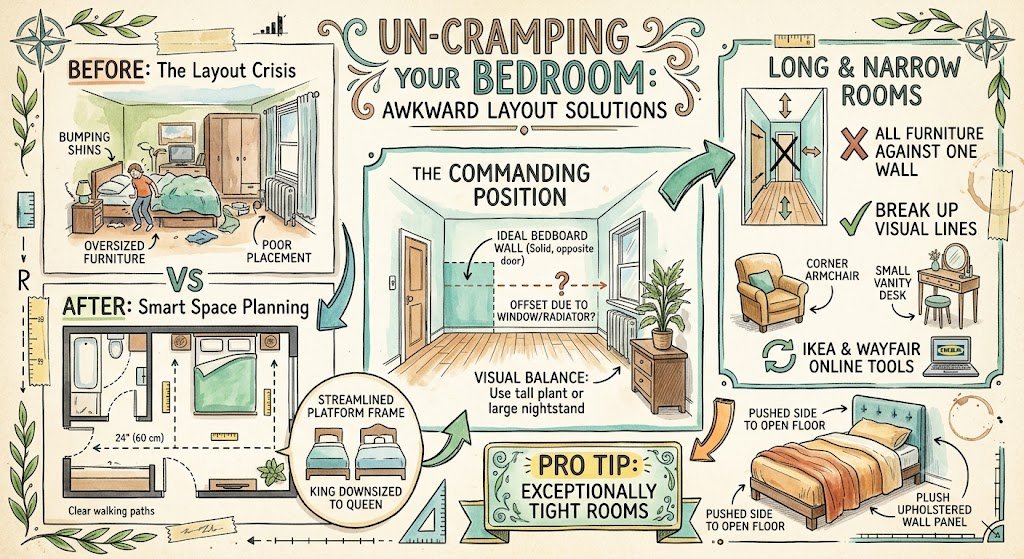
Where you place the bed sets the tone for the entire room’s flow and functionality. Ideally, position your headboard against the main solid wall opposite the entry door—this is known as the commanding position. If a window or radiator forces the bed into an asymmetrical position, don’t panic. You can visually balance the offset look by placing a larger nightstand or a tall houseplant on the wider side.
[INTERNAL LINK: Small space layout hacks — Design Inspiration]
For long, narrow rooms, avoid lining up all your furniture against a single wall, which creates a sterile hallway effect. Instead, break up the visual lines by placing a cozy armchair or a small vanity desk in an empty corner. Retailers like IKEA and Wayfair offer exceptional online room-planning tools to help you test these layouts digitally before moving heavy pieces.
PRO TIP: If your bedroom is exceptionally tight, try pushing one side of the bed against a wall to open up the floor. Use a plush, upholstered wall panel as a wrap-around headboard to keep the setup looking intentional and incredibly cozy.
Are Your Nightstands Causing Clutter? Smart Storage Solutions
Your nightstand should be a peaceful landing pad for a book, a glass of water, and a reading lamp. Instead, it frequently becomes a chaotic dumping ground for old receipts, loose change, tangled charging cables, and half-empty lotion bottles. This visible clutter is the first thing you see when you wake up, instantly triggering subconscious morning anxiety.
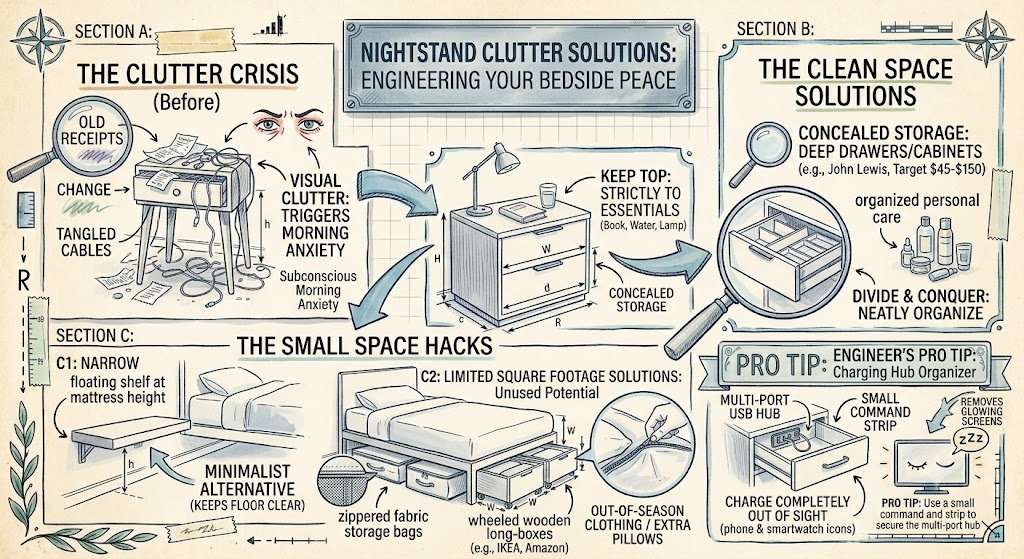
To reclaim your bedside peace, switch from open, leggy tables to nightstands featuring deep, functional drawers or cabinets. Units from John Lewis, Dunelm, or Target ($45 / £40 to $150 / £130) offer excellent concealed storage options. Keep the top surface strictly limited to three essential items, and relegate everything else to the drawers below. Use small canvas dividers or acrylic trays inside the drawers to keep personal items neatly organized.
Now here is where it gets interesting: if your bedroom is too narrow for standard nightstands, you have to think vertically. Floating shelves mounted at mattress height offer a brilliant, minimalist alternative that keeps the floor completely clear. This design choice creates an illusion of extra space while providing just enough room for your nighttime essentials.
If you are still struggling with limited square footage, look to the massive, unused storage potential sitting right under your mattress. Avoid storing loose items directly on the floor where they gather thick layers of dust. Instead, invest in zippered fabric storage bags or wheeled wooden long-boxes from IKEA or Amazon. They are perfect for stashing away thick winter duvets, extra pillows, and out-of-season clothing completely out of sight.
PRO TIP: Run a multi-port USB charging hub directly into your nightstand drawer using a small command strip. This setup allows you to charge your phone and smartwatch completely out of sight, removing glowing screens from your sleep environment.
What Is the Best Way to Organize a Chaotic Wardrobe?
A chaotic closet makes morning routines incredibly stressful, turning a simple task like getting dressed into an annoying scavenger hunt. When clothes are jammed tightly onto rails, they become wrinkled, hidden from view, and difficult to reach. This issue usually stems from a lack of internal categorization rather than a genuine lack of physical space.
To solve this common problem, start by executing a thorough edit of your wardrobe, sorting items by season and frequency of use. Once you have streamlined your collection, replace mismatched plastic and wire hangers with slim, non-slip velvet alternatives. Velvet hangers consume less than half the space of bulky wooden ones, instantly freeing up precious inches on your hanging rails.
Next, look closely at the unused vertical space at the very top and bottom of your wardrobe unit. Install stackable mesh baskets or clear plastic drawers from HomeGoods or Next Home to neatly store shoes, belts, and bags. For folding items like jeans and heavy knitwear, utilize canvas shelf organizers to prevent tall, messy stacks from tipping over. If you are dealing with a rental property lacking built-in closets, a freestanding wardrobe like the IKEA PAX system offers customizable interior fittings tailored to your exact storage needs.

[INTERNAL LINK: Wardrobe organization systems — Storage Guide]
Don’t forget to utilize the back of your wardrobe doors for extra organization capacity. Mount lightweight utility hooks or a slim over-door organizer to hold your morning robes, scarves, or everyday hats. This simple addition keeps frequently used items off your bedroom chairs and floors, maintaining a clean visual landscape across the room.
PRO TIP: Implement the “one-in, one-out” rule for your clothing collection. Every time you purchase a new clothing item from a store, donate or sell an older piece to keep your wardrobe volume perfectly balanced.
Are Poor Windows & Curtains Ruining Your Sleep Quality?
Your windows are your connection to the outside world, but they can easily ruin your sleep if dressed incorrectly. Thin, unlined curtains let in bright morning sunlight, passing car headlights, and flashing street lamps, constantly disrupting your circadian rhythm. Furthermore, poorly insulated windows allow cold drafts to enter in the winter and trap intense solar heat during the summer months.
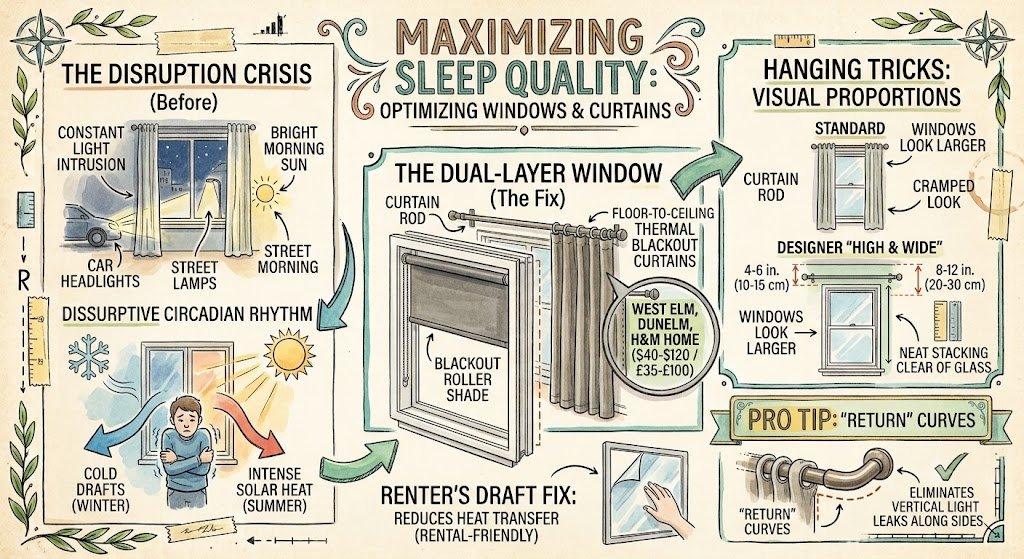
The ultimate fix for this issue is a high-quality, dual-layer window treatment. Start by installing a tight-fitting blackout roller shade directly inside your window frame to block out external light leaks. Layer this with a pair of heavy, floor-to-ceiling thermal blackout curtains mounted on a sturdy curtain rod outside the frame. Retailers like West Elm, Dunelm, and H&M Home offer gorgeous linen-look blackout panels ($40 / £35 to $120 / £100) that look elegant while serving a vital practical purpose.
When hanging your new drapes, use the “high and wide” designer trick to dramatically improve your room’s visual proportions. Mount the curtain rod 4 to 6 inches (10–15 cm) below your ceiling line rather than directly on top of the window trim. Extend the rod 8 to 12 inches (20–30 cm) past the sides of the window frame. This placement makes your windows look larger and allows the fabric to stack neatly clear of the glass when open.
For renters facing drafty, single-pane windows, consider applying a temporary, static-climb thermal window film before hanging your curtains. This budget-friendly layer significantly reduces heat transfer without damaging the glass. It keeps your bedroom comfortable through freezing winter nights and blazing summer days alike.
PRO TIP: Choose a curtain rod with wrap-around “return” curves at the ends. This design allows the fabric edges to flush directly against the bedroom wall, completely eliminating annoying vertical light leaks along the sides.
How Do You Fix Cold, Hard, and Noisy Bedroom Flooring?
Stepping out of a warm bed onto a freezing, hard floor is an incredibly unpleasant way to start your morning. Hardwood, laminate, and tiled floors look beautiful and clean, but they offer zero thermal insulation or acoustic dampening properties. Without a soft texture underfoot, a bedroom can quickly feel cold, hollow, and echoey, much like an empty hallway.
The most effective remedy for hard surfaces is the strategic addition of a plush, oversized area rug. When selecting a rug size, ensure it extends at least 24 to 36 inches (60–90 cm) beyond both sides of your bed frame. This layout guarantees your feet will land on a soft, warm surface regardless of which side you exit. Look for high-quality, low-shedding wool or thick woven cotton options at Wayfair, John Lewis, or Target ($100 / £80 to $350 / £300).
And this is the part most people overlook: the rug pad underneath is just as important as the rug itself. A thick, felted rug pad prevents the rug from slipping while adding a luxurious layer of cushioning underfoot. It also works wonders for noise reduction, soaking up impact sounds if you live in an upstairs apartment or an older home.

If you prefer a fully carpeted bedroom but have to live with a worn, high-traffic rental carpet, don’t worry. You can easily layer a large, neutral jute or low-pile wool rug directly over the existing carpet to conceal stains and refresh the room’s style. This layering technique adds instant depth and character while protecting your security deposit.
PRO TIP: If your bedroom budget is tight, skip the giant room-sized rug. Instead, place two matching, ultra-plush sheepskin or faux-fur runner rugs along both sides of the bed to get that cozy morning landing pad for less.
Are Your Bedroom Walls and Decor Feeling Uninspiring?
It is incredibly common for bedrooms to become a design afterthought, filled with mismatched furniture, bare walls, or overly bright paint choices. When your decor lacks intention, the room can feel clinical and cold, failing to provide the cozy psychological embrace you need at night. Your walls should actively promote relaxation through balanced color and meaningful art.
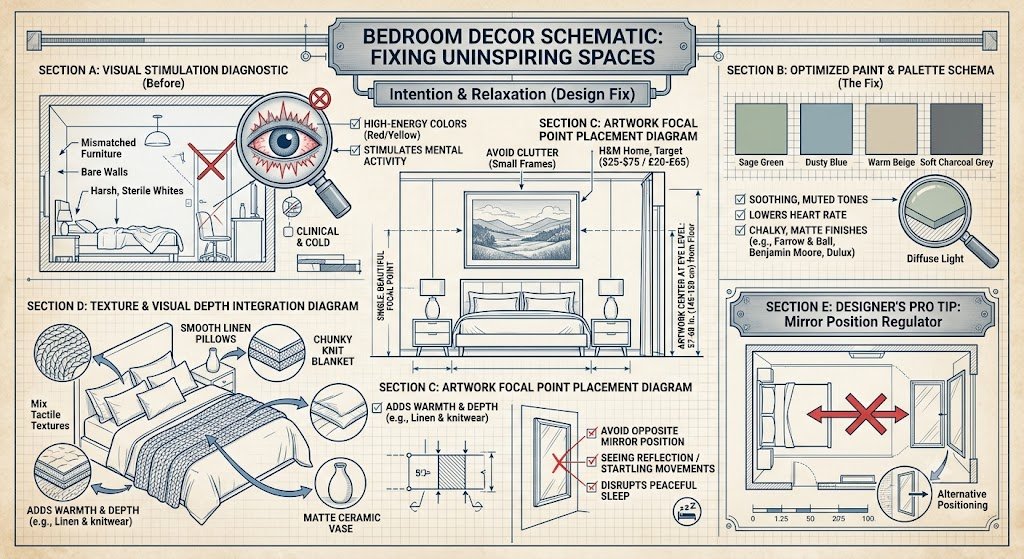
Start by addressing your paint or wallpaper choices, focusing on shades that actively lower your heart rate. Avoid high-energy colors like bright red, vibrant yellow, or harsh, sterile whites, which stimulate mental activity. Instead, opt for soothing, muted tones such as sage green, dusty blue, warm beige, or soft charcoal grey. Leading brands like Farrow & Ball, Benjamin Moore, and Dulux offer excellent chalky, matte finishes that diffuse light beautifully across bedroom walls.
When hanging artwork, focus on creating a single, beautiful focal point rather than cluttering every wall with small frames. Hang a large, calming landscape print or a pair of minimalist abstract designs directly above your headboard or dresser. Retailers like H&M Home and Target offer affordable, high-quality framed prints ($25 / £20 to $75 / £65) that look high-end. Ensure the center of the artwork sits at eye level—roughly 57 to 60 inches (145–150 cm) from the floor—for a balanced look.
[INTERNAL LINK: Selecting bedroom artwork — Gallery Guide]
Incorporate a mix of tactile textures across your decor to add warmth and visual depth without introducing clutter. Mix a chunky knit blanket with smooth linen pillows, and add a matte ceramic vase on your dresser. This thoughtful contrast of materials makes a bedroom feel expensive, comforting, and deeply personalized.
PRO TIP: Avoid hanging a large mirror directly opposite your bed. Seeing your own reflection or catching sudden movements in the middle of the night can startle you and disrupt a peaceful sleep state.
Is Bad Climate and Acoustics Disrupting Your Sleep?
Even the most beautiful bedroom will fail to deliver deep rest if it is too hot, too cold, or plagued by outside noise. Street traffic, barking dogs, loud neighbors, and humming appliances can keep your mind on high alert throughout the night. Similarly, a stuffy room with poor air circulation makes it incredibly difficult for your body temperature to drop naturally for sleep.
To tackle acoustic disturbances effectively, you need to introduce dense materials that absorb airborne sound waves. If noise enters through a hollow bedroom door, install a thick, self-adhesive weather stripping seal around the inside frame. You can also hang a heavy canvas organizer or a decorative acoustic panel on the back of the door to further dampen incoming sound.

For persistent exterior street noise, running a dedicated white noise machine or a high-quality air purifier on your nightstand works wonders. Devices from brands like Levoit or Hatch create a soothing, consistent background hum that masks sharp sound spikes from traffic or neighbors. They also actively filter out dust and allergens, improving air quality for easier breathing at night.
Temperature control is another critical pillar when addressing bedroom issues and their solution. The ideal room temperature for high-quality sleep is surprisingly cool—around 65°F (18°C). During hot summer months, use a quiet oscillating tower fan from Dyson or Honeywell to keep fresh air moving across your bed. In the winter, swap your lightweight summer duvet for a high-tog down or wool quilt from John Lewis or West Elm to stay warm without overheating your room.
PRO TIP: Place a couple of air-purifying houseplants, like a Snake Plant or Peace Lily, on your dresser or window sill. They naturally release oxygen at night, subtly improving air freshness while adding a lovely touch of nature to your decor.
Frequently Asked Questions About Bedroom Issues and their Solution
Q: What is the most affordable way to refresh a tired bedroom look?
A: The quickest budget-friendly fix is swapping out old bedding for a crisp, neutral duvet cover and updating your bedside lightbulbs to a warm 2700K LED. Adding a couple of textured throw pillows from H&M Home or Target instantly elevates the entire room’s style for under $50 / £40.
Q: How do I stop my bedroom from feeling constantly stuffy?
A: Open your windows for just 10 minutes every morning to purge stale air, even during cold winter months. Pair this routine with a low-profile air purifier and switch out synthetic blankets for breathable 100% cotton or linen bedding.
Q: Where should I position a mirror in a small bedroom?
A: Place your mirror on a wall adjacent to a window so it catches and reflects natural daylight around the room. Avoid mounting it directly opposite your bed to prevent distracting reflections while trying to fall asleep.
Q: How can I add effective storage to a bedroom with no closet?
A: Utilize a freestanding modular wardrobe system like the IKEA PAX or a stylish industrial clothing rail paired with matching storage boxes. Additionally, maximize your layout by using rolling storage bins under your bed frame.
Q: Why does my bedroom always feel colder than the rest of the house?
A: Cold air usually leaks through unsealed window frames or rises up through uninsulated wood or laminate floors. Install foam weather stripping around window seams and lay down a thick wool area rug with a dense felt pad to trap warmth.
Taking the time to fix layout mistakes, clear out nightstand clutter, and layer your lighting will completely transform your daily relationship with your bedroom. By addressing these pain points systematically, you can effortlessly turn an uninspiring space into a deeply relaxing, organized retreat.
Explore our comprehensive design archives for more practical room styling ideas, and share your favorite transformation tips in the comments below!