
As the crisp autumn air settles in and the leaves begin to turn, bringing rich, warm floral textures into our living spaces is one of the easiest ways to embrace the season. Dried florals from silvery eucalyptus to golden straw-flowers bring a rustic, timeless warmth to any room.
A common frustration many face is watching their autumn arrangements fade, droop, or lose their vibrancy within just a few weeks. With proper drying techniques and care, your fall floral arrangements can easily stay beautiful throughout the entire September-to-November season and often well beyond.
The secret isn’t complicated, but it requires understanding how light, air circulation, and humidity affect plant cells once they stop absorbing groundwater. Here is a comprehensive guide on how to preserve, style, and extend the life of your fall florals using proven, science-backed methods along with easy household hacks if you don’t have specialized tools.
Why Environmental Factors Matter: The Science of Floral Decay
Before drying your favorite blooms, it helps to know what damages them. Once a flower is harvested, two main natural forces act against it:
Photodegradation (Sunlight Exposure):
Direct UV rays break down the natural pigments (anthocyanins and carotenoids) within flower petals, leading to washed-out, dull brown tones.Moisture & Microbial Growth:High humidity introduces atmospheric moisture back into cell walls, encouraging mold, mildew, and physical structural collapse.
According to The Dried Flower Book by Annette Mierhof, controlling air speed and humidity during the initial drying phase determines whether a flower keeps its vibrant hue or turns brittle and gray.
5 Proven Methods to Preserve Your Fall Florals (+ Easy Household Alternates)
Different blooms require different techniques. Here are five time-tested methods backed by university agricultural extensions and professional florists, along with DIY hacks using everyday household items.
1. Traditional Air-Drying (Best for Sturdy Stems)
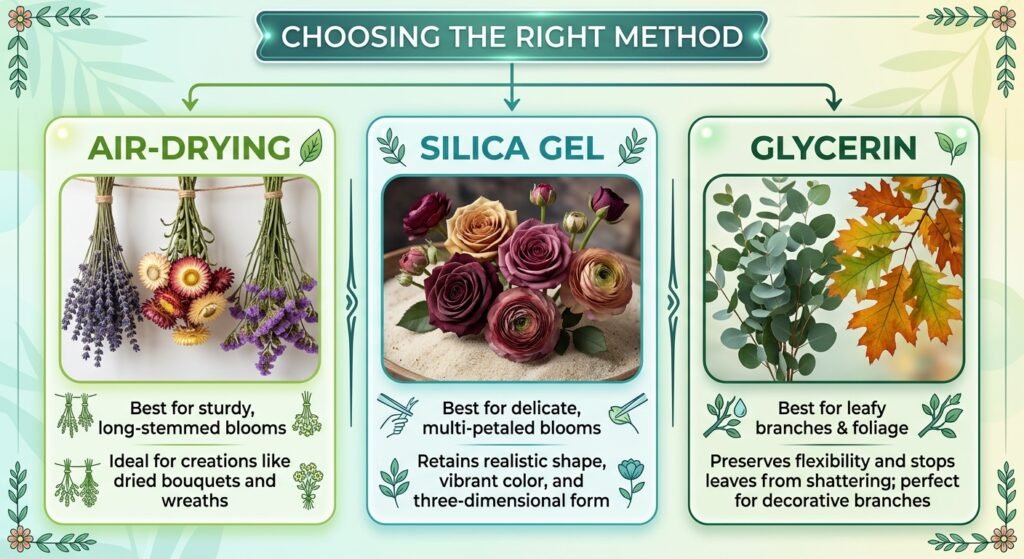
Air-drying is the oldest, simplest, and most natural approach. It works best for varieties with lower water content that naturally hold their shape as they dehydrate.
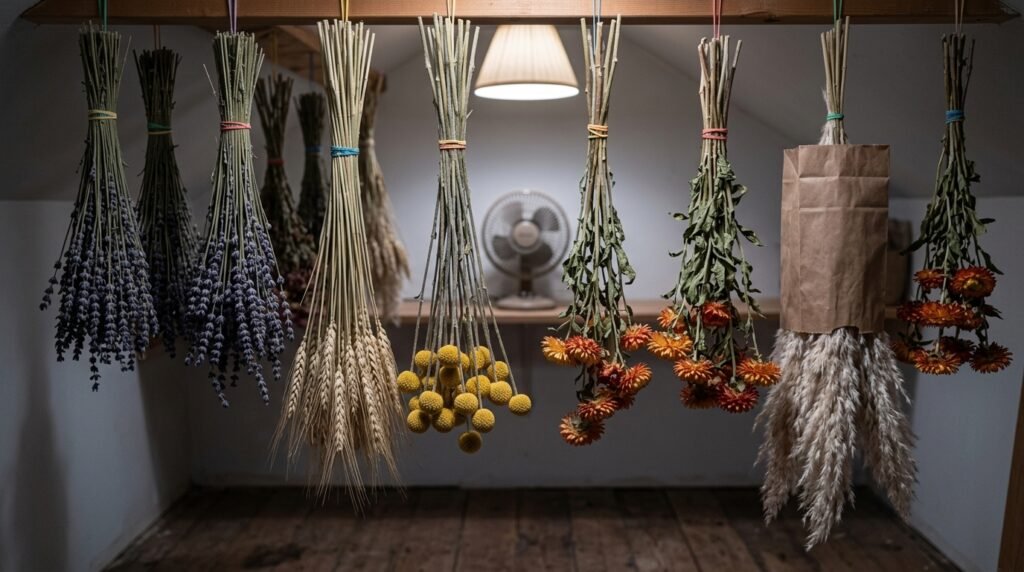
Standard Method: Trim excess foliage, tie stems loosely with a rubber band, and hang upside down in a dark, dry space with air circulation.
Drying Time: 2 to 3 weeks.
Best Varieties: Lavender, statice, strawflower, baby’s breath, pampas grass, wheat stalks.
DIY Household Alternate / Hack:
No Dark Closet or Spare Room? Cover the hanging flowers loosely with an inverted brown paper bag (punch 4–5 air holes in the bag for ventilation). This blocks sunlight completely while allowing air to circulate.
No Airflow? Place a small table fan running on low setting (oscillating) in the room to keep air moving and prevent mildew formation.
2. Silica Gel Desiccation (Best for Delicate Blooms)
If you want to preserve structural flowers without shrinking or losing vibrant colors, desiccation is the gold standard.
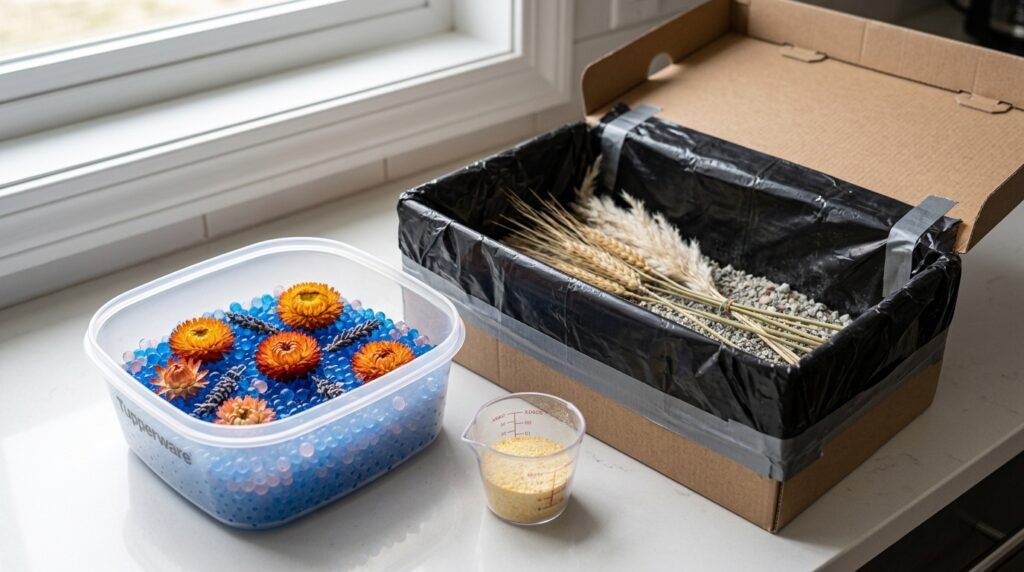
Standard Method: Bury flower heads upright or sideways in an airtight Tupperware container filled with fine silica gel crystals.
Drying Time: 2 to 7 days.
Best Varieties: Dahlias, roses, zinnia, ranunculus, and delicate daisies.
DIY Household Alternates / Hacks:
Flowers Too Big for Airtight Containers? Use large cardboard shoe boxes or plastic storage totes. Simply line the inside with a garbage bag, layer your drying agent, place the flowers, and tape the plastic bag shut to make it moisture-sealed.
Don’t Have Silica Gel? Use Fine Crystal Cat Litter or Cornmeal + Borax:
Non-Clumping Silica Cat Litter: Buy 100% silica crystal cat litter (which is pure silica gel) and crush it slightly in a cloth bag with a rolling pin for a finer texture.
Cornmeal & Borax Mixture: Mix 1 part Borax with 1 part white cornmeal. The cornmeal supports the petal shape while Borax gently draws out moisture.
⚠️ Safety Note: Handle silica gel, Borax, and fine powder/dust in a well-ventilated area. Avoid inhaling fine dust particles, and wear light gloves if you have sensitive skin. Keep all drying agents strictly out of reach of children and pets.
3. Flower Pressing (Best for Flat Crafts & Framed Art)
Pressing is ideal for creating thin, flat floral elements for framed displays, glass glasswork, or seasonal stationeries.
Standard Method: Place fresh flowers between sheets of untextured absorbent paper inside a dedicated wooden flower press.
Drying Time: 2 to 4 weeks.
Best Varieties: Pansies, cosmos, pressed leaves, small geraniums, and ferns.
DIY Household Alternates / Hacks:
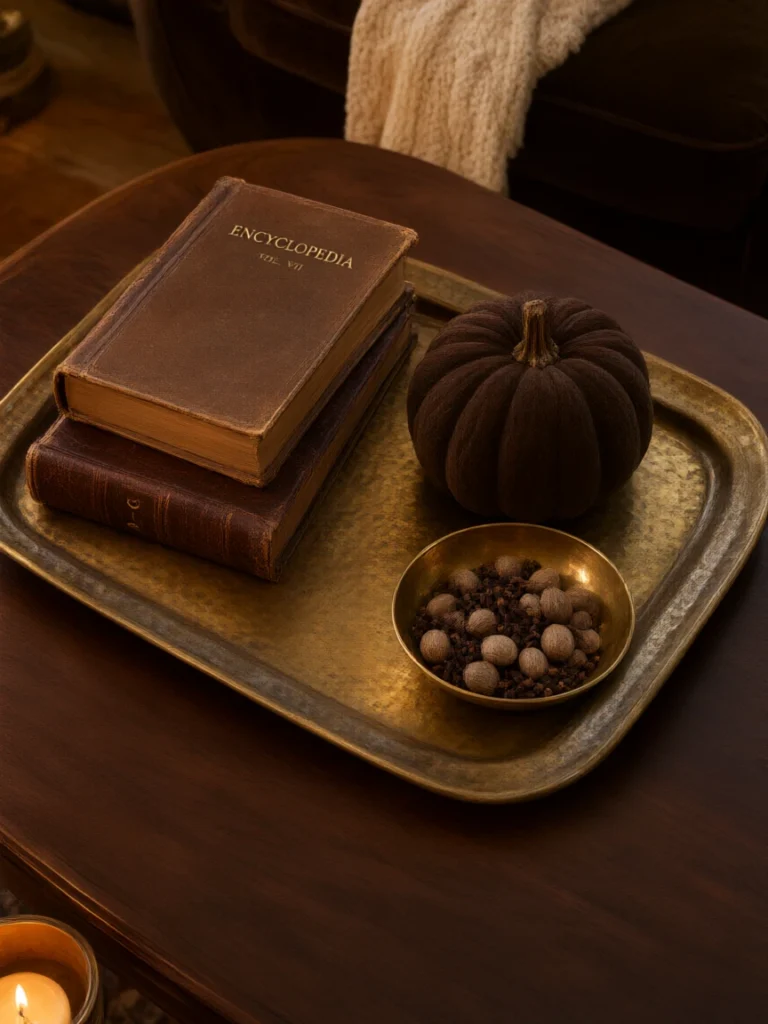
No Flower Press? Use Heavy Books + Baking Paper: Place flowers inside parchment/baking paper (avoid paper towels with embossed patterns as they leave prints on petals). Tuck them inside a heavy dictionary or encyclopedia, and weigh it down with a heavy cast-iron skillet, heavy book, or brick.
Speedy Microwave Method: Place flowers between two ceramic tiles lined with paper towels. Microwave on medium power in 20-second bursts for 2–3 minutes total.
4. Glycerin Bath Preservation (Best for Branches & Foliage)
When decorating for fall, rich foliage like oak branches, eucalyptus, and magnolia leaves adds crucial structure and depth to arrangements. Glycerin keeps leaves soft and flexible instead of brittle.
Standard Method: Mix 1 part vegetable glycerin with 2 parts warm water and place crushed stems in the liquid.
Drying Time: 1 to 3 weeks.
Best Varieties: Eucalyptus, beech, oak, magnolia, and maple leaves.
DIY Household Alternates / Hacks:
Don’t Have Pure Glycerin? Use Liquid Fabric Softener (Short-Term Hack): If you can’t source vegetable glycerin from a local pharmacy, soaking leaf stems in a 1:2 mix of liquid fabric softener and warm water helps foliage retain flexibility for 4–6 weeks.
Mod Podge / PVA Glue Coating for Fallen Autumn Leaves: For quick fall tabletop displays, brush a thin layer of clear PVA craft glue or Mod Podge over fresh leaves. This seals in moisture and prevents curling without liquid soaking.
⚠️ Handling Disclaimer: Although vegetable glycerin is non-toxic, always label DIY solution containers clearly. If using liquid fabric softener as an alternate hack, avoid direct eye contact and wash hands after handling soaked foliage.
5. Proper Post-Preservation Placement & Care
How you display and store your dried arrangement is just as important as how you dry it.
Keep away from sunlight: Place displays on interior walls or dining tables rather than sunny windowsills.
Avoid steam zones: Keep florals out of bathrooms, laundry rooms, or directly above stovetops where cooking steam accumulates.
Dust gently: Use a soft paintbrush or a hairdryer on the lowest, cool setting held 12 inches away to gently blow off accumulated dust.
Household Hairspray Hack:
A light misting of clear aerosol hairspray (held 12–15 inches away) acts as a protective shield. It stops pampas grass and wheat heads from shedding seeds onto your tables.
⚠️ Spray Caution: Always apply aerosol hairspray or clear floral sealants in a well-ventilated space or outdoors. Avoid spraying near open flames, candles, or active heat sources.
Creative Ways to Style Dried Florals for Autumn
To get the most out of your preserved flowers this fall, consider these styling ideas:
Warm-Tone Wreaths: Weave dried strawflowers, mini pumpkins, and preserved oak leaves around a grapevine wreath base for your front door (if sheltered from rain and wind).
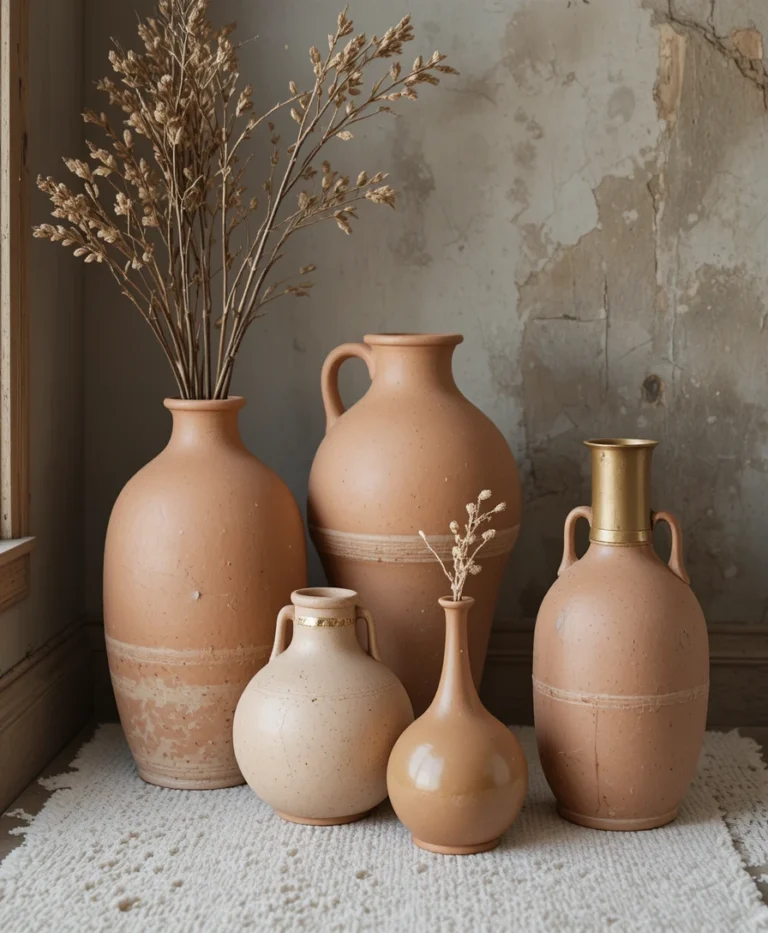
Rustic Ceramic Vases: Pair tall, textured pampas grass and wheat stalks in matte ceramic or terracotta vases for a minimalist, cozy look.
Glass Dome Displays (Cloches): Delicate silica-dried roses or dahlias look elegant under clear glass cloches or inverted mason jars, which protect them from dust and ambient humidity.
Frequently Asked Questions (FAQs)
What can I use if I don’t have an airtight container for large stems?
If you have long stems or large arrangements that don’t fit in Tupperware, use a large storage bin or cardboard box lined with a heavy-duty plastic garbage bag. Pour your silica gel or cornmeal mix inside, lay your flowers, wrap the garbage bag tightly, and seal it with duct tape.
Can I spray dried flowers with hairspray to preserve them?
Yes, a light misting of clear, aerosol hairspray from 12–14 inches away can help seal brittle petals and prevent seed heads (like wheat or pampas grass) from shedding. Avoid over-saturating, as heavy wet spray can flatten light textures.
⚠️ Read the Spray Caution above in method 5.
Why did my air-dried flowers turn brown instead of keeping their color?
Flowers usually turn brown if they were dried in a room with too much light, excessive humidity, or poor air flow. For bright color retention, keep the drying area dark and well-ventilated (using a fan or paper bag hack).
The Takeaway
Creating a fall display that lasts from September into late November comes down to three main rules: dry using the correct technique for your flower type, protect from direct sunlight, and keep clear of humidity. Whether you use professional silica gel or cat litter and paper bags from around the house, spend a little time drying your stems properly today to enjoy cozy fall vibes all season long.
⚠️ Chemical & Handling Safety Disclaimer:
When using preservation materials including silica gel, Borax mixtures, vegetable glycerin, fabric softeners, or aerosol sprays always exercise proper care. Work in a well-ventilated area to avoid inhaling fine dust or chemical fumes. Wear protective gloves if you have sensitive skin, keep all materials out of reach of children and pets, and never use aerosols near open flames or heat sources.
Academic & Literature References
University of Illinois Extension — Guidance on Drying and Preserving Garden Flowers and Native Plants.
Purdue University Extension — Preserving Plant Materials for Dried Arrangements (HO-19-W).
University of Missouri Extension — G1957: Quality Preservation of Fresh Flowers and Foliage.
Mississippi State University Extension — Publication 2459: Preserving Botanical Material with Glycerin.
Iowa State University Extension and Outreach — Harvesting and Drying Flowers for Long-Lasting Displays.
Mierhof, Annette (1993) — The Dried Flower Book: Growing, Picking, and Drying Flowers for Natural Arrangements. Workman Publishing.
Vance, Victoria (1990) — Preserving Flowers and Foliage: Practical Methods and Techniques. Rodale Press.