
Fixing common living room issues comes down to understanding how scale, lighting, and materials interact in your daily life. By addressing structural wear, awkward seating arrangements, and poor lighting placement, you can effortlessly transform a chaotic space into a peaceful oasis. Discovering practical Living Room Issues and their Solution will help you save cash, dodge expensive remodeling work, and build a beautiful, functional family hub.
Quick Answer:
Fix Awkward Layouts: Bring your seating forward off the perimeter walls and replace undersized rugs with large textiles that ground the entire seating group.
Control Visual Light: Swap clinical blue-white lightbulbs for warm alternatives and use high-and-wide curtain rods to frame your windows beautifully.
Repair Fabric Surfaces: Restore sagging cushions using simple dacron wraps and use an electric shaver to trim unsightly pill fuzz from woven textiles.
Tame Media Clutter: Conceal messy entertainment cables behind paintable wall raceways and re-mount elevated screens down to a comfortable, relaxing eye level.
What Are the Best Living Room Issues and their Solution for Walls & Wall Color?
Your perimeter walls set the structural tone for your home, meaning that minor paint wear, uneven finishes, and bad hanging choices can quickly throw off the balance of your design.
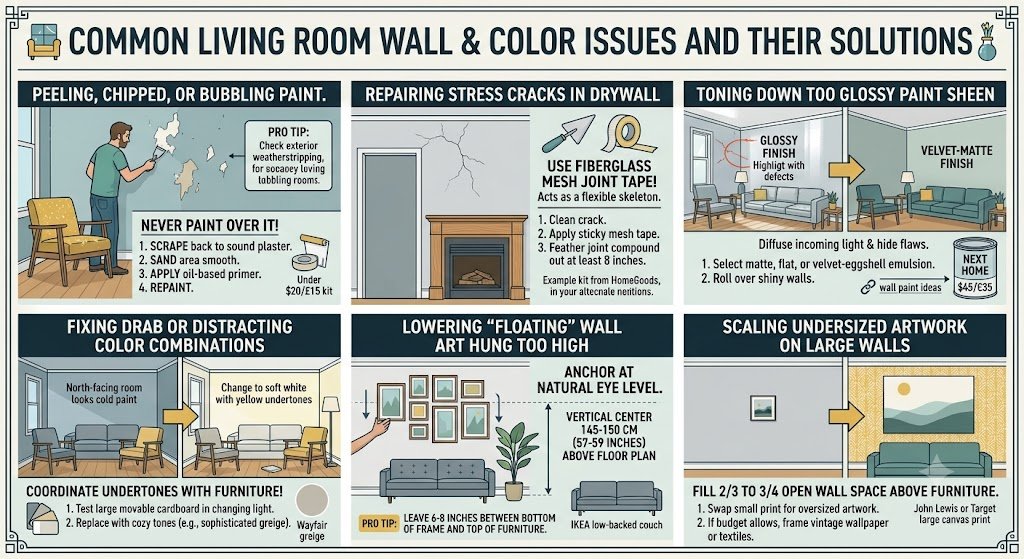
How do you fix peeling, chipped, or bubbling paint?
Walking into your main family lounge only to find flaky chunks of plaster dust shedding behind your accent armchair is incredibly frustrating. This bubbling generally happens when dampness gets trapped underneath the drywall surface or when someone skips using a proper primer over a dusty, bare wall patchwork.
Here is the thing: you can never hide peeling edges by simply rolling fresh paint straight over them. You need to grab a flexible steel putty knife, scrape back the loose edges until you hit sound plaster, sand the area smooth, and apply a premium oil-based stain-blocking primer before painting your top coat.
Real Scenario: Smoothing out a damp, blistered drywall patch right behind a vintage radiator shield using a quick-drying multi-surface primer kit sourced from Dunelm or Target for under $20 / £15.
PRO TIP: If the bubbling paint sits near an exterior door frame or single-pane window, check your weatherstripping first to stop moisture from sneaking back behind your fresh paint layers.
What is the trick to repairing stress cracks in drywall?
As changing seasonal humidity shifts the timber frame of your house, plasterboards expand and contract, creating thin hairline fractures around door openings and window frames. Smearing standard spackle paste straight into the crack is a temporary fix that will inevitably crack wide open again the moment the ground shifts.
Now here is where it gets interesting: you must bridge that shifting fracture line using a sticky fiberglass mesh joint tape before smoothing down your compound mud. The hidden mesh weave behaves exactly like a flexible structural skeleton, absorbing wall micro-movements without letting the surface fracture reappear.
Real Scenario: Mending a recurring diagonal settlement gap above a heavy oak fireplace mantel with a basic joint compound mud kit from HomeGoods.
PRO TIP: Feather your patch compound out at least 8 inches on both sides of the tape using a wide taping knife to blend the patch invisibly into your main wall.
How do you tone down an improper paint sheen that is too glossy?
Selecting a highly reflective paint finish for your main lounge walls can quickly turn your relaxing sanctuary into a shiny, clinical space that highlights every uneven plaster wave, nail pop, and dent. High-gloss finishes are great for hard-wearing doors and baseboard trims, but your main walls look best in flat, matte, or velvet-eggshell finishes.
These soft surfaces diffuse incoming light evenly in all directions, hiding minor wall flaws while creating a cozy atmosphere.
Real Scenario: Rolling over a reflective, shiny feature wall with a rich velvet-matte emulsion paint from Next Home ($45 / £35 per tin).
[INTERNAL LINK: wall paint ideas — Living Room Issues and their Solution]
What can you do about drab or distracting color combinations?
Picking wall tones purely from tiny paper store swatches can leave your space feeling either cold or uncomfortably bright. For instance, north-facing spaces painted in cool, blue-toned grays look dingy and clinical, whereas soft whites with yellow or pink undertones instantly feel cozy.
And this is the part most people overlook: your wall tones need to coordinate with the undertones of your largest upholstered furniture pieces to feel cohesive.
Real Scenario: Replacing an overwhelming neon-yellow accent wall with a sophisticated, warm greige tone from Wayfair.
PRO TIP: Paint a large movable piece of cardboard with your choice and watch how the hue shifts from bright morning light to warm evening lamp light before painting the wall.
How do you fix “floating” wall art hung too high?
Hanging your favorite art frames close to the ceiling line breaks the visual connection with your furniture and causes neck strain. Art should be anchored at a natural, standard eye level, meaning the vertical center of the picture frame sits roughly 145 to 150 centimeters (57 to 59 inches) above your floor plan.
Real Scenario: Lowering a scattered gallery wall grid behind a contemporary low-backed linen couch from IKEA.
PRO TIP: When positioning frames above a sofa or console table, leave a space of six to eight inches between the bottom of the frame and the top of the furniture piece to keep the arrangement grounded.
How do you scale undersized artwork on large walls?
A tiny frame hanging alone on a massive wall looks unfinished and out of place. Your wall installations should fill roughly two-thirds to three-quarters of the open wall space above your furniture to feel intentional.
Real Scenario: Swapping out a single small photo print for an elegant, large canvas print from John Lewis or Target.
PRO TIP: If large original artwork stretches your budget, buy an oversized poster frame and insert a beautifully patterned piece of vintage wallpaper or textile.
What Is the Secret to Resolving Lighting & Electrical Issues?
Illumination sets the mood for your entire home, yet many properties rely on clinical overhead fixtures or deal with messy, tangled cords.
How can you warm up a harsh “interrogation room” overhead light?
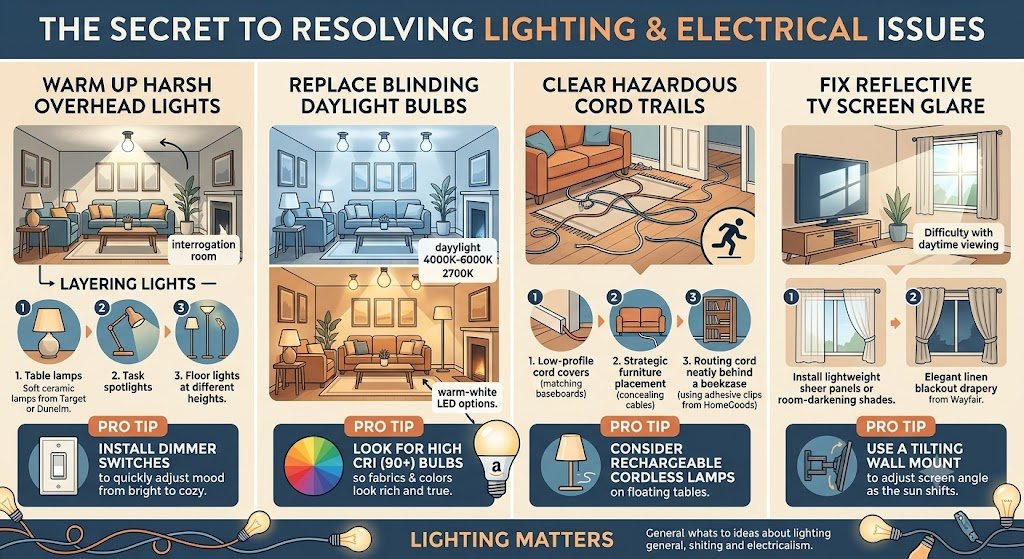
A single unshielded flush-mount ceiling bulb casts unflattering shadows straight down, making your living room feel cold and clinical. To fix this, create a warm environment by placing lamps at different heights across the space.
Layering your light sources with table lamps, task spotlights, and low floor lights helps spread illumination evenly while softening the edges of your room layout.
Real Scenario: Turning off a bright central ceiling fixture and switching on a pair of soft ceramic lamps from Target or Dunelm.
PRO TIP: Install dimmer switches on your main lighting circuits so you can quickly adjust the room’s mood from bright afternoon work to a cozy evening atmosphere.
Why should you replace blinding blue-white daylight bulbs?
Cool daylight bulbs with a high color temperature ( to ) make your home feel sterile and ruin the cozy ambiance of a living space. Swap them out for warm-white LED options rated at to create a relaxing, golden-hour feel.
Real Scenario: Replacing harsh office-grade bulbs with warm, dimmable LED smart bulbs from Amazon or Next Home.
PRO TIP: Look for light bulbs with a high Color Rendering Index (CRI of 90+) so your furniture fabrics and paint tones look rich and true to life.
How do you clear hazardous extension cord trails across walkways?
Running long power cords under rugs or across open floor walkways creates a tripping hazard and looks untidy. If adding new outlets isn’t an option, use low-profile cord covers that match your baseboards, or place furniture strategically along walls to conceal cables safely.
Real Scenario: Routing a lamp cord neatly behind a long bookcase using adhesive clips from HomeGoods.
PRO TIP: Consider using rechargeable cordless LED lamps on floating tables to keep your walkways completely clear.
What fixes reflective screen glare on the TV?
Positioning your television directly across from an uncovered window makes daytime viewing difficult due to heavy glass reflections. Installing lightweight sheer panels or room-darkening shades allows you to filter the incoming daylight without making the space feel completely dark.
Real Scenario: Adding elegant linen blackout drapery panels from Wayfair to block afternoon light glare.
PRO TIP: Use a tilting wall mount so you can quickly adjust the screen angle when the sun shifts.
How Can You Revive Wear and Tear on Sofas & Seating?
Your main furniture pieces handle a lot of daily use, which can lead to flattened cushions, pilling fabric, and awkward placements that block your paths.
What is the easiest fix for sagging sofa cushions?
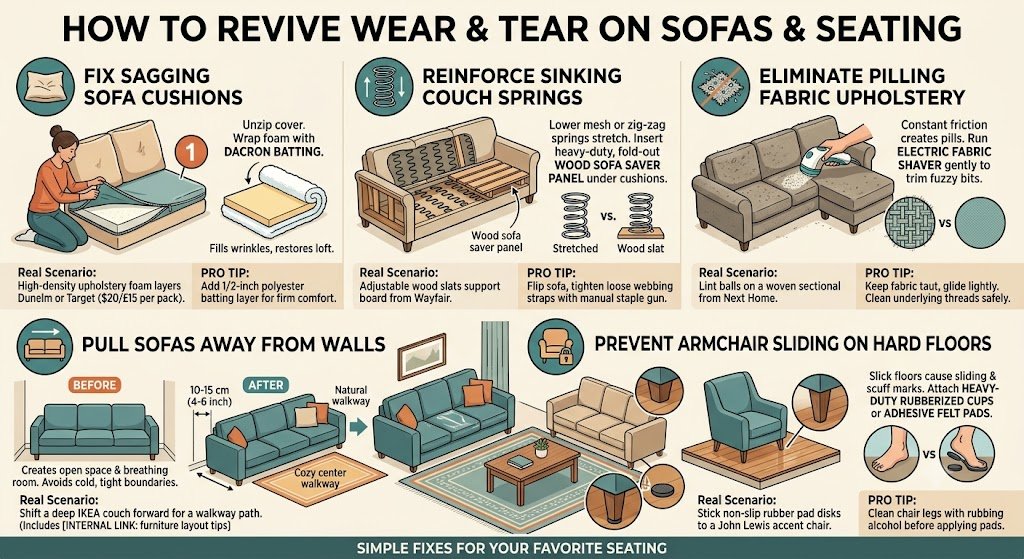
Over time, standard foam cushion cores lose their shape and density, leaving your favorite couch looking tired and uninviting. You can easily fix this by unzipping the cushion covers and wrapping the existing foam with layers of inexpensive dacron batting.
This simple fix plumps up the cushions and fills out loose fabric wrinkles, restoring a crisp, structured look to your sofa.
Real Scenario: Reviving flat seat cushions by inserting high-density upholstery foam layers from Dunelm or Target ($20 / £15 per pack).
PRO TIP: If the foam is still in good shape but has flattened out over time, add a half-inch layer of polyester batting around it to give it a firm, comfortable loft.
How can you reinforce sinking couch springs?
When the lower support mesh or zig-zag springs inside an older sofa frame stretch out, the seat cushions begin to sag down. Placing a heavy-duty, fold-out wood sofa saver panel directly onto the frame under the cushions provides instant support.
Real Scenario: Saving a vintage mid-century sofa from the scrap heap with an adjustable wood slats support board from Wayfair.
PRO TIP: Flip your sofa over and check the dust cover; often, a sagging seat can be fixed by tightening loose webbing straps with a simple manual staple gun.
How do you eliminate pilling fabric upholstery?
Constant friction from clothing creates fuzzy little fabric pills on woven furniture fabrics, making your sofa look worn out. Running an electric fabric shaver gently across the surface cleanly trims away these fuzzy bits, making the weave look smooth and new again.
Real Scenario: Shaving away lint balls on a woven sectional sofa from Next Home.
PRO TIP: Keep the fabric taut and glide the shaver lightly over the surface without pressing down hard to avoid cutting the underlying threads.
Why should you pull sofas pushed stiffly against walls?
Pushing all your seating flat against the outer walls creates an empty, cold space in the center of the room and highlights tight boundaries. Pulling your sofa just 10 to 15 centimeters (4 to 6 inches) away from the drywall creates breathing room that makes the entire area feel larger and more open.
Real Scenario: Shifting a deep-seated IKEA couch forward to create a natural walkway path behind it.
[INTERNAL LINK: furniture layout tips — Living Room Issues and their Solution]
How do you prevent constant armchair sliding on hard floors?
Heavy armchairs can slide out of position on slick wood or laminate floors when you sit down, creating scuff marks on the finish. Attaching heavy-duty rubberized furniture cups or adhesive felt pads to the bottom of the legs locks them securely in place.
Real Scenario: Sticking non-slip rubber pad disks onto the tapered wooden feet of an accent chair from John Lewis.
PRO TIP: Clean the bottom of the chair legs with rubbing alcohol before applying adhesive pads to make sure they stick firmly for years.
What Are the Best Ways to Troubleshoot Coffee Table Disasters?
A central coffee table is a functional hub, but incorrect proportions, sharp edges, or missing surface protection can cause real headaches.
How can you protect against sharp, dangerous coffee table edges?

Square coffee tables with sharp wooden corners can be hazardous in tight spaces, especially for young children or pets. Replacing them with a round or oval silhouette keeps traffic flowing smoothly and prevents painful bumps.
Real Scenario: Swapping out a sharp, boxy table for a soft, round woven ottoman piece from HomeGoods.
PRO TIP: If you aren’t ready to replace your square table, use transparent silicone corner bumpers for a subtle safety update.
What is the correct coffee table height?
A table that sits much higher or lower than your sofa cushions makes it awkward to reach for drinks. Aim for a table height that sits within 5 centimeters (2 inches) of your sofa seat cushions for a comfortable, balanced look.
Real Scenario: Adjusting a low-profile table by adding elegant mid-century riser legs from Wayfair.
PRO TIP: For low sofas, look for an unadorned stone or wood block style table to maintain clean design lines.
How far should a table be placed from your seating?
Setting your coffee table too far away makes it hard to reach, while placing it too close blocks your walkway. Keep a comfortable distance of 35 to 45 centimeters (14 to 18 inches) between the table and the front edge of the sofa.
Real Scenario: Adjusting a central table profile layout to match an open walkway path.
PRO TIP: Use a piece of painter’s tape on the floor to map out this distance before purchasing new furniture.
How do you erase permanent water ring stains on wood surfaces?
Placing sweaty glasses directly on raw wood tables leaves behind cloudy white moisture rings that ruin the finish. You can often remove these rings by applying a thin layer of non-gel toothpaste mixed with baking soda, gently rubbing the spot with a soft cloth, and wiping it clean.
Real Scenario: Buffing out a stubborn white cup ring on a vintage walnut table.
PRO TIP: Keep a curated tray of absorbent cork or slate coasters handy on the table so guests always have a spot to set their drinks.
How Do You Solve Tripping Hazards and Bad Rug Sizing?
An area rug serves to anchor your entire seating arrangement. However, choosing the wrong size or dealing with slipping hazards can quickly disrupt the flow of your space.
How do you upgrade a tiny “floating stamp” rug?
Choosing a rug that is too small can make your entire living room feel fragmented and cramped. Your main rug should be large enough so that at least the front two feet of all your primary seating pieces rest comfortably on top of it.
Real Scenario: Replacing a small foot accent rug with a proper foot woven rug from Target.
PRO TIP: If an oversized rug is outside your budget, layer your smaller decorative rug over a larger, inexpensive flat-weave sisal option.
What is the best way to flatten curling rug corners?
Woven rug corners that curl upward create a frustrating tripping hazard and look untidy. Dampen the curled corner slightly, lay a clean towel over it, and place a heavy stack of books on top for 24 hours to flatten the fibers back down.
Real Scenario: Flattening the upturned corners of a new geometric rug from Dunelm.
PRO TIP: Apply dual-sided silicone rug tape underneath the corners to securely lock the edges flat against hard flooring.
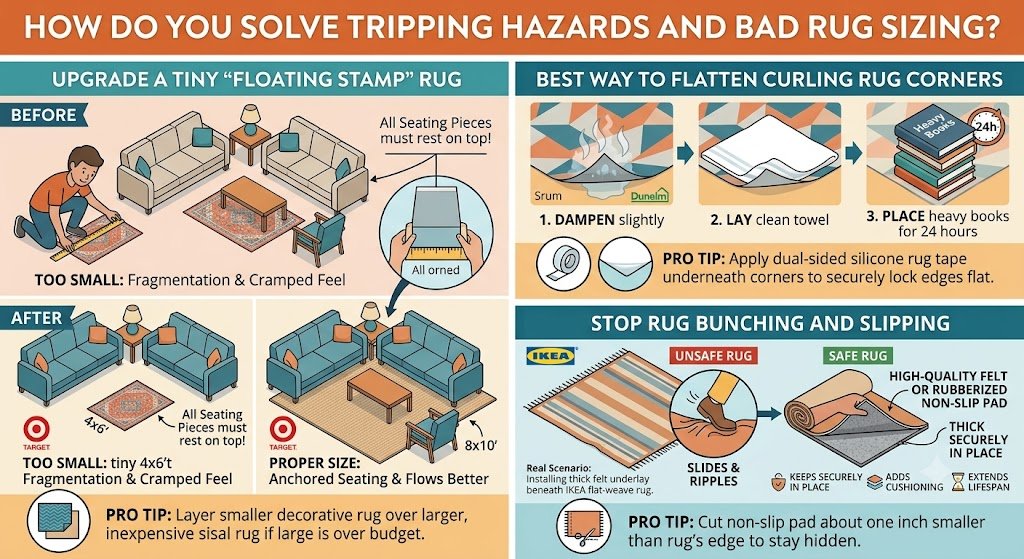
How do you stop rug bunching and slipping?
Lightweight area rugs often ripple, bunch up, or slide across slick floors when walked on. Placing a high-quality felt or rubberized non-slip pad underneath keeps the rug securely in place, adds extra cushioning, and extends its lifespan.
Real Scenario: Installing a thick felt underlay beneath a classic flat-weave rug from IKEA.
PRO TIP: Cut your non-slip pad about one inch smaller than the rug’s outer edge so it stays completely hidden from view.
What Is the Most Effective Remedy for Awkward Curtains & Windows?
Window treatments regulate natural light and help establish the visual height of your walls. Avoid these common mistakes to keep your living room feeling bright, airy, and open.
How do you fix “high-water” curtains that don’t reach the floor?
Drapery panels that stop short and hover several inches above the floor visually cut your walls in half. Curtains should ideally skim the floor surface or pool slightly, resting about a half-inch above the flooring for a clean, tailored look.
Real Scenario: Swapping out short panels for proper 96-inch linen draperies from John Lewis.
PRO TIP: If your current curtains are just a bit too short, lower the rod slightly or use curtain rings with clips to add those missing inches.
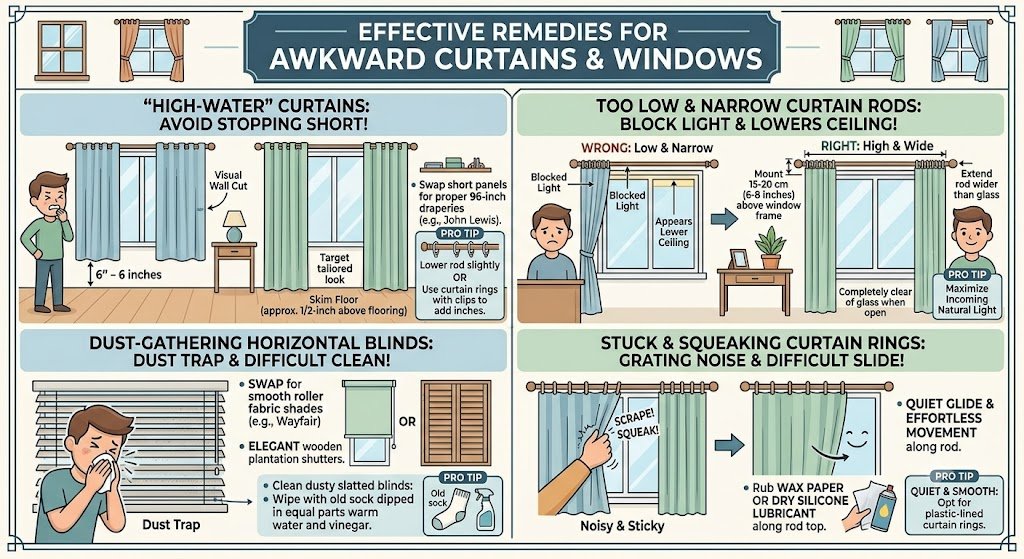
Why should you avoid curtains hung too low and narrow?
Mounting your curtain rod directly at the top of the window frame blocks daylight and can make your ceiling feel lower. Instead, mount the rod 15 to 20 centimeters (6 to 8 inches) above the window frame and extend it wider than the glass to instantly create a brighter, grander feel.
Real Scenario: Moving a curtain rod up toward the ceiling line in a compact Next Home layout.
PRO TIP: Extending your drapery rod 12 inches past the window frame allows you to pull the panels completely clear of the glass when open, maximizing incoming natural light.
How do you clean dust-gathering horizontal blinds easily?
Traditional plastic slatted blinds tend to collect layers of dust quickly and can be difficult to clean. Replacing them with smooth roller fabric shades or elegant wooden plantation shutters simplifies cleaning and offers better light control.
Real Scenario: Swapping out old plastic slatted blinds for crisp fabric roller shades from Wayfair.
PRO TIP: Clean dusty horizontal blinds easily by wiping them down with an old sock dipped in a simple mix of equal parts warm water and vinegar.
What eliminates stuck or squeaking curtain rings?
Metal curtain rings can scrape loudly against metal rods, making them difficult to slide open smoothly. Rubbing a small amount of wax paper or spraying a touch of dry silicone lubricant along the top of the rod allows the rings to glide quietly and effortlessly.
Real Scenario: Quieting a noisy curtain rod setup in a quiet reading room layout.
PRO TIP: Opt for plastic-lined curtain rings to eliminate scraping sounds and ensure smooth movement.
How Can You Silence Noisy Floors and Repair Damaged Finishes?
Your floors handle a lot of daily foot traffic, leading to inevitable wear like squeaks, scratches, and dingy grout lines. Here is how to refresh your flooring.
What silences squeaky wood floorboards?
Noisy gaps between wooden floorboards develop when the subfloor shifts over time, causing the wood planks to rub together. Sifting a small amount of powdered graphite or baby powder directly into the squeaking joints lubricates the wood and silences the friction.
Real Scenario: Silencing a noisy spot right in front of a main doorway walkway.
PRO TIP: Walk across the area slowly while dusting the powder to help it work deep into the floor joints.
How do you hide scratched hardwood finishes?
Moving heavy furniture or pet nails can leave light scratches on your beautiful wood floors. Rubbing a matching wood repair crayon or a bit of fresh walnut meat over light scratches hides them naturally by releasing protective oils into the wood.
Real Scenario: Buffing away light surface scratches on an oak floor layout using a touch-up pen from Target.
PRO TIP: Place adhesive felt pads under all your furniture legs to prevent new scratches when rearranging things.
Can you fix a cracked ceramic floor tile yourself?
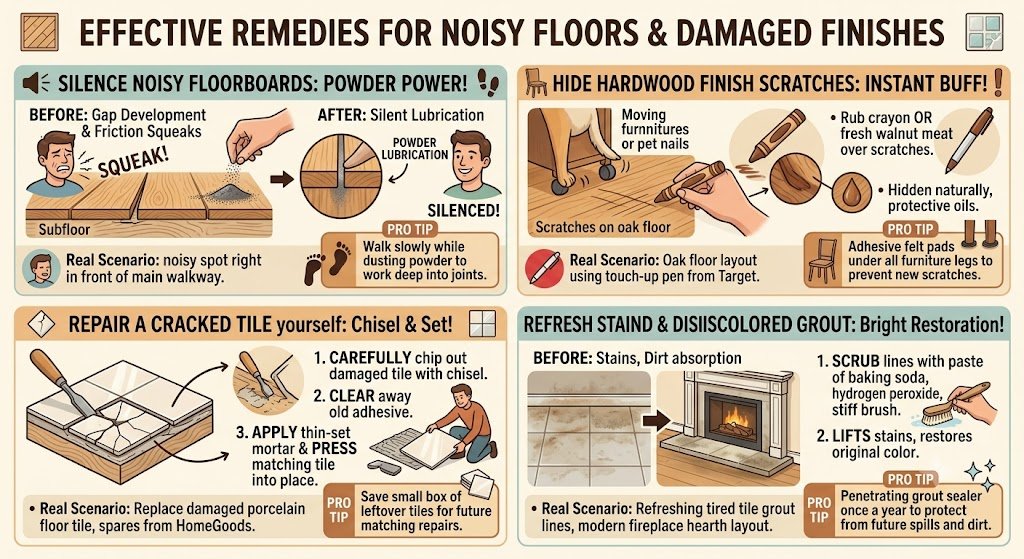
A single cracked floor tile can disrupt the look of your entire space. To fix it, carefully chip out the damaged piece with a chisel, clear away the old adhesive, apply fresh thin-set mortar, and press a matching tile into place.
Real Scenario: Replacing a damaged porcelain floor tile in a high-traffic zone using spares from HomeGoods.
PRO TIP: Always save a small box of leftover tiles from your original installation for quick, perfect matching repairs later.
How do you refresh discolored or stained grout lines?
Grout lines can absorb dirt easily, making a beautifully tiled floor look aged and dingy. Scrubbing the lines with a paste of baking soda, hydrogen peroxide, and a stiff brush lifts stubborn stains and restores the grout to its original bright color.
Real Scenario: Refreshing tired tile grout lines in a modern fireplace hearth layout.
PRO TIP: Apply a high-quality penetrating grout sealer once a year to protect the lines from future liquid spills and dirt.
What Is the Secret to Fixing Smoky Fireplaces and Dull Mantels?
A fireplace serves as a natural focal point for your room, but smoky drafts or an overcluttered mantel can detract from its charm. Here is how to keep it clean, safe, and beautifully balanced.
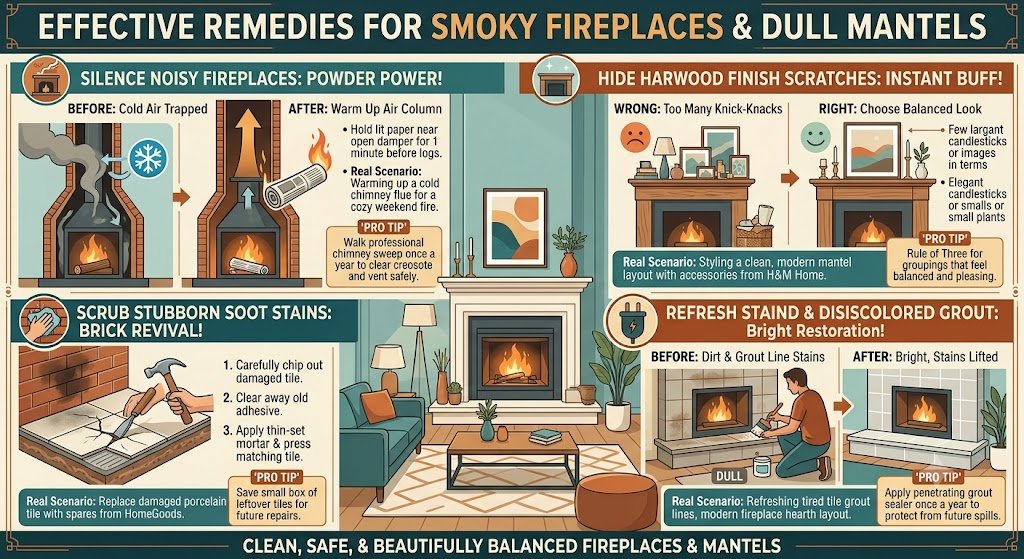
Why is your fireplace throwing smoky drafts back into the room?
If smoke enters your living space when you start a fire, cold air may be trapped inside the chimney flue. Holding a lit piece of rolled-up newspaper near the open damper for a minute helps warm up the air column, creating a proper upward draft before you light your logs.
Real Scenario: Warming up a cold chimney flue before enjoying a cozy weekend fire.
PRO TIP: Make sure to book a professional chimney sweep once a year to clear away creosote buildup and keep your fireplace venting safely.
How do you scrub stubborn soot stains on brick facades?
Dark carbon soot can build up on the front face of brick fireplaces over the winter months. Scrubbing the brick with a mix of warm water, heavy dish soap, and a stiff nylon brush easily removes the stains and restores the brick’s natural color.
Real Scenario: Cleaning seasonal soot stains off a brick fireplace surround from Dunelm.
PRO TIP: For stubborn soot stains, try using a specialized rubber soot-eraser sponge to lift away the carbon without water.
How can you declutter an overcluttered mantelpiece?
Placing too many small knick-knacks along your fireplace mantel can make the whole wall look busy and disorganized. Instead, choose a balanced look with one large central piece of art, flanked by a few items of varying heights like elegant candlesticks or small plants.
Real Scenario: Styling a clean, modern mantel layout using decorative accessories from H&M Home.
PRO TIP: Use the classic “rule of three” when grouping items on your mantel to create an arrangement that feels naturally balanced and pleasing to the eye.
How do you block cold drafts from an unused fireplace opening?
When your fireplace isn’t in use, cold air can draft down the chimney and chill your living room. Installing an inflatable chimney balloon or a stylish, tight-fitting magnetic draft stopper inside the opening blocks the cold air and helps lower your heating bills.
Real Scenario: Blocking winter drafts from a decorative vintage fireplace with a tailored hearth plug.
PRO TIP: A beautiful decorative fireplace screen or a curated arrangement of birch logs can neatly hide a draft stopper while keeping the hearth looking inviting.
How Do You Hide Tangled Media Cables and Lower High TVs?
Modern entertainment gear is essential, but messy cable nests and poorly placed screens can disrupt an otherwise peaceful room design.
How do you tame a “spaghetti monster” cable mess?
A tangled web of black power cords hanging below your TV can make even the most beautiful room look untidy. Gather the cables neatly together using hook-and-loop fabric straps, and run them inside a paintable wall cord cover that blends right into your wall paint.
Real Scenario: Organizing a messy home entertainment center layout using cable management ties from Amazon.
PRO TIP: Label both ends of each power cord with small tape tabs so you always know which device is plugged in before disconnecting anything.
What is the fix for a TV mounted too high?
Mounting your television high above a fireplace mantel can lead to neck strain and disrupt the flow of the room. For comfortable viewing, your screen should be mounted so that the lower third of the display sits right at eye level when you are seated on your sofa.
Real Scenario: Lowering an oversized flat-screen TV onto a low wood media console table from IKEA.
PRO TIP: If you must mount your TV above a high mantel, look into a pull-down wall mount that lets you easily lower the screen to eye level when watching a movie.
How do you cool down overheated media equipment?

Keeping game consoles and streaming boxes enclosed in solid wood cabinets can trap heat, causing your devices to run slowly or overheat. Swapping out solid cabinet doors for breathable woven cane, mesh panels, or installing a quiet USB exhaust fan keeps your gear cool and protected.
Real Scenario: Updating a closed media cabinet from Wayfair with breathable mesh panel door inserts.
PRO TIP: Leave at least two inches of open space around all sides of your electronic devices inside cabinets to allow for healthy air circulation.
What Design Tricks Fix Cluttered Shelves and Lifeless Dead Corners?
Finishing touches give your home its unique personality, but small styling mistakes can easily lead to a cluttered look. Here is how to keep your shelving and layouts beautifully organized.
How do you stop a leaning book avalanche on shelves?
Heavy books can slip and slide on smooth wooden shelves, often tipping over and causing damage. Placing heavy stone bookends or using sturdy, non-slip L-shaped metal brackets at each end keeps your book collections upright and organized.
Real Scenario: Securing a row of heavy art books on a floating wall shelf using accents from Target.
PRO TIP: Lay a few large books horizontally to act as a natural, sturdy base for smaller decorative pieces on your shelves.
What is the best way to thin out overstuffed bookshelves?
Packing your bookshelves tightly from edge to edge can make your entire room feel heavy and crowded. Try leaving about one-third of your shelf space open, using that breathing room to display a few favorite photos or small sculptures to create a lighter, more balanced look.
Real Scenario: Sorting through an overfilled bookcase from John Lewis to curate a cleaner look.
PRO TIP: Alternate between rows of vertical books and horizontal stacks to give your eyes a pleasing variety of shapes as you scan the shelves.
How do you stabilize wobbly side tables permanently?
A side table that wobbles every time you set down a cup can be incredibly frustrating. Attaching a small, adjustable screw-in furniture glide or a simple adhesive felt disc under the short leg levels it out instantly.
Real Scenario: Fixing a rocky accent table next to an armchair with felt pads from HomeGoods.
PRO TIP: For a quick fix while hosting guests, slide a small piece of natural cork under the wobbly leg to level it out safely.
How do you refresh dusty fake plastic plants?
Artificial green plants can add a nice touch of color, but when they collect layers of dust, they lose their charm and look dated. Wipe the leaves down with a damp microfiber cloth, or give them a gentle rinse with cool water in the shower to restore their fresh, vibrant look.
Real Scenario: Dusting an artificial potted fiddle-leaf fig tree in a sunny corner layout.
PRO TIP: Mix a few real, low-maintenance indoor plants like pothos or snake plants in with your faux greenery to make the whole arrangement look more natural.
What can you place in empty, unused “dead corners”?
Awkward, empty corners can leave a room feeling cold and unfinished. Filling that space with a comfortable reading chair, a tall potted plant, or a tiered corner shelf turns an unused spot into a cozy and functional destination.
Real Scenario: Transforming a lonely, empty corner with a stylish floor lamp and armchair from Next Home.
PRO TIP: Placing a low uplight behind a tall corner plant casts beautiful, soft shadows across your ceiling in the evening.
How many accent pillows are too many on a sofa?
Piling too many decorative pillows on your couch can leave guests with no comfortable place to sit. A good rule of thumb is to keep it to two or three pillows on a standard sofa, choosing textures that complement your room’s color palette.
Real Scenario: Editing down a cluttered pile of toss pillows on a sectional sofa from Dunelm.
PRO TIP: Choose high-quality down or alternative feather inserts that can be fluffed up easily, rather than stiff foam pillows that hold a rigid shape.

How do you resolve a radiator or heating vent blockage?
Placing a large sofa or heavy cabinet directly in front of a heating vent or radiator blocks warmth from circulating through the room, making your heating system work much harder. Move your furniture back at least 30 centimeters (12 inches) to let warm air flow freely and keep the entire space cozy.
Real Scenario: Shifting a deep armchair away from a wall radiator panel to improve airflow.
PRO TIP: Install a clear plastic heat deflector over floor vents to direct warm air out into the living space rather than straight up behind your curtains.
How do you lift smelly upholstery and pet odors out of fabrics?
Fabric couches can absorb pet odors and everyday smells over time, making the room feel less than fresh. Dusting your sofa cushions with a light layer of baking soda, letting it sit for 20 minutes, and vacuuming it up lifts trapped odors out of the fabric fibers naturally.
Real Scenario: Deodorizing a well-loved family sofa using a simple baking soda refresh.
PRO TIP: Look for furniture with removable, machine-washable cushion covers to make deep cleaning on laundry day quick and easy.
What is the quickest way to clean scratched or scuffed baseboards?
Daily life, vacuums, and foot traffic can leave dark scuffs and marks along your white baseboards. Wiping the baseboards down with a melamine damp cleaning sponge removes those marks easily without dulling or removing the paint finish.
Real Scenario: Erasing dark scuff marks along hallway baseboards with a quick wipe-down.
PRO TIP: Use a durable semi-gloss or satin enamel paint finish on your baseboards; it resists scuffs and wipes clean much easier than flat paint.
How do you fix a door swing path hitting your furniture pieces?
If an entry door bumps into the back of an armchair or side table every time it opens, your layout can feel cramped and frustrating. Rearrange your furniture layout so that all entryways have a completely clear, unblocked path through the space.
Real Scenario: Adjusting a side table position near a living room doorway to clear the swing path.
PRO TIP: Swap out a traditional swinging interior door for a sleek sliding barn door or pocket door to save valuable floor space in tight layouts.
What can you add if you have a lack of drink surfaces near your seating?
There is nothing more awkward for a guest than having nowhere to set down their coffee or glass. Make sure every seat in your living room has an accessible surface within arm’s reach, whether it’s a central coffee table, a side table, or a clever sofa-arm wrap tray.
Real Scenario: Placing a small, sleek C-shaped end table next to a deep accent armchair from Wayfair.
PRO TIP: A mobile bar cart on wheels can serve as an adjustable side table that you can easily roll wherever your guests are sitting.
How do you eliminate loud echoing and poor room acoustics?
Rooms with hard flooring, bare walls, and minimal fabric can have a loud, echoing sound that makes conversation difficult. Adding soft textures like plush area rugs, fabric draperies, and canvas art helps absorb sound waves, making the space feel instantly quieter and cozier.
Real Scenario: Softening a noisy apartment living room with thick woven curtains from IKEA.
PRO TIP: Adding a premium felt or cork underlay pad underneath your main area rug provides excellent sound insulation for your room.
How do you establish a clear focal point in a confusing layout?
A living room without a clear focal point can feel disorganized, leaving your eyes with no natural place to rest. Arrange your main seating to highlight a beautiful feature, like a fireplace, a large view window, or a curated media console, giving the space an organized and intentional feel.
Real Scenario: Rearranging a scattered seating layout to face a beautiful central fireplace from John Lewis.
PRO TIP: If your room doesn’t have a built-in feature, create your own focal point with a large piece of art or an eye-catching accent cabinet.
Frequently Asked Questions About Living Room Issues and their Solution
Q: What is the most practical way to fix a living room that feels dark and cave-like?
A: You can instantly brighten a dim space by hanging your curtain rods high and wide to uncover your window glass, replacing cool bulbs with warm options, and placing mirrors opposite light sources to bounce sunshine around.
Q: How do I know if my area rug is the correct size for my furniture layout?
A: A proper living room rug needs to be large enough for the front two feet of your sofa and primary accent chairs to rest firmly on top of the weave, which unifies the furniture group instead of letting pieces look scattered.
Q: What can I do to stop my television from completely dominating the entire room?
A: Try surrounding your wall-mounted television screen with a curated gallery wall of framed art prints, or set it inside a sleek media cabinet featuring paintable sliding doors that hide the display when you are finished watching.
Q: How can I safely layout power cables for lamps when my couch sits in the center of the room?
A: Run your power cords flat beneath low-profile rubber wire tracks that match your wood color, or opt for contemporary battery-powered rechargeable LED table lamps to keep your central seating walkways clean and clear.
Q: Why does my living room feel cluttered even though I have plenty of storage bins?
A: True visual organization comes down to visual weight rather than just hiding clutter, so make sure to leave one-third of your open shelving blank and edit down your sofa pillows so your eyes have a quiet place to rest.
Executing Creative Living Room Issues and their Solution Every Day
Tackling daily layout slip-ups, lighting mistakes, and fabric wear with real interior design experience makes it easy to maintain a beautiful, balanced home. By utilizing these straightforward Living Room Issues and their Solution, you can avoid costly replacement bills while building an exceptionally functional space that fits your lifestyle. Grab your measuring tape this weekend, experiment with these simple layout shifts, and feel free to reach out if you need help polishing your home.