
If you are looking to turn your master suite into a luxurious sanctuary, designing a King Size Bedroom is the ultimate way to celebrate comfort and architectural scale. A standard king mattress occupies a significant amount of visual real estate, meaning the surrounding design choices must be intentional, well-proportioned, and perfectly balanced.
In my decade of design experience in home decor and spatial layout optimization, I have seen many homeowners fall into the trap of letting a massive bed overwhelm their floor plan. Alternatively, they leave the rest of the room completely sparse, making the environment feel cold and uninviting. To fix this, I utilize a repeatable styling system that frames the bed as an elegant centerpiece while maximizing the surrounding floor space. These 22 proven design strategies will help you build a cohesive, grand, and comforting sanctuary that perfectly aligns with your lifestyle.
Quick Reference Comparison Table
Tools and Materials You Need
Before rearranging your furniture or purchasing new decor, assemble this foundational checklist to ensure precise installation and spatial harmony.
King Bed Frame Specifications: Standard Eastern King dimensions are exactly 76 inches wide by 80 inches long. Ensure you have at least 30 inches of walking clearance on both sides.
Oversized Area Rug: A 9′ x 12′ rug is the absolute minimum size required, though a 10′ x 14′ rug is preferred to leave a beautiful 3-foot border around the perimeter of the bed.
Heavy-Duty Wall Toggle Anchors: Rated for at least 75 lbs to safely secure floating shelves, large statement art, or wall-mounted nightstands.
Laser Distance Measurer: Crucial for verifying symmetry between flanking nightstands, hanging pendant lights, and centering artwork.
Dimmable LED Strip Kits (CRI 90+): Soft warm-white accent lighting (2700K) to place behind headboards or inside architectural alcoves.
Detailed Design Blueprint for a Master Suite
1. Luxe Upholstered Headboard for Royal Vibes
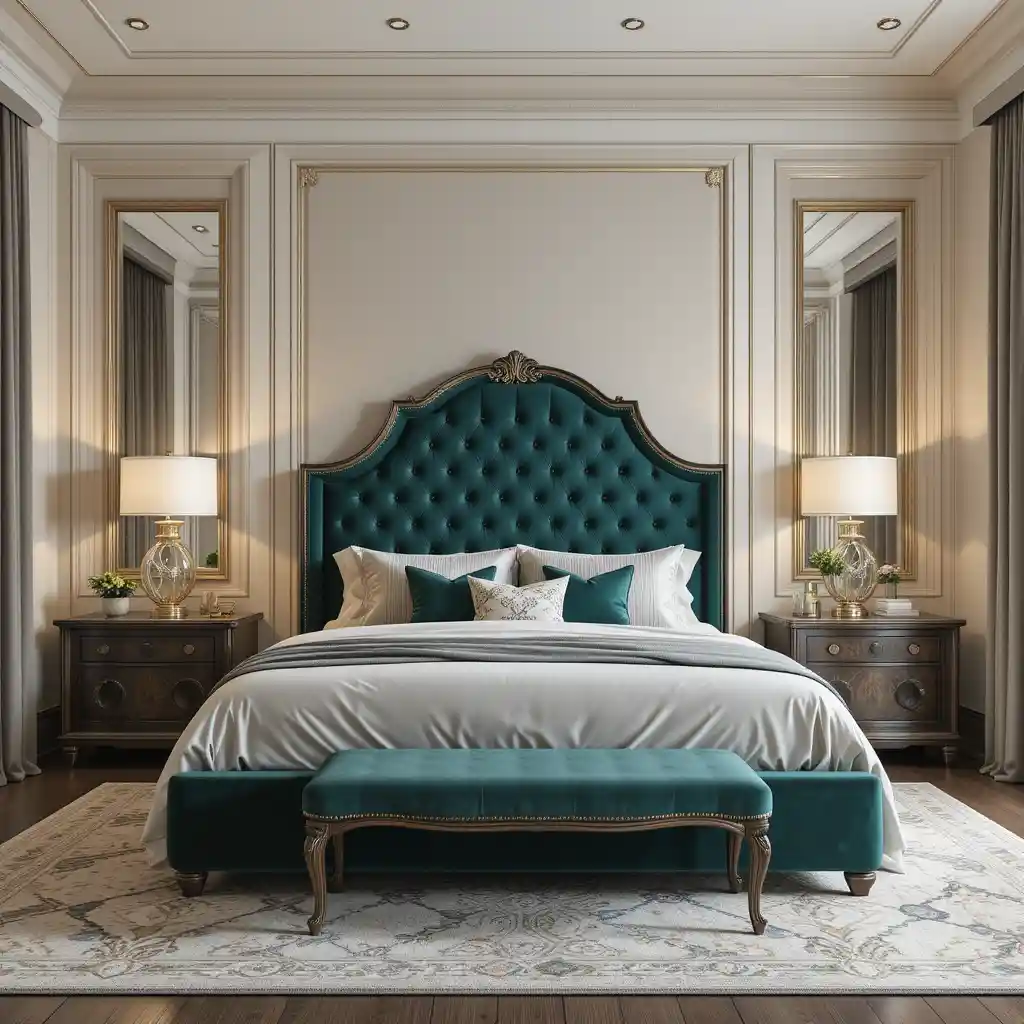
Opt for a thickly padded, custom-tufted, or channel-tufted headboard to bring immediate softness and a high-end feel to your bed. I always recommend my clients choose a performance velvet or a heavily textured linen fabric. Selecting a rich jewel tone like deep emerald or midnight navy establishes a bold aesthetic anchor, while a soft alabaster tone keeps the footprint visually light.
2. Statement Chandelier Above the Bed
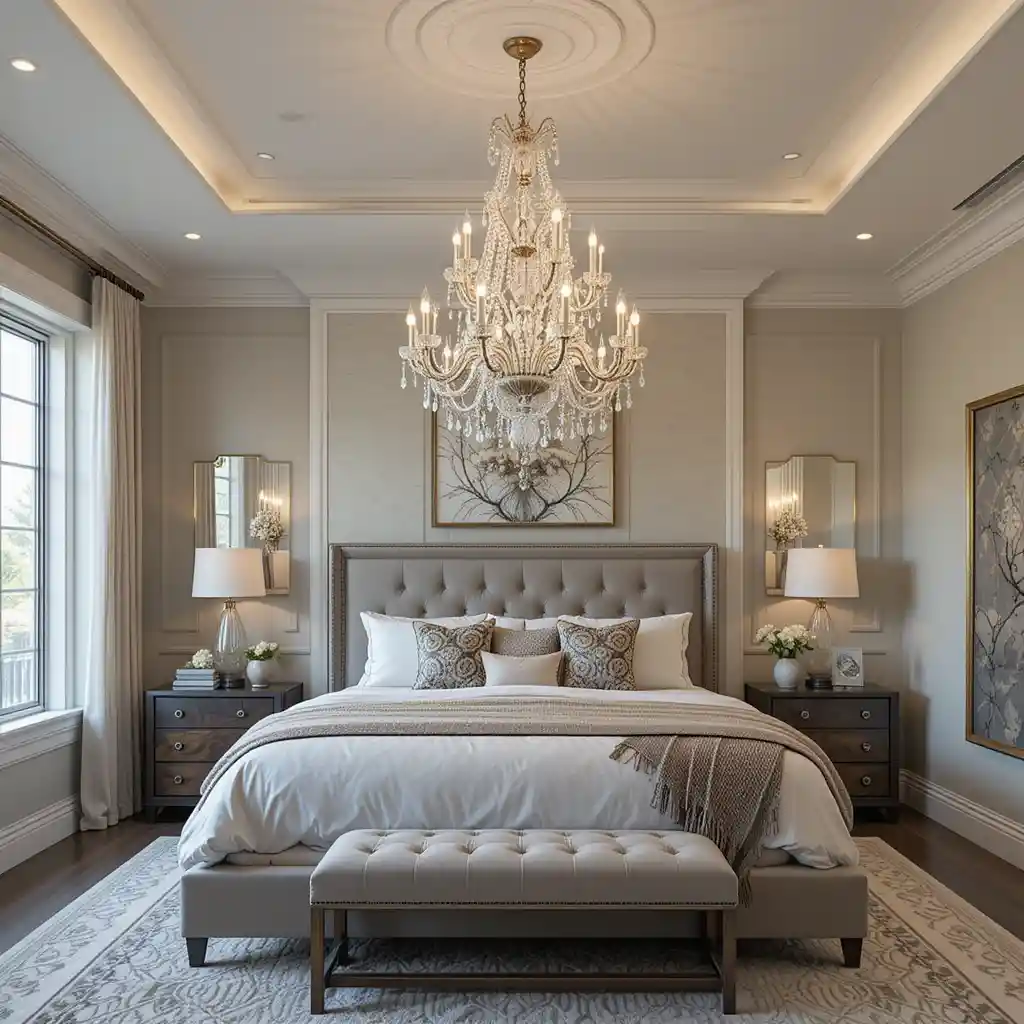
Illuminate your space with a grand, oversized chandelier hung directly over the lower third of the bed. This decorative fixture serves to fill the vertical scale of a larger room without crowding the actual floor space. Ensure the bottom of the chandelier hangs at least 7 feet above the floor to maintain safe clearance and optimal light diffusion.
3. Moody Wall Colors for Depth
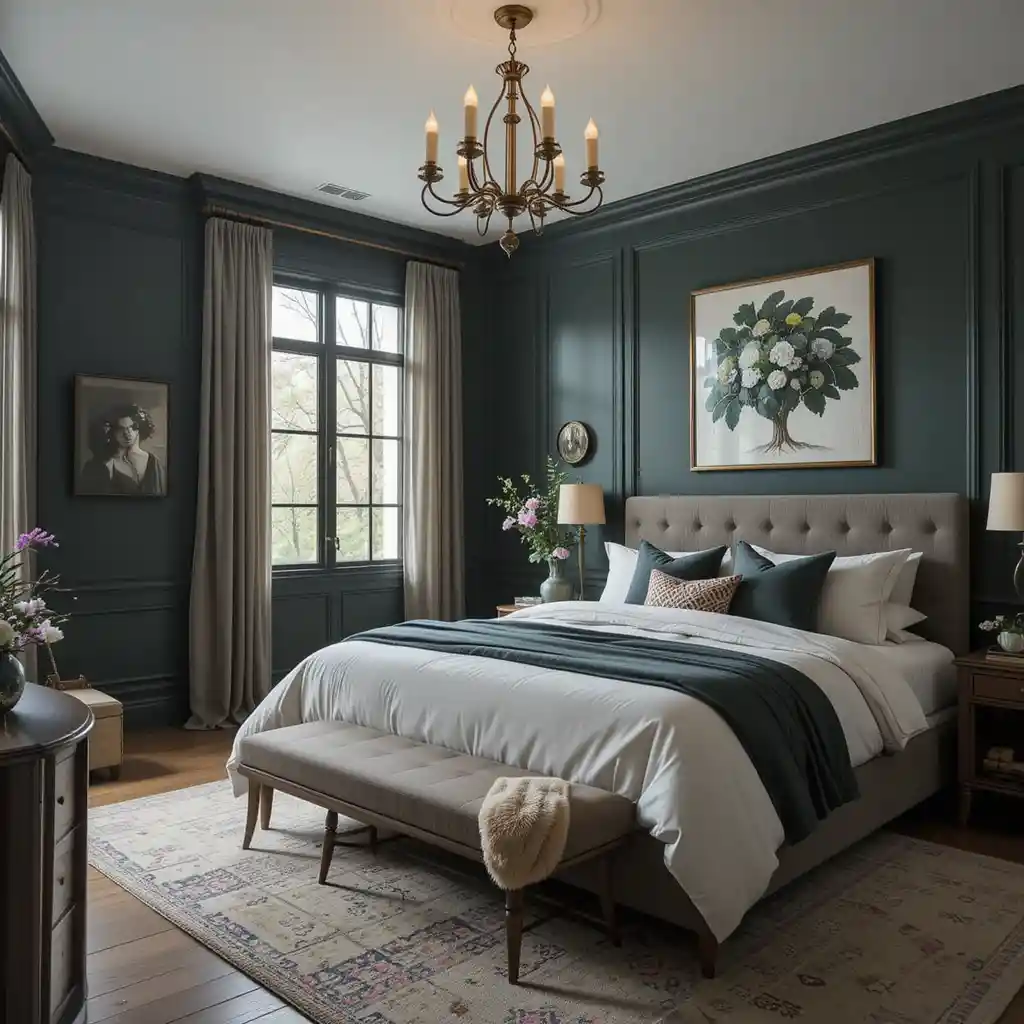
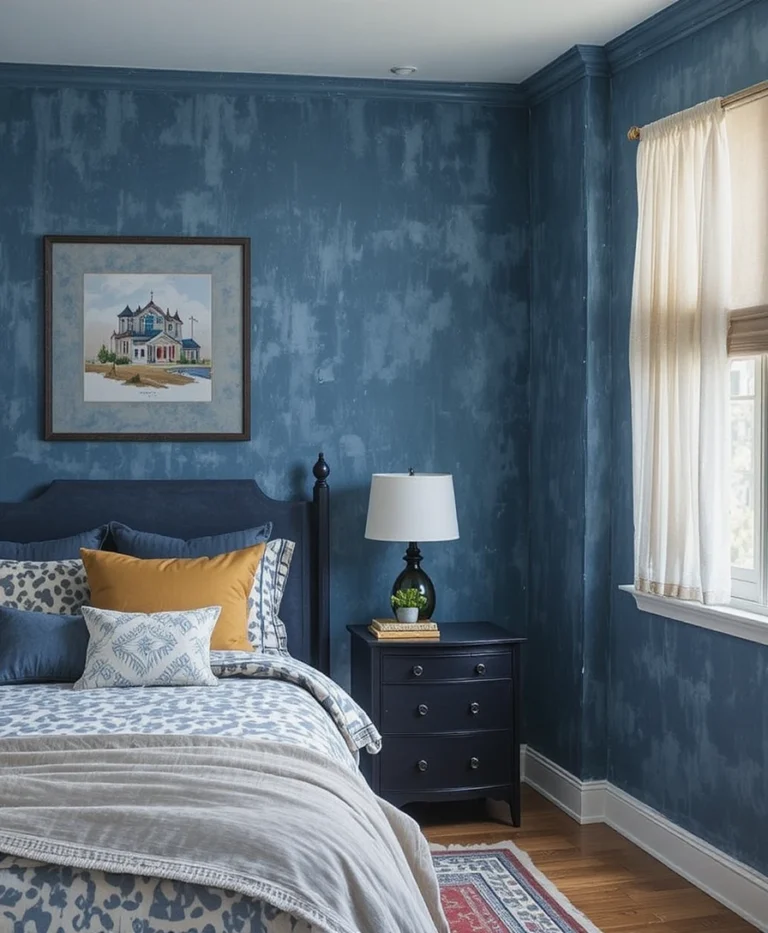
Paint your bedroom walls in deep charcoal, rich navy, or saturated forest green to introduce an immediate sense of intimacy to your large floor plan. Darker paint finishes cause the perimeters of the room to visually recede, creating a cozy, protective environment. Balance these heavy tones by pairing them with crisp, light-colored bedding and metallic accents to prevent the room from feeling cave-like.
4. Layered Bedding for Hotel Luxury
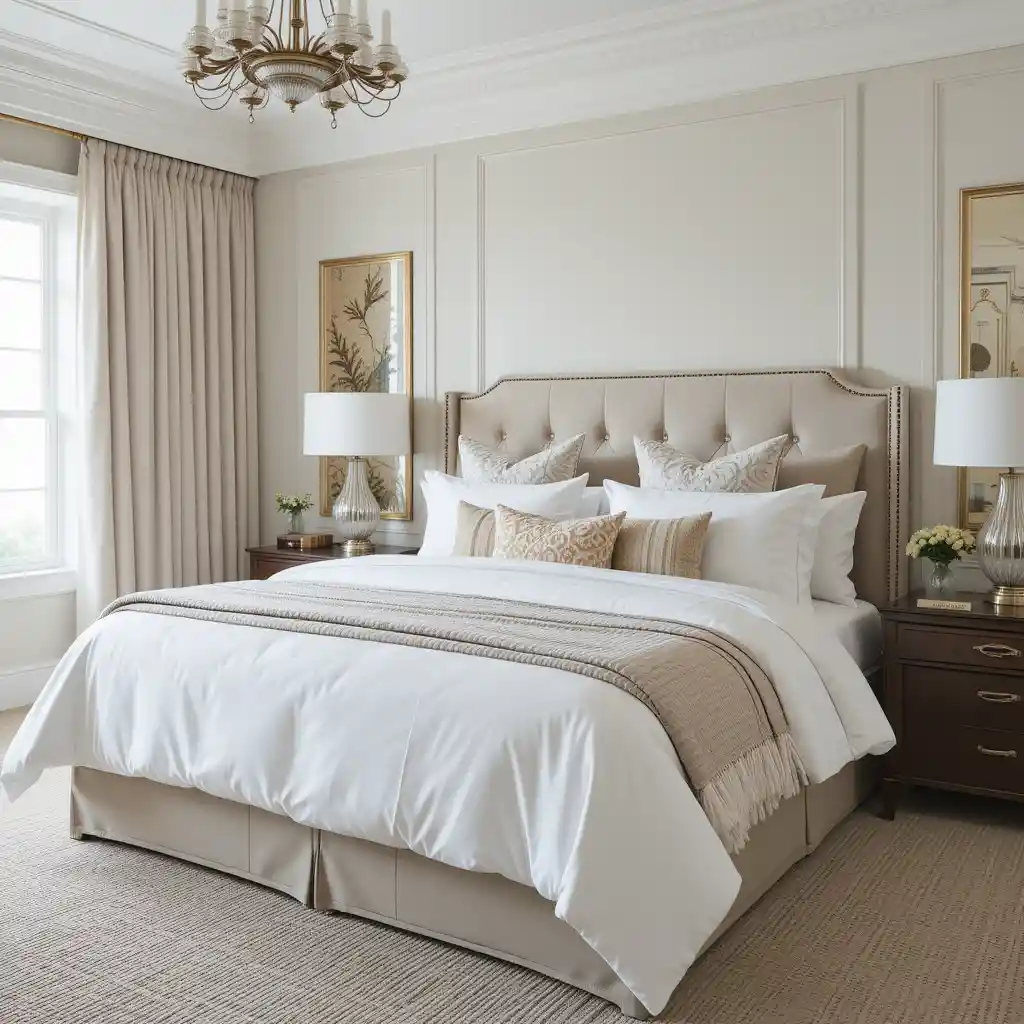
To capture that coveted 5-star resort aesthetic, you must master the art of tactile textile layering. Start with a crisp, 100% Egyptian cotton sheet set, add a plush down-alternative duvet, and drape a heavy waffle-weave blanket across the middle. Top the arrangement with an asymmetrical mix of sleeping pillows, large European shams, and a textured lumbar pillow.
5. Canopy Frames for a Dramatic Flair
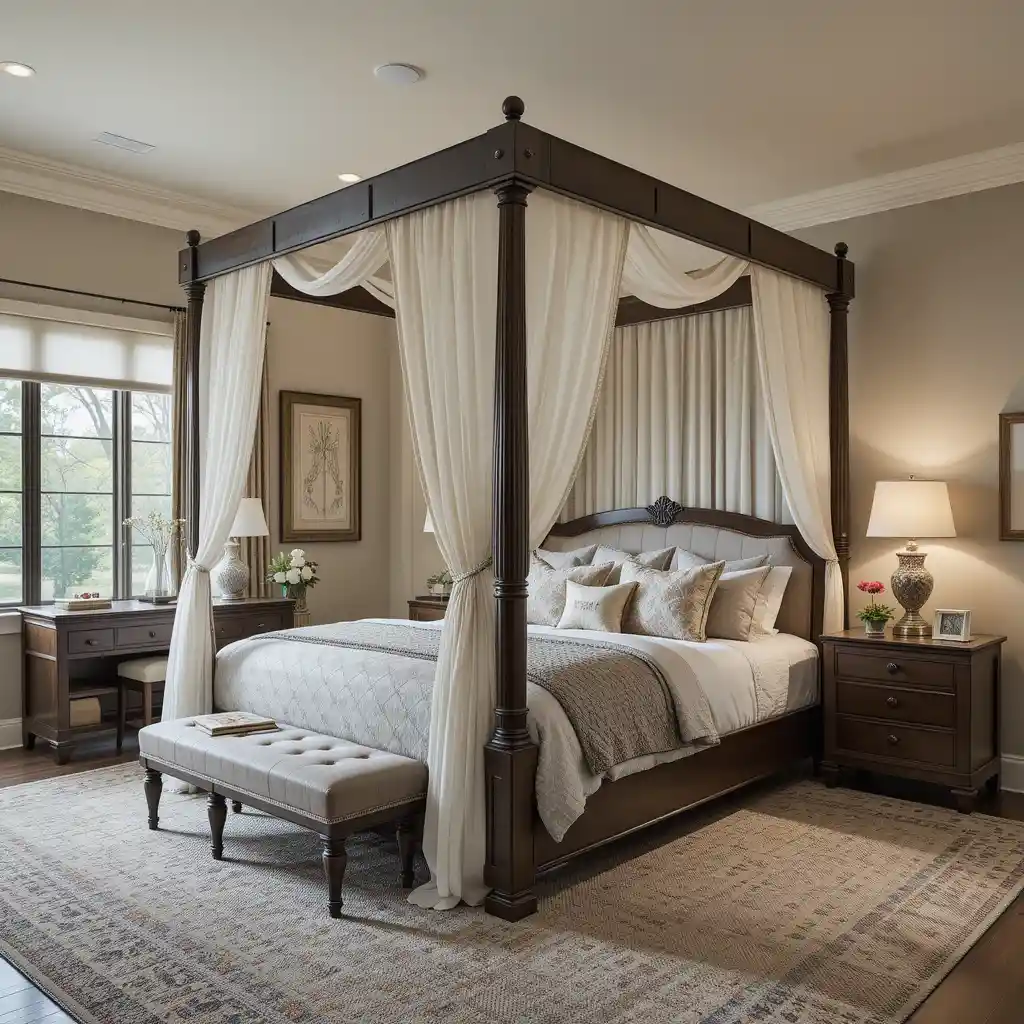
A modern matte-black iron or clean-lined wooden canopy bed frame adds instant architectural height and sophistication to a large space. If your style leans traditional, drape the upper frame with sheer, flowing white linen panels to soften the layout. For a more masculine, contemporary look, leave the geometric frame entirely bare to highlight its crisp lines.
6. Oversized Area Rugs to Anchor the Room
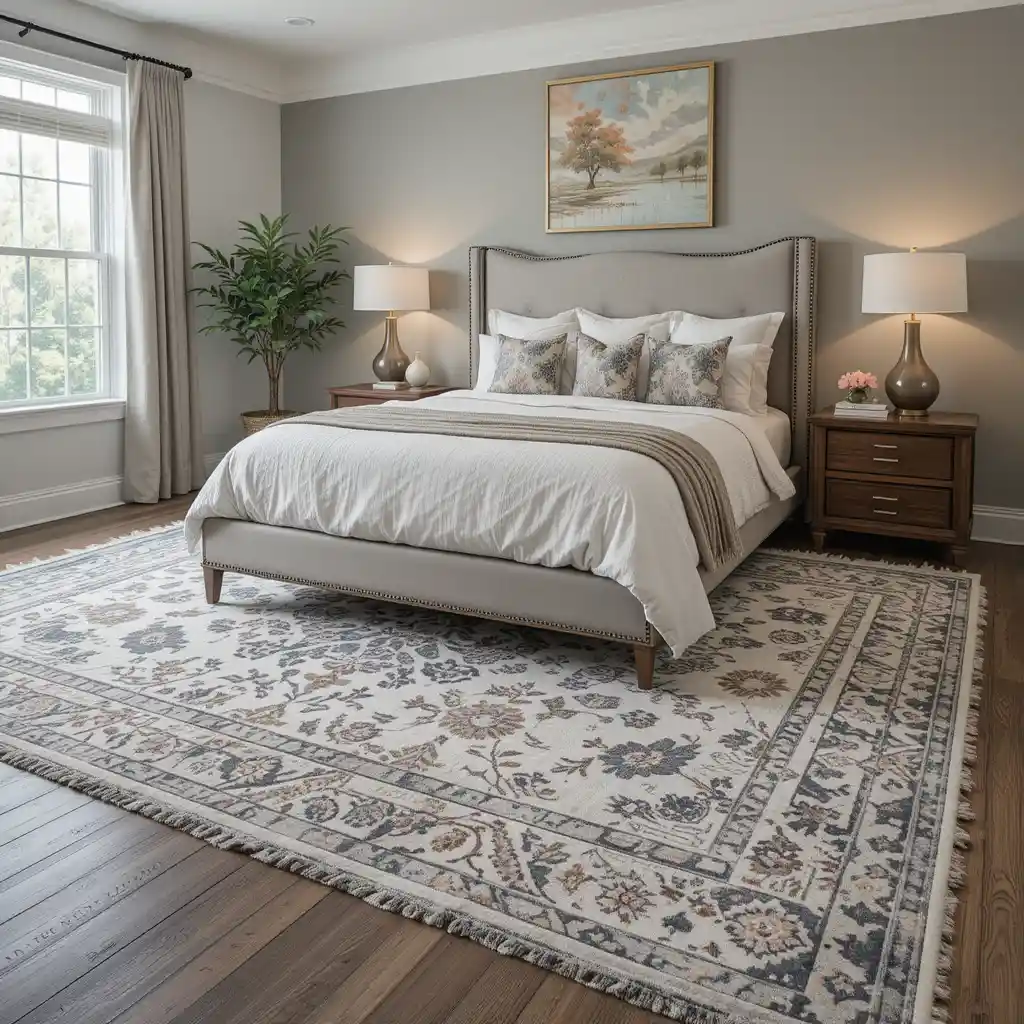
Never make the mistake of using a small rug beneath a massive bed frame. Place a large area rug completely under the bed, ensuring it extends at least 24 to 36 inches beyond the sides and foot of the mattress. This framing technique anchors the heavy furniture visually, protects your flooring, and gives your bare feet a soft place to land every morning.
7. Matching Nightstands with Style
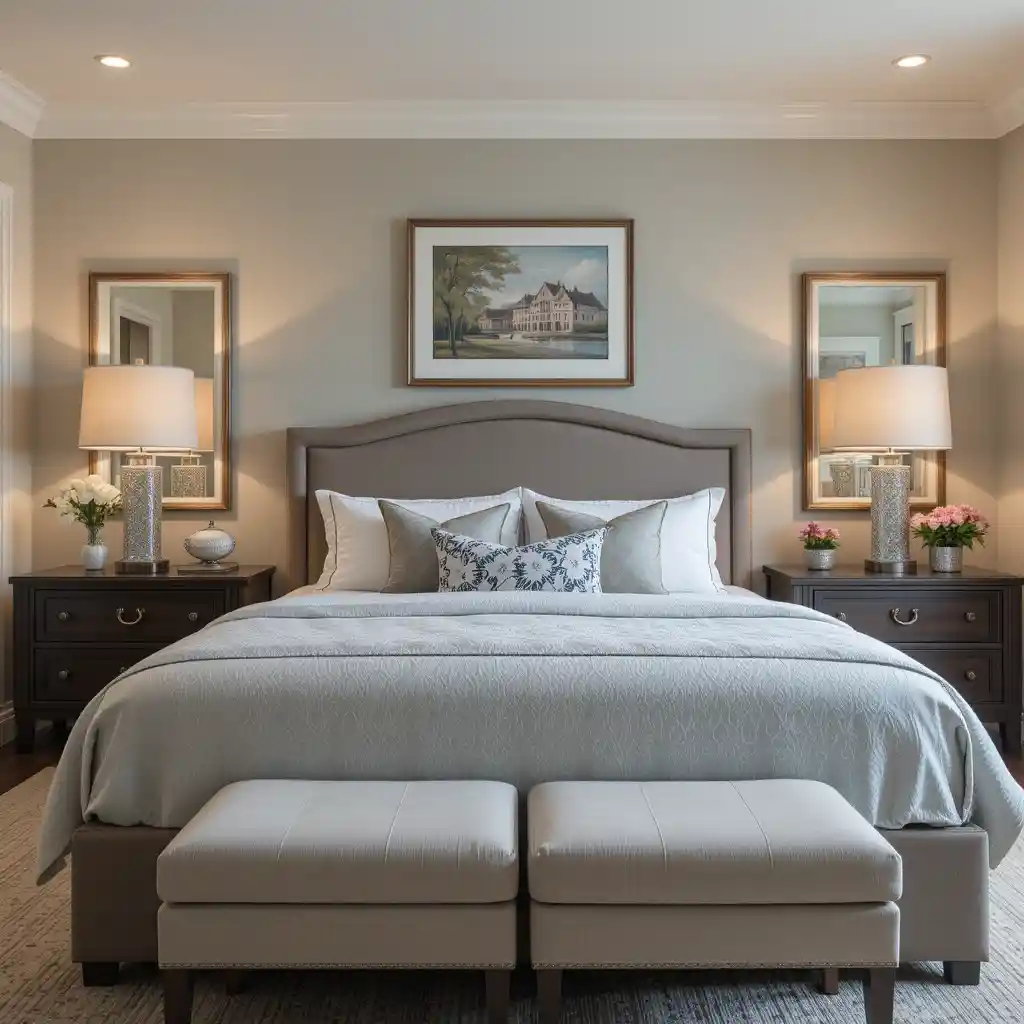
Invest in wide, substantial nightstands on either side of the bed to match the expansive scale of the frame. I find that nightstands measuring between 28 and 32 inches wide work best to maintain proper visual proportions. Choose models equipped with deep drawers to hide daily clutter, and top them with matching statement lamps to establish clean symmetry.
8. Accent Walls Behind the Bed
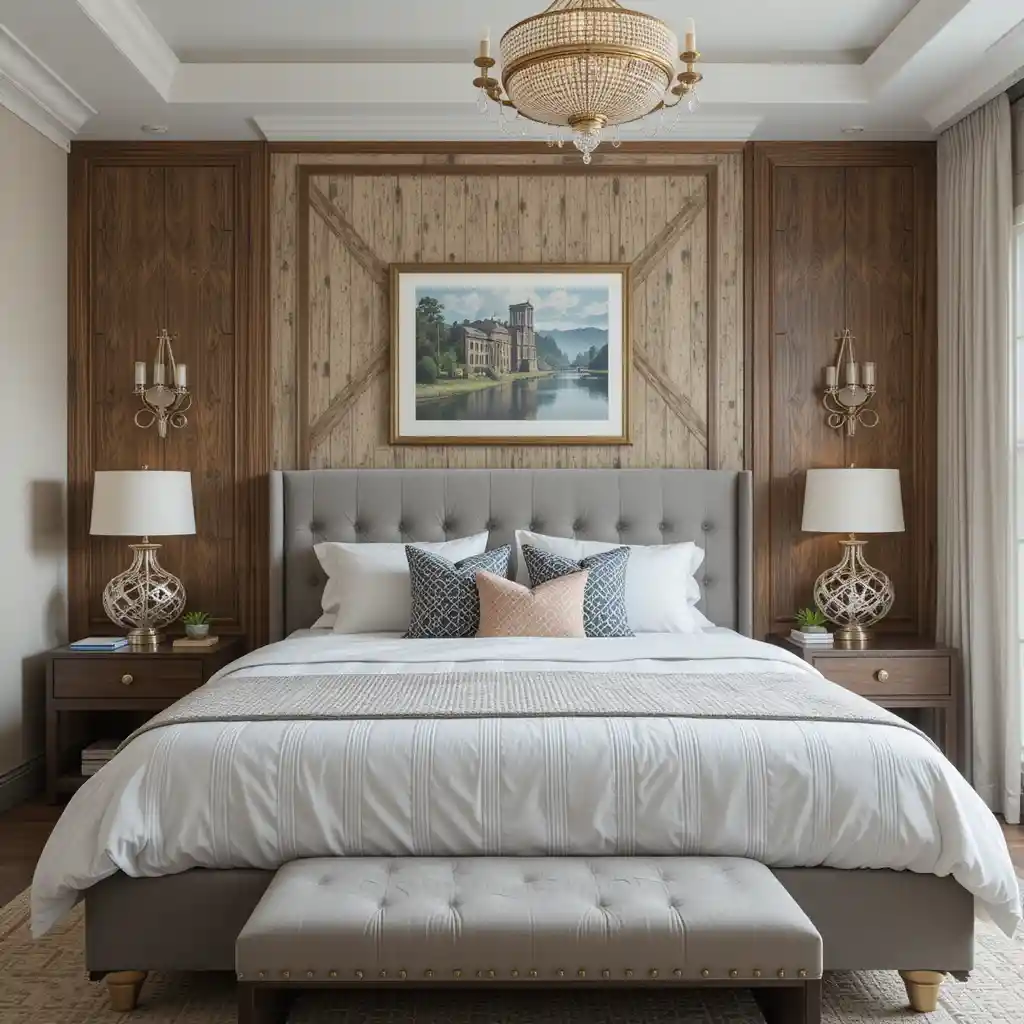
Create a powerful visual focal point by treating the wall directly behind your headboard with an architectural application. Consider floor-to-ceiling white oak vertical wood slats, a subtle grasscloth wallpaper, or a custom trim molding pattern. This treatment frames the bed beautifully and introduces rich artistic texture without occupying any usable square footage.
9. Tall Headboards for Vertical Impact
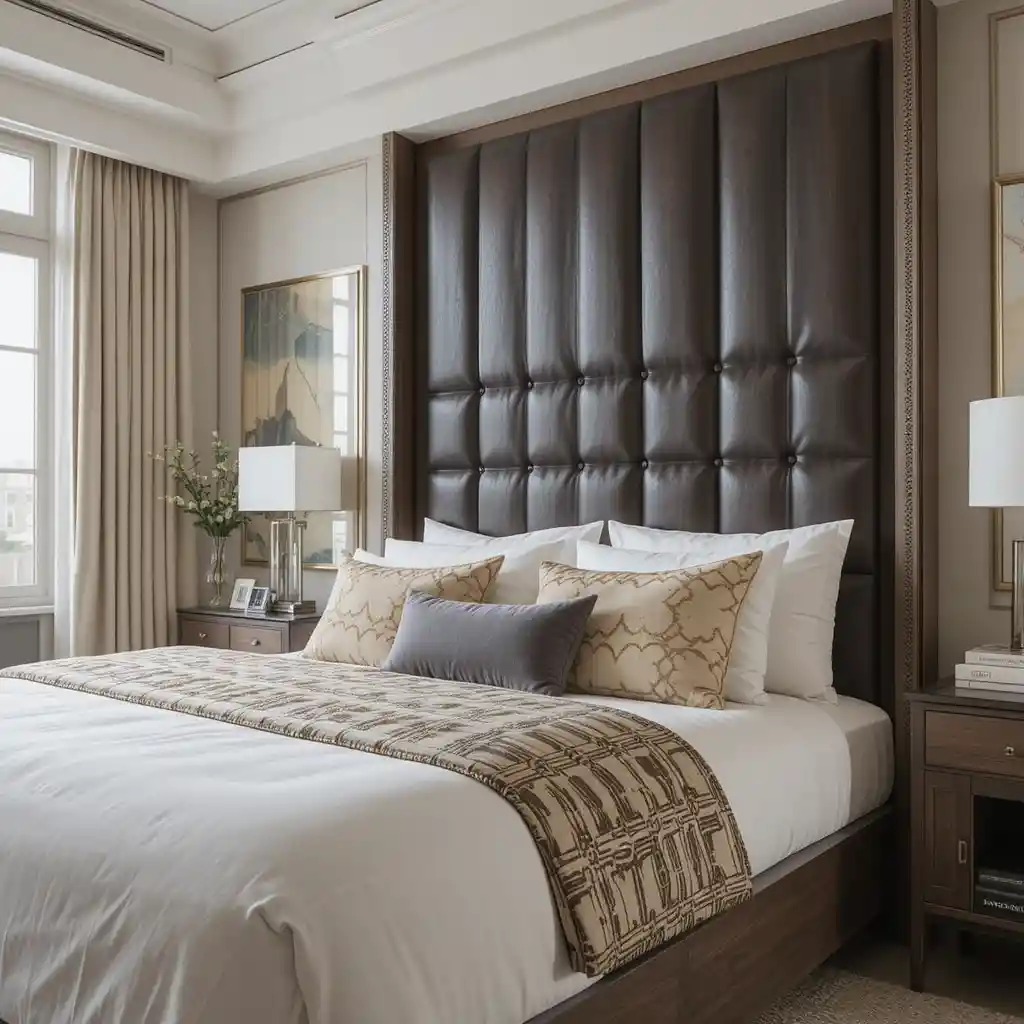
Go for an extended or extra-tall headboard design to draw the human eye upward and emphasize the grand architecture of a large master suite. Whether you opt for tufted leather, organic wood planks, or smooth wrapped fabric panels, a tall silhouette prevents the bed from looking dwarfed by high ceilings or expansive vertical walls.
10. Cozy Seating Area in the Corner
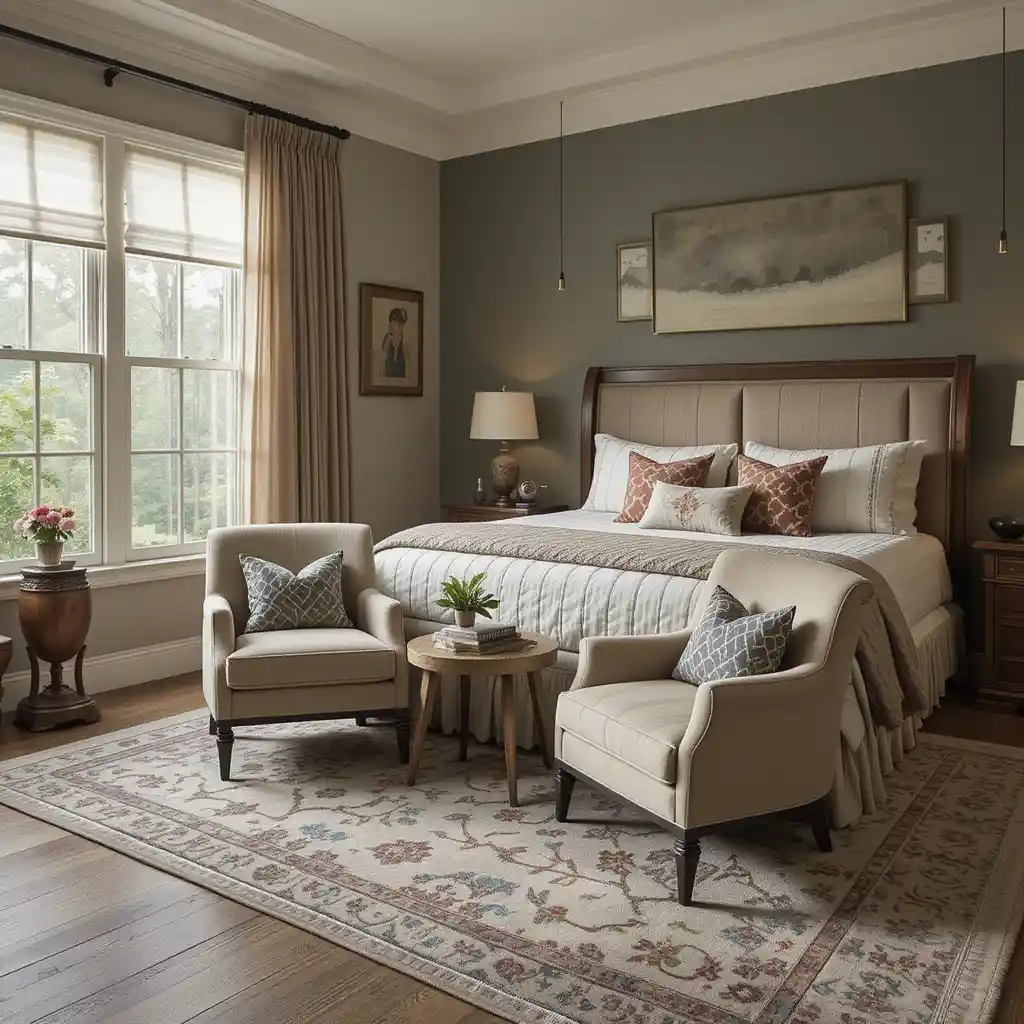
If your layout features unutilized floor space, transform an empty corner into a functional, private destination. Arrange two comfortable upholstered armchairs, a small marble-topped accent table, and a sleek floor lamp. This creates a dedicated micro-zone within your sanctuary that is perfect for reading books or enjoying a quiet morning coffee.
11. Floating Shelves as Minimalist Decor
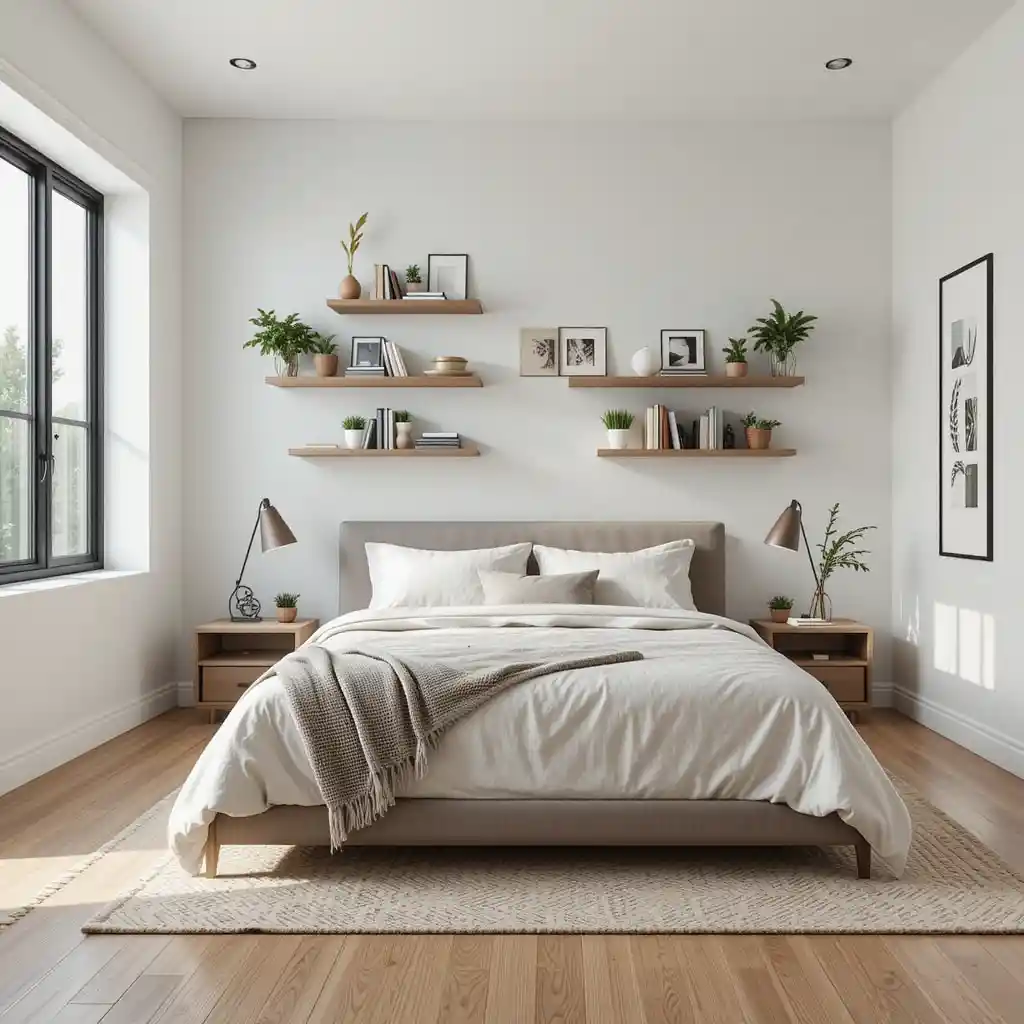
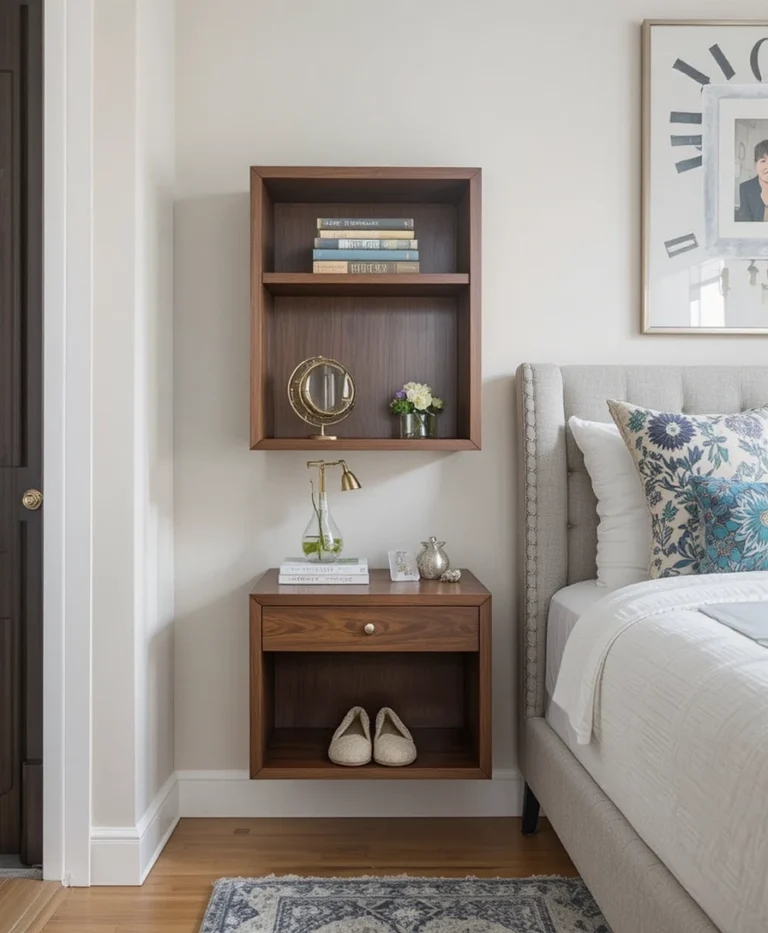
Install clean, hidden-bracket floating shelves along an empty side wall to display an edited curation of hardback books, small trailing plants, or framed art. Floating ledges provide wonderful extra storage and visual interest without taking up valuable floor space, keeping your main walking paths open and entirely unburdened.
12. Soft Ambient Lighting Options
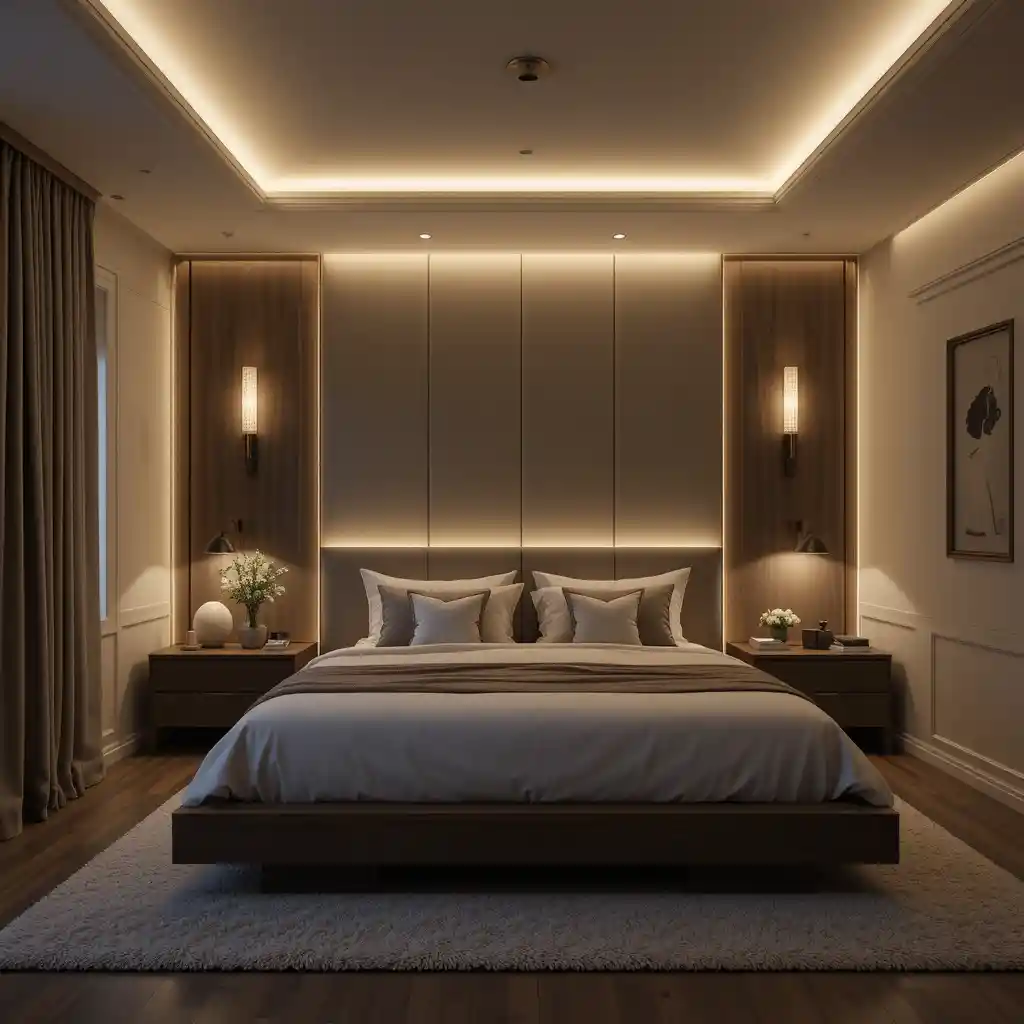
To transition your mind into a restful state, implement multiple layers of indirect, low-voltage illumination. Think flush wall sconces flanking the bed, dimmable table lamps, or hidden LED light strips mounted directly behind the headboard panel. This soft glowing layout eliminates harsh glare, creating a deeply relaxing, spa-like evening atmosphere.
13. Dual-Purpose Benches at the Foot of the Bed
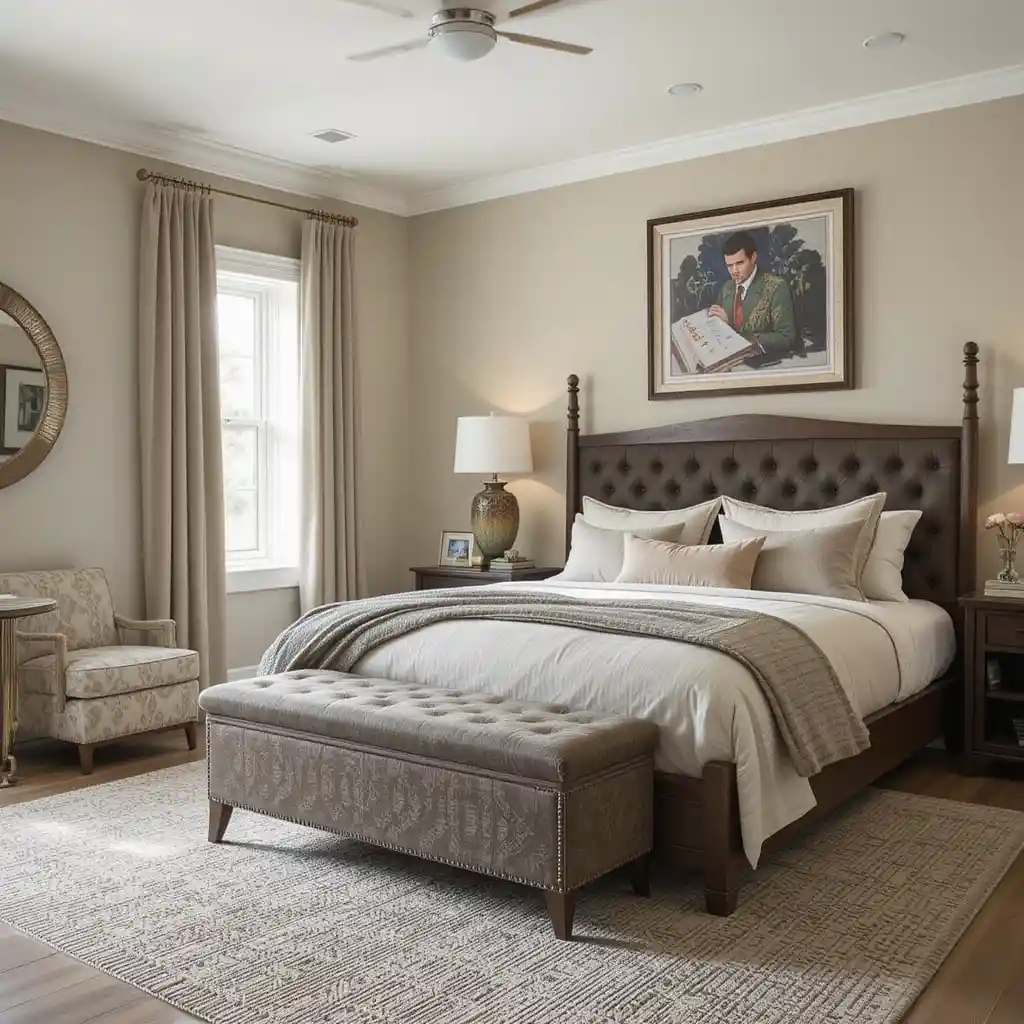
Position an elegant storage bench, a tufted ottoman, or a clean mid-century modern wooden bench directly at the foot of your mattress. This addition should measure roughly two-thirds the total width of the bed. It provides a practical place to sit while putting on shoes, stores extra linens out of sight, and contributes to a balanced layout.
14. Wall-to-Wall Curtains for Elegance
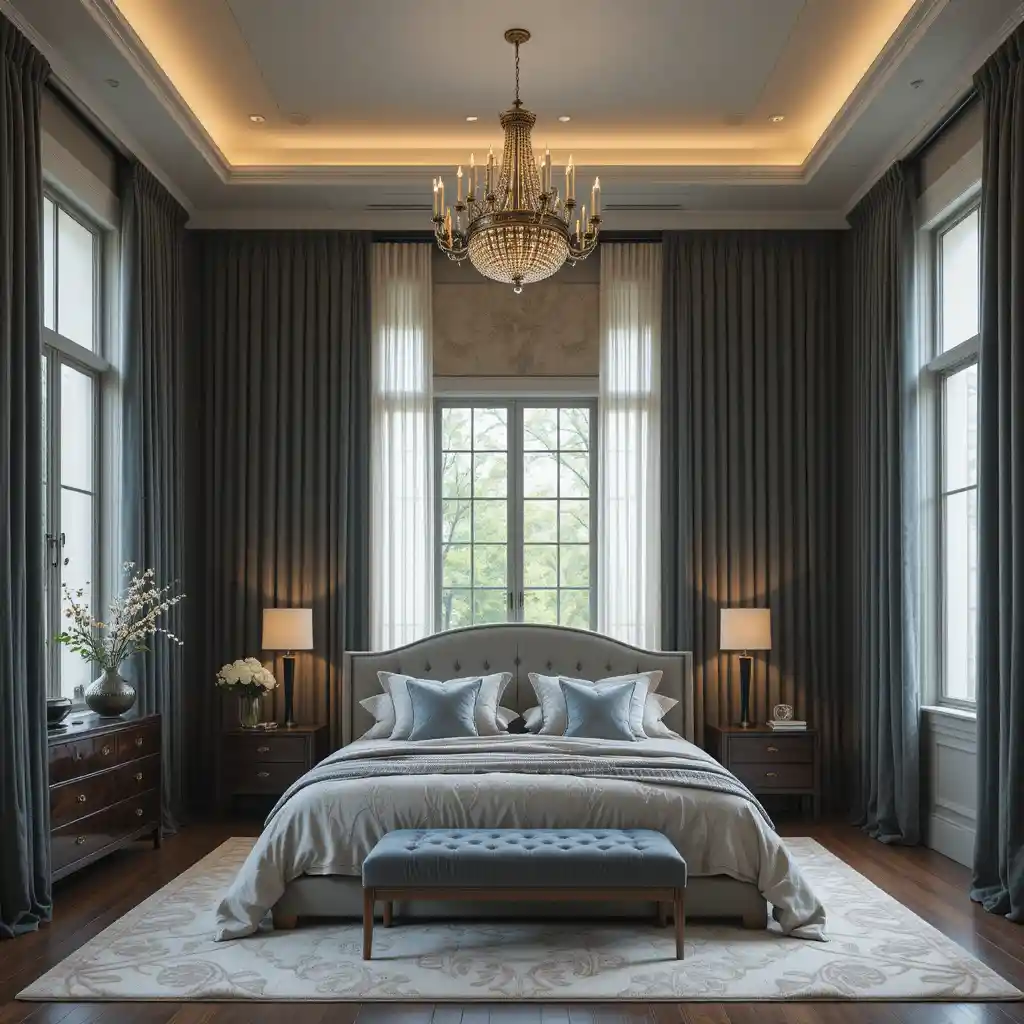
Mount your curtain rods directly at the ceiling line and extend the drapery panels from wall to wall. This pro styling hack exaggerates your actual ceiling height, making the entire suite feel significantly grander and more luxurious. Choose high-quality blackout fabrics like heavy velvet or dense linen to ensure optimal light blocking for a better night’s rest.
15. Earth-Toned Themes for Natural Comfort
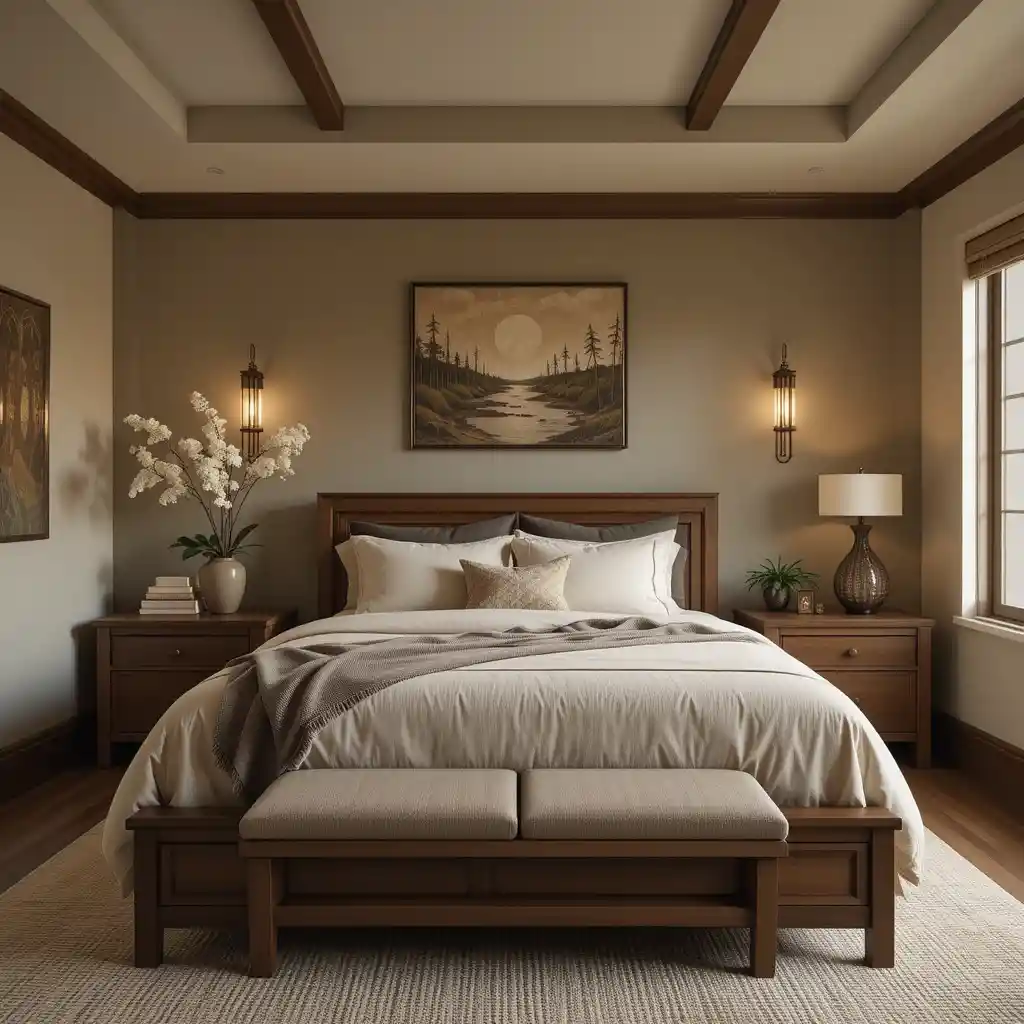
Build a grounded, tranquil, and comforting environment by utilizing a palette composed of rich clay browns, soft warm beiges, and muted moss greens. Pair these organic paint choices with natural solid wood furniture pieces and unglazed ceramic accessories. This connection to nature promotes immediate relaxation and emotional balance within the space.
16. Modern Minimalist Approach
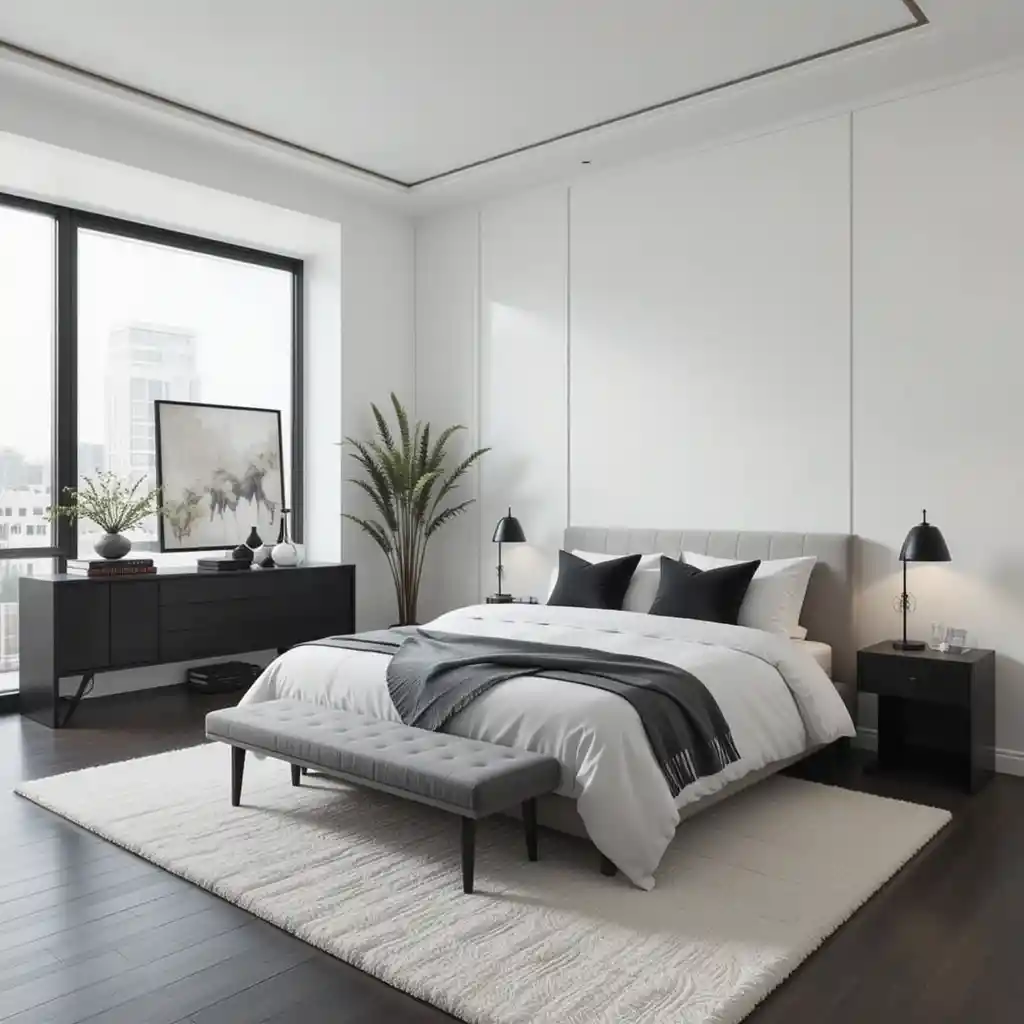
For a sleek, entirely calm environment, keep your layout completely uncluttered with simple geometric furniture silhouettes and crisp white walls. Introduce contrast through sharp matte-black metal hardware and charcoal gray textiles. This style emphasizes open space and negative areas, allowing your mind to rest free from visual distractions.
17. Built-In Wall Niches or Alcoves
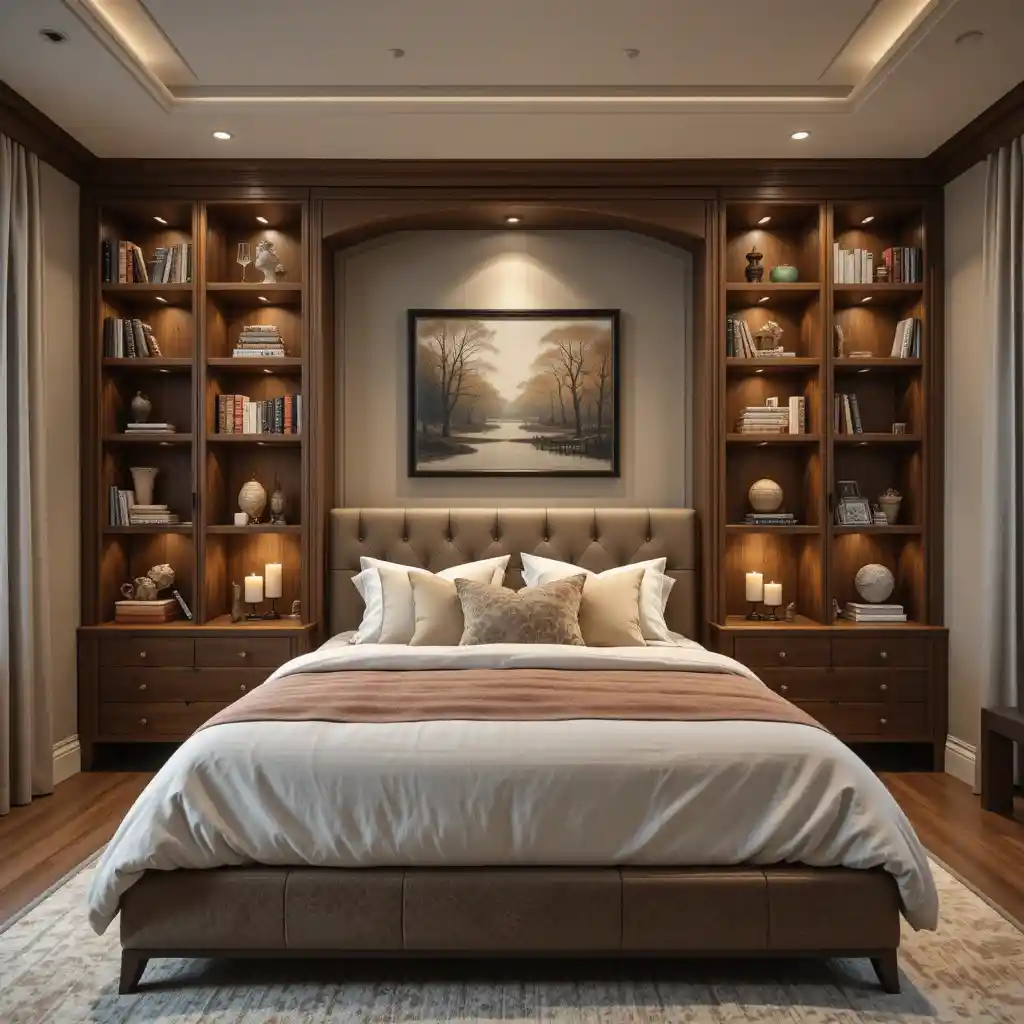
Incorporate custom architectural shelving niches or shallow wall alcoves directly into the drywall structure surrounding the bed. These recessed zones offer a highly polished, sleek alternative to traditional protruding furniture. Use them to hold evening candles, essential books, or minimal decor accents while preserving clean walking borders.
18. Metallic Accents for Glam Appeal
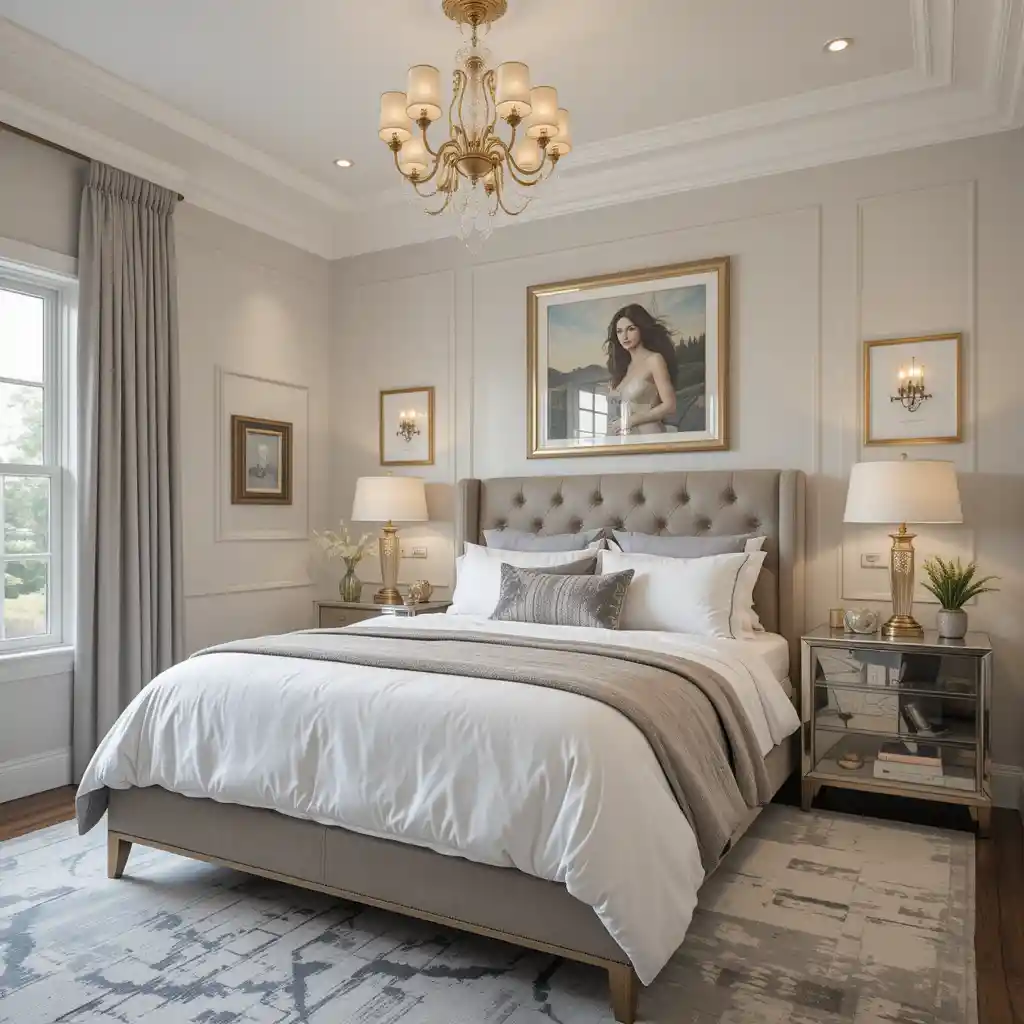
Incorporate high-quality metallic finishes like brushed brass, polished gold, or antique silver through your selection of light fixtures, picture frames, and drawer pulls. These reflective surfaces catch natural daylight beautifully and instantly elevate the luxury level of the room, adding a subtle touch of sophisticated sparkle.
19. Dark Wood Furniture for Rich Texture
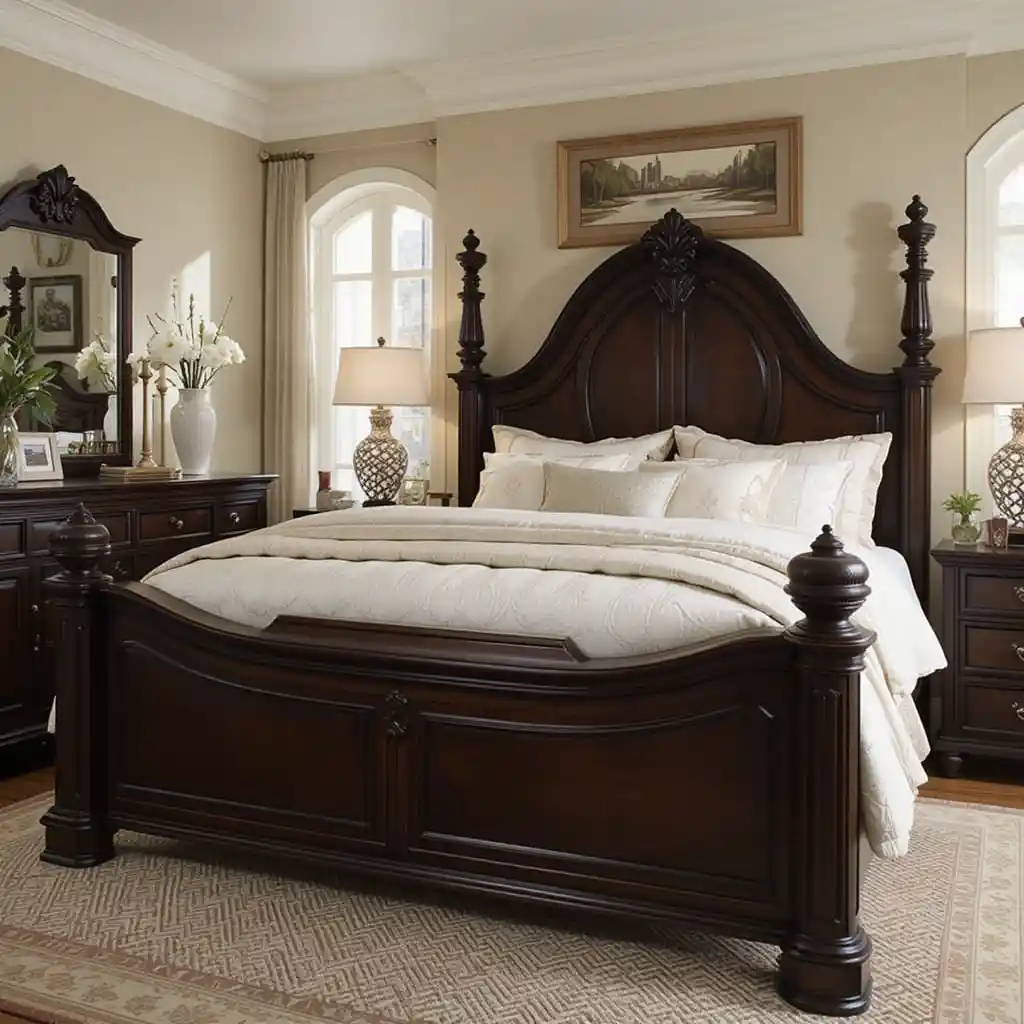
Opt for rich, dark-stained wood finishes like espresso walnut, deep mahogany, or black ash for your primary dressers and nightstands. These heavy wood grains bring an element of classic heritage and structural permanence into the layout. Pair them with light, airy bedding linens to create a beautiful, high-contrast composition.
20. Personalized Wall Art Above the Bed
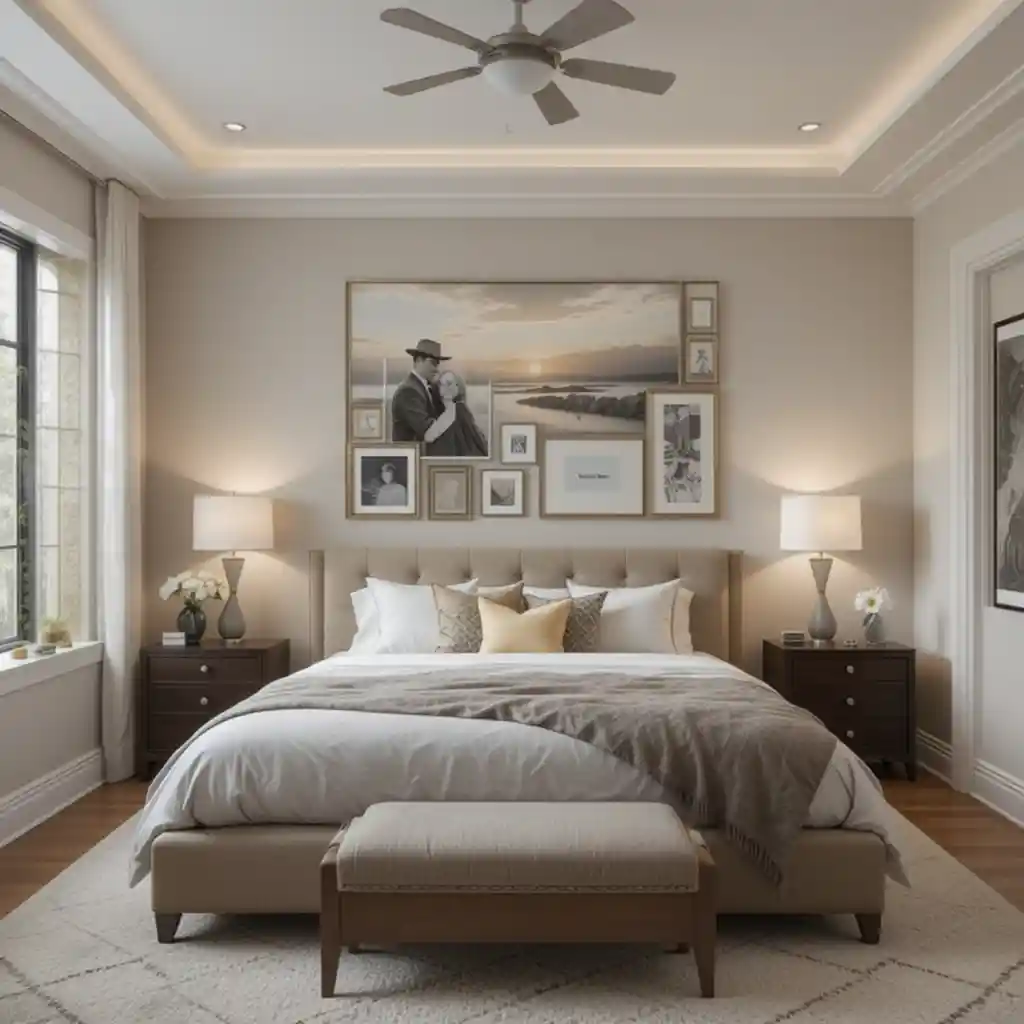
Hang an oversized, statement-making abstract canvas or assemble a perfectly balanced gallery wall directly above your headboard to personalize your space. Ensure the art arrangement spans roughly two-thirds the width of the bed to maintain proper scale. Use matching frames and matboards to keep the final presentation looking gallery-grade.
21. Monochrome Magic for Clean Elegance
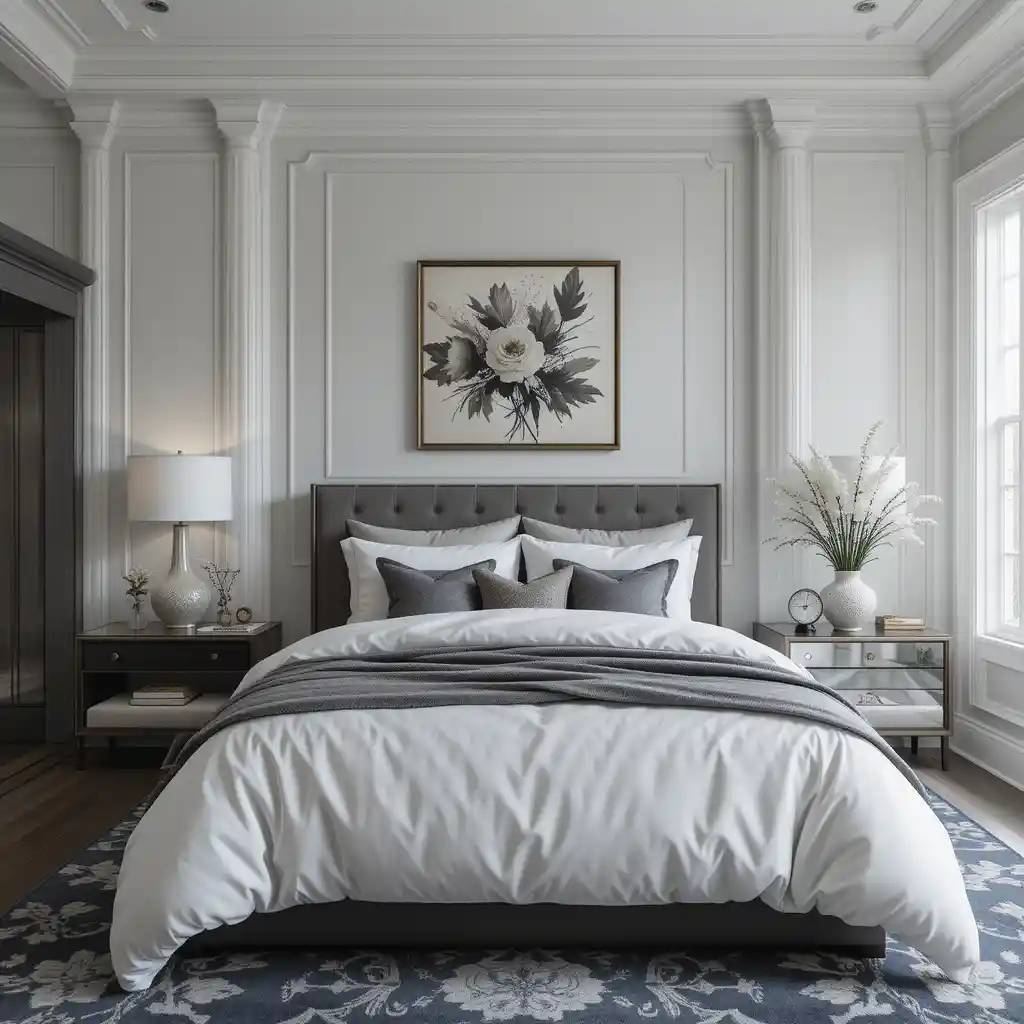
Choose one specific color family and layer varying shades, tones, and textures of it across your walls, bedding, rugs, and window treatments. For instance, a monochromatic soft gray room utilizing silk sheets, a wool rug, and matte walls feels incredibly harmonious, high-design, and effortless to the eye.
22. Fireplace or Faux Fireplace Feature
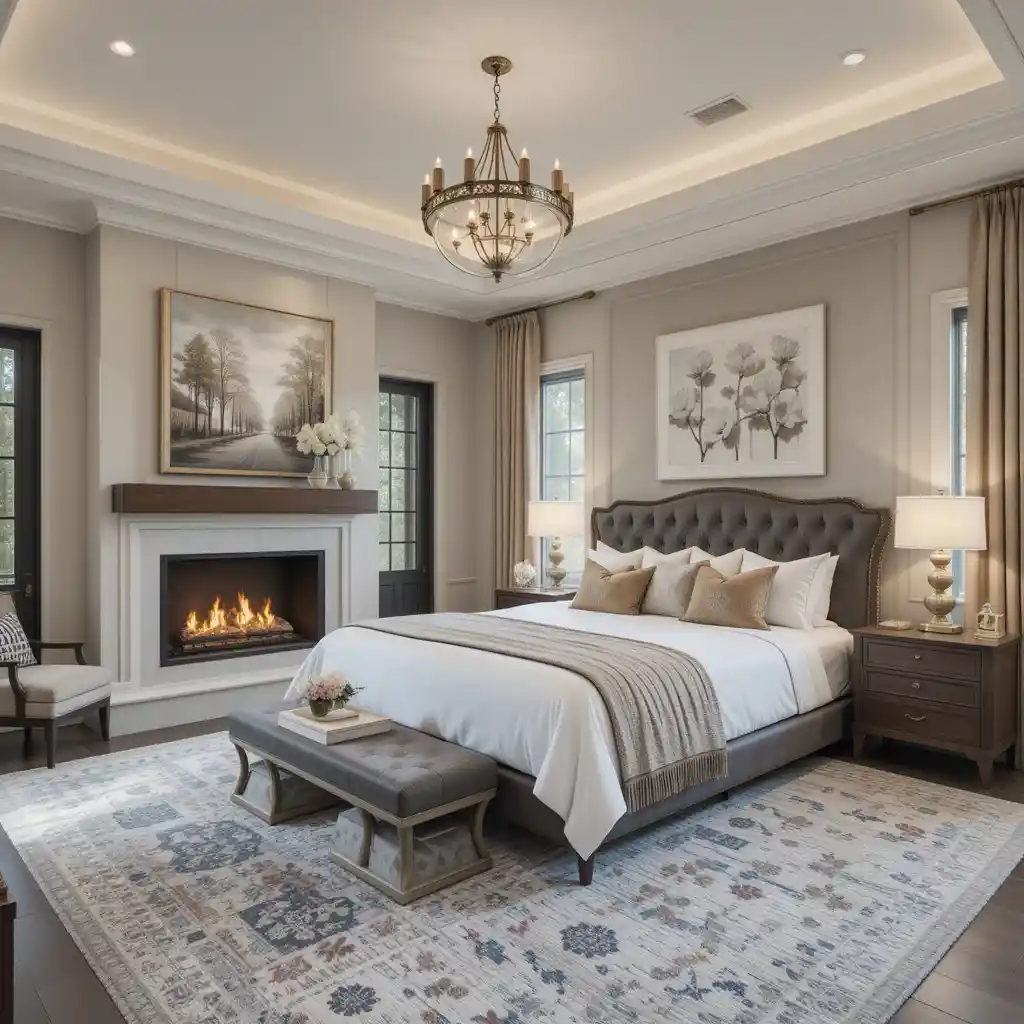
Introduce an electric, gas, or decorative faux fireplace mantle along the wall opposite your bed. A fireplace serves as an incredible architectural secondary focal point, anchoring the room’s layout while providing soothing visual warmth. This premium feature instantly upgrades the luxury level of your home, transforming the suite into a regal retreat.
Optical Tricks and Pro Styling Hacks
When styling a large room centered around a massive bed frame, you can utilize clever interior design tricks to maximize the visual proportions.
The Symmetrical Extension: If your nightstands feel too small for the room, hang oversized vertical mirrors directly behind them. This mirrors the light, creates an illusion of endless depth, and visually expands the horizontal footprint of the headboard wall.
The Leg Secret: To keep a large bed from looking like a giant block of wood in a smaller room, choose a bed frame that sits on elevated, slender legs rather than a solid box platform. Seeing the floor continue underneath the bed instantly tricks the brain into perceiving more open square footage.
The Science of Large Spatial Layouts: Surprising Facts
The environmental physics and spatial volume of your sleeping quarters directly affect your cognitive health and sensory decompression.
The Scale and Anxiety Study: Data from environmental psychology journals indicates that when a piece of furniture takes up more than 40% of a room’s total volume, it triggers a subconscious claustrophobic response in the human brain, elevating nighttime stress levels.
By utilizing a king mattress within a space that allows for at least 3 feet of open perimeter border, you preserve a healthy ratio of positive-to-negative space. This structural balance lowers your baseline cortisol production, allowing your nervous system to transition smoothly into deep, restorative REM sleep cycles.
Frequently Asked Questions (FAQ)
What is the minimum room size required for a king size bed?
The absolute minimum recommended room size for a standard king bed is 12 feet by 12 feet. However, for a truly comfortable layout that accommodates nightstands and walking paths, a room size of 14 feet by 16 feet is highly preferred.
How do I stop a king bed from making my room look cluttered?
Focus on incorporating closed storage options like dressers with hidden pulls, utilize a low-profile platform frame with legs to expose the floor, and stick to a clean, cohesive color palette to reduce visual noise.
Can I use two different nightstands in a master bedroom layout?
Yes, but you must maintain visual balance. Ensure both mismatched nightstands are the exact same height and share a common element, such as matching tabletop lamps or identical hardware finishes, to keep the layout feeling intentional.
Final Thoughts
Crafting a luxurious master suite is all about honoring the generous proportions of your space while infusing it with deep comfort and personal style. A grand bed frame is a magnificent asset, but it requires thoughtful framing—through oversized textiles, symmetrical lighting, and proper scale—to truly shine.
As you begin implementing these 22 ideas, focus first on establishing your structural baselines, like the correct rug dimensions and balanced nightstands. Take your time selecting textures that soothe your senses, and remember that a well-designed room is one that supports your rest, celebrates your journey, and welcomes you home every single night.