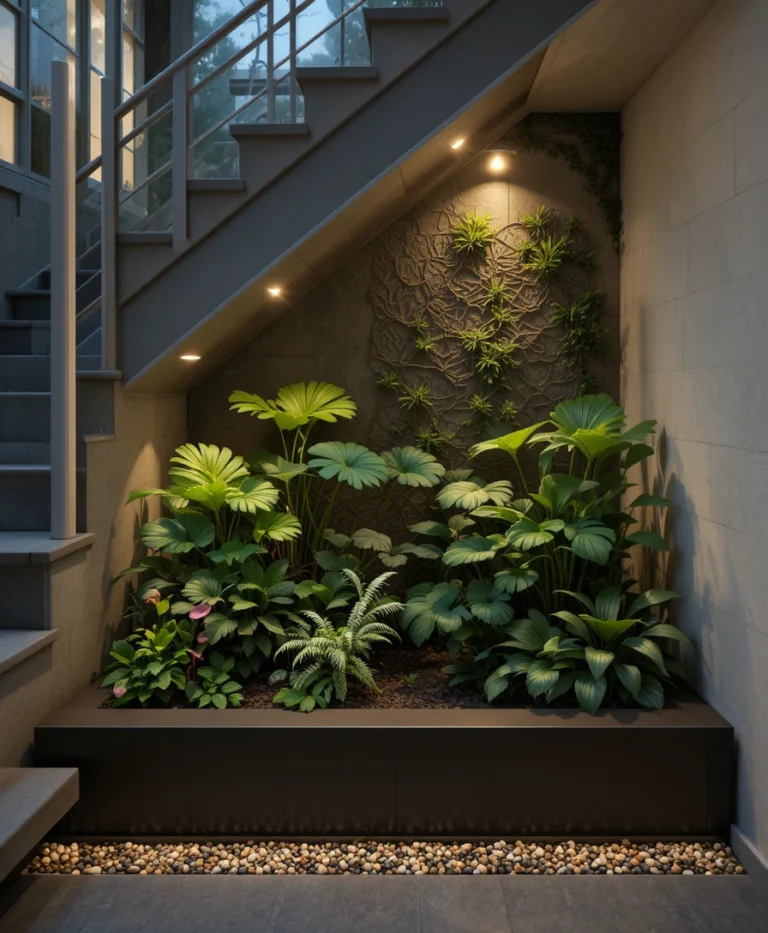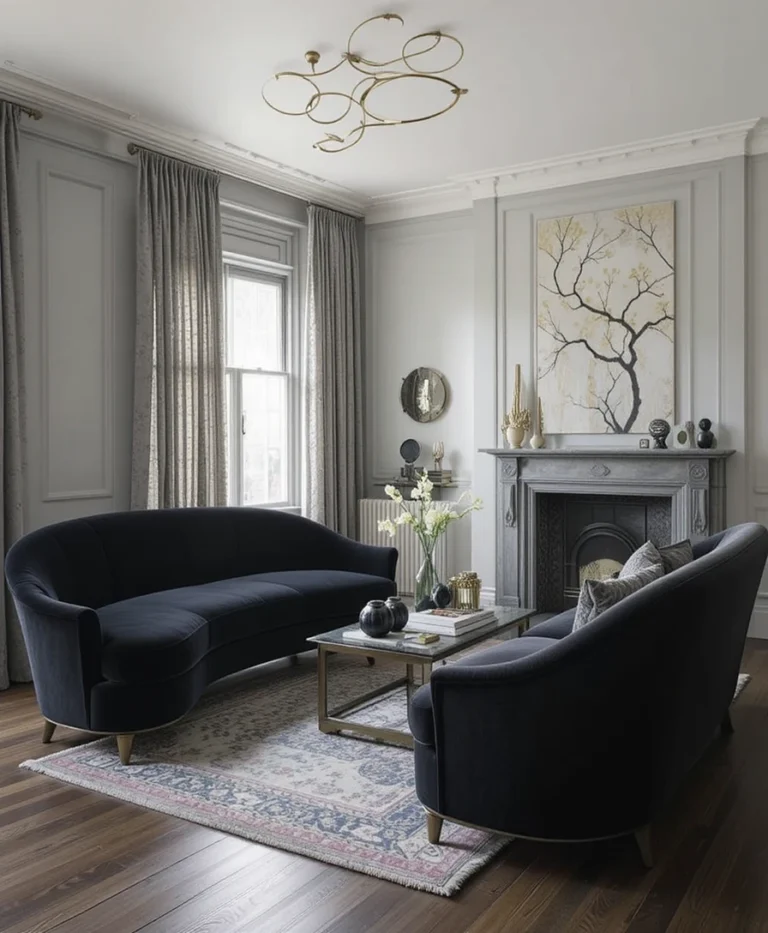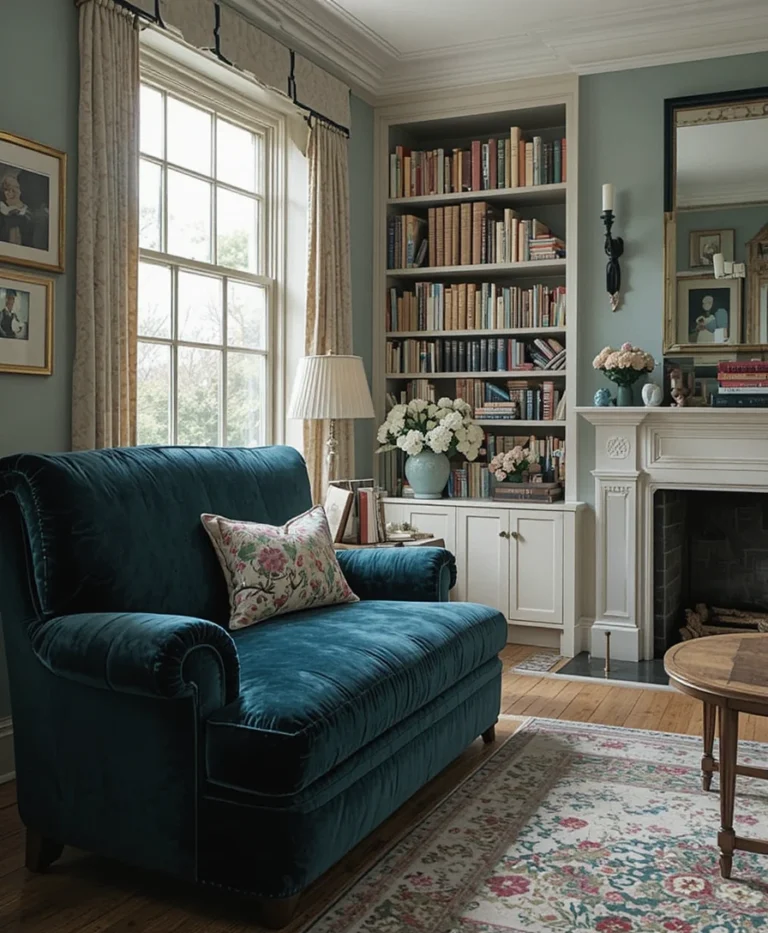

Looking to swap stark white walls for something with more soul? This guide breaks down 20 striking ways to bring moody minimalist interiors into any space — from charcoal palettes to candlelit corners — without losing that clean, uncluttered feel.
I’ve spent years studying how spaces make us feel, and nothing has captivated me quite like moody minimalist interiors. There’s a quiet confidence in a room that doesn’t shout for attention but still manages to hold it. Moody minimalist interiors aren’t about darkness for darkness’s sake — they’re about restraint, depth, and the kind of atmosphere that makes you want to linger a little longer. Below, I’m sharing twenty ideas I’ve genuinely fallen for, each one a different way to bring moody minimalist interiors into your own home.
1. Charcoal Walls That Whisper Drama
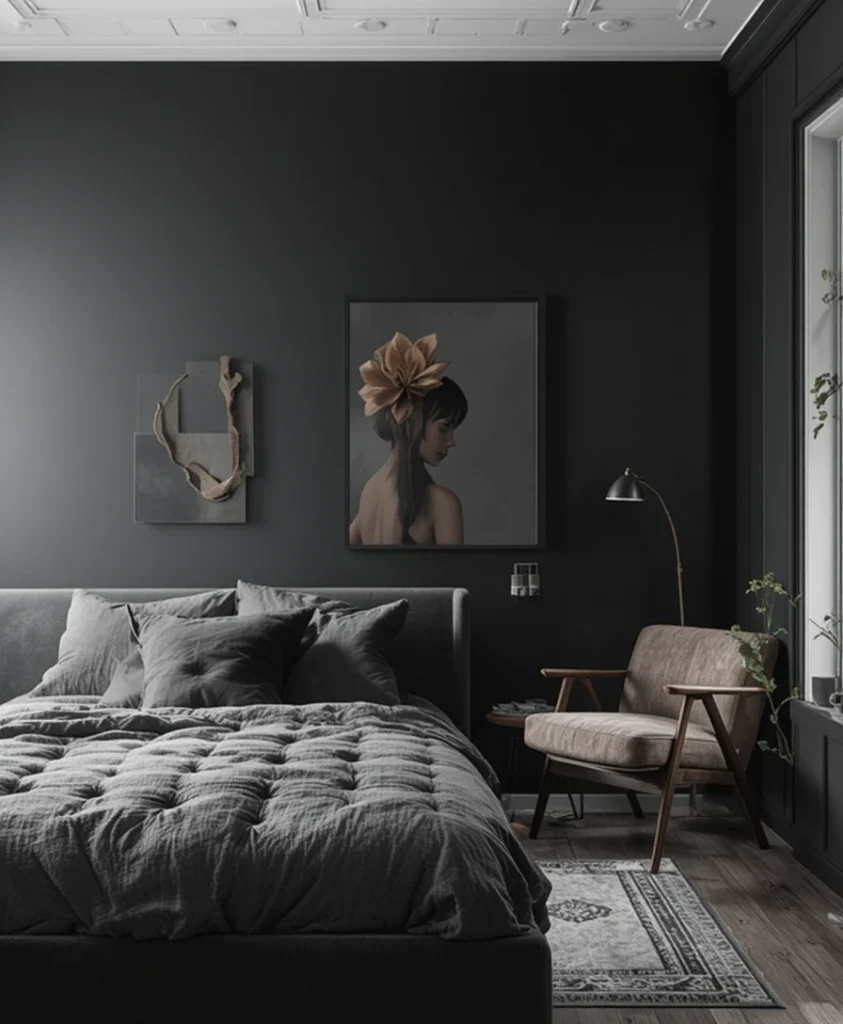
I’ll admit it — the first time I painted a room in deep charcoal, I worried it would feel like a cave. Instead, it felt like a hug. The trick is pairing it with matte finishes so light doesn’t bounce harshly off the surface. It grounds a room instantly, giving everything else inside it a sense of quiet importance.
2. Matte Black Fixtures as Quiet Statements
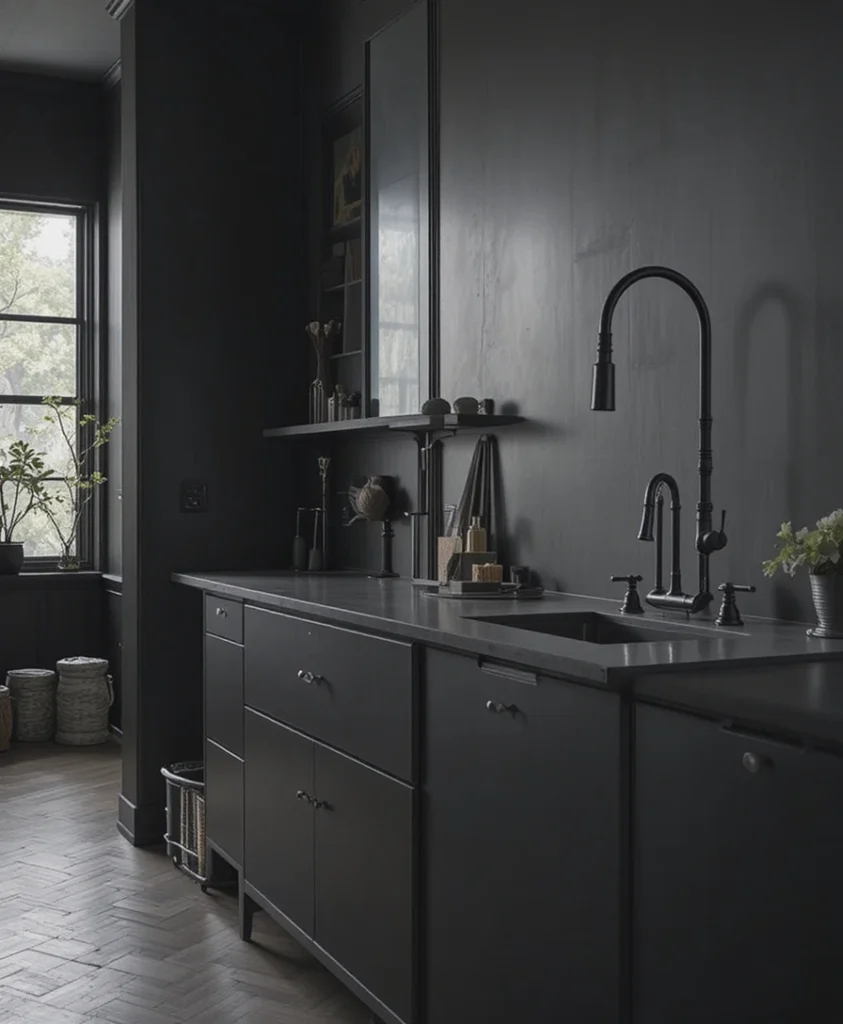
There’s something almost architectural about matte black hardware. Faucets, switch plates, even door hinges — when they disappear into shadow rather than gleam, the whole room feels intentional. I’ve noticed it works best when paired sparingly, so the black reads as punctuation, not noise.
3. Deep Emerald as a Color Anchor
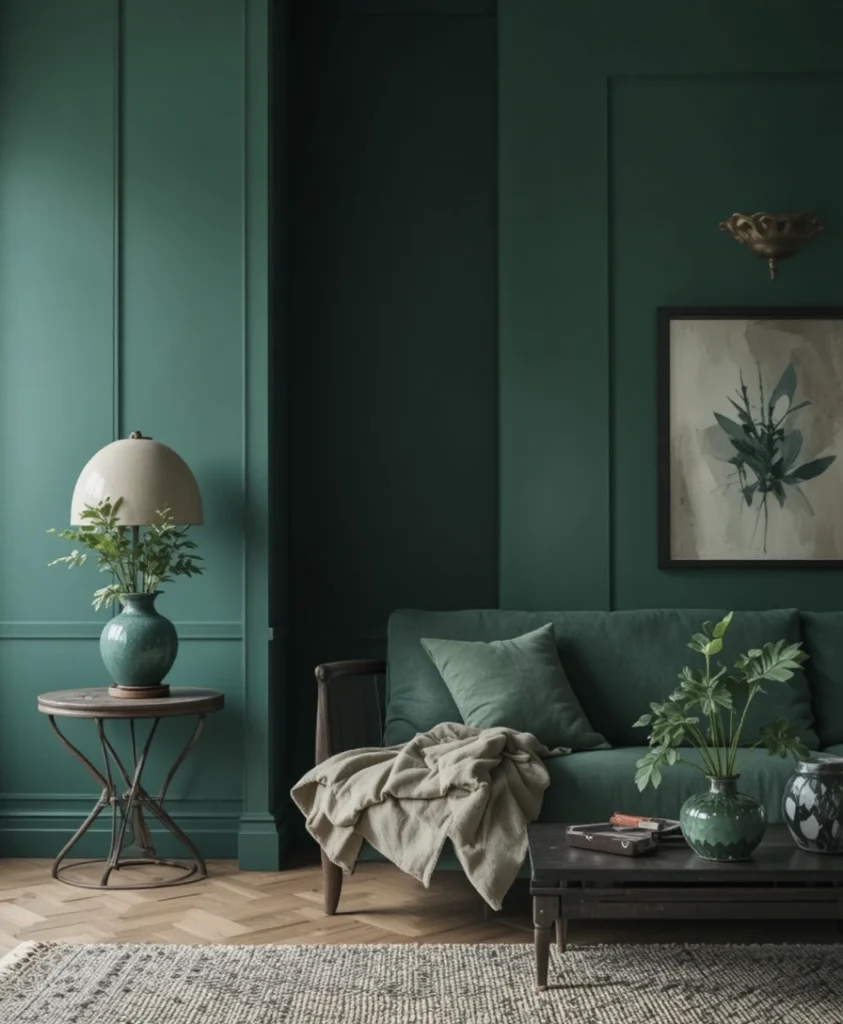
Green doesn’t usually scream “moody,” but a deep, almost black-green changes that entirely. I used it once on a single accent wall and it instantly read as luxurious without trying too hard. It’s a color that photographs beautifully in low light, which says a lot about its mood-setting power.
4. Sculptural Shadows From Layered Lighting
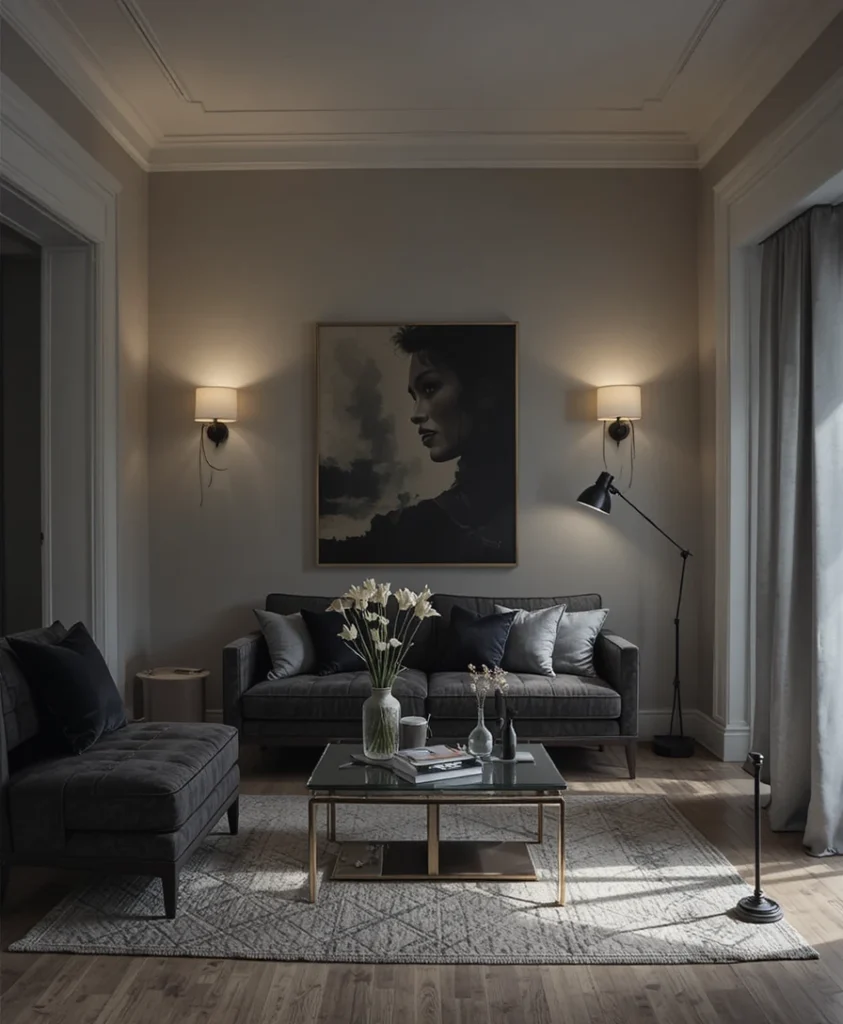
I’ve come to believe lighting is the real architect of mood. Instead of one overhead source, I layer floor lamps, wall sconces, and hidden strip lighting to create pockets of shadow. The result is a room that shifts personality depending on the hour — softer at night, sharper at midday.
5. Monochrome Layering Without the Boredom
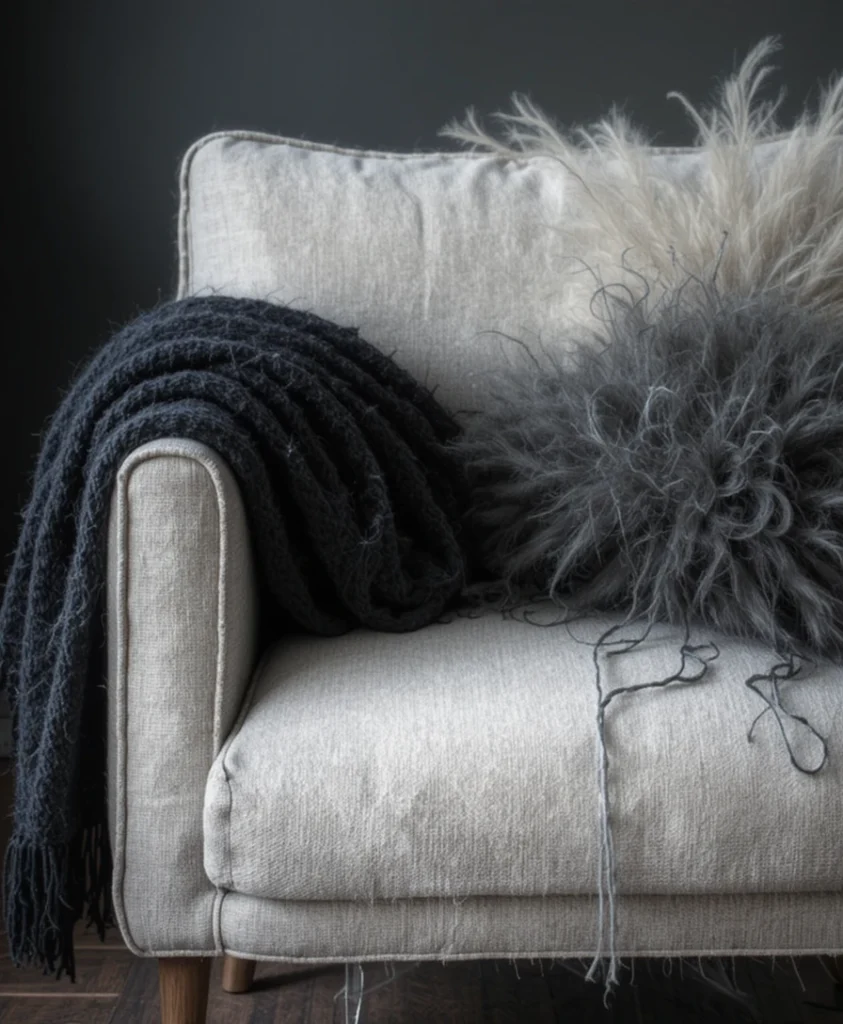
Sticking to one color family sounds risky, but it’s actually liberating. I build texture instead of contrast — a charcoal wool throw against a slightly lighter linen chair, for instance. The eye reads depth rather than flatness, and the whole space feels cohesive in a way busy palettes never quite achieve.
6. Textured Plaster for Tactile Depth
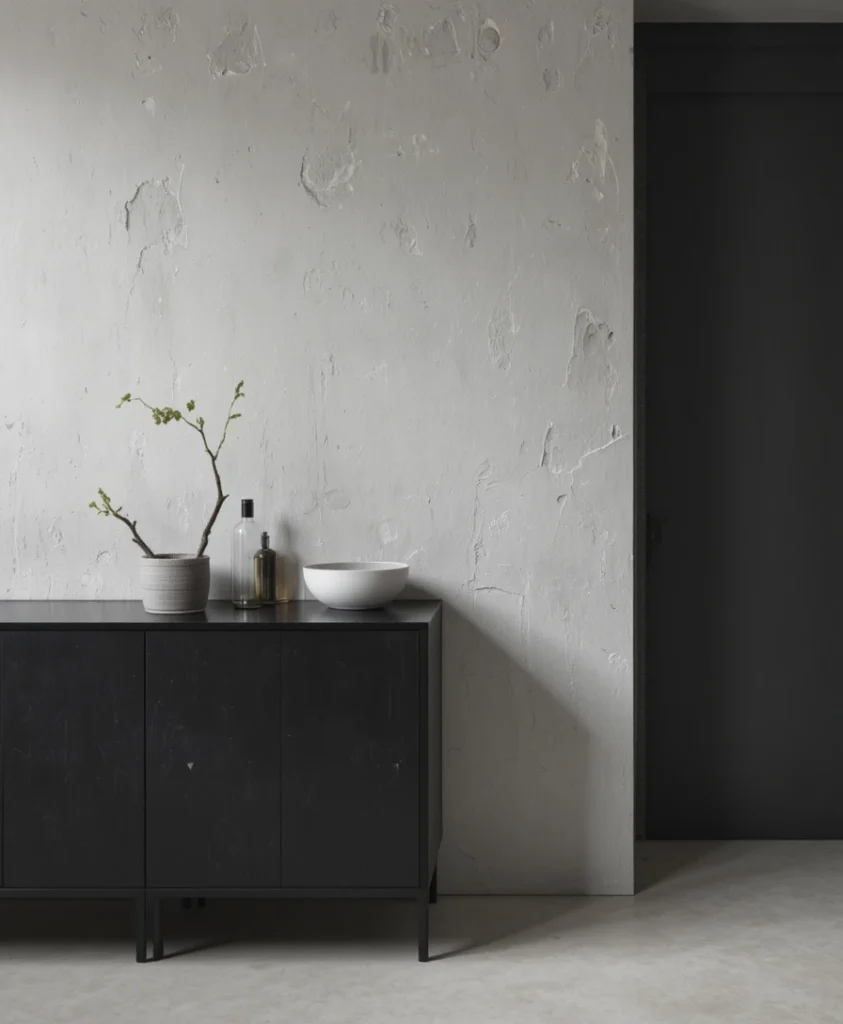
Smooth walls can feel sterile in a dark palette, so I’ve started leaning into raw, hand-troweled plaster finishes. The slight imperfections catch shadow beautifully, almost like the wall itself is breathing. It’s a small detail that makes a huge difference in how “alive” a moody room feels.
7. Negative Space as the Real Statement
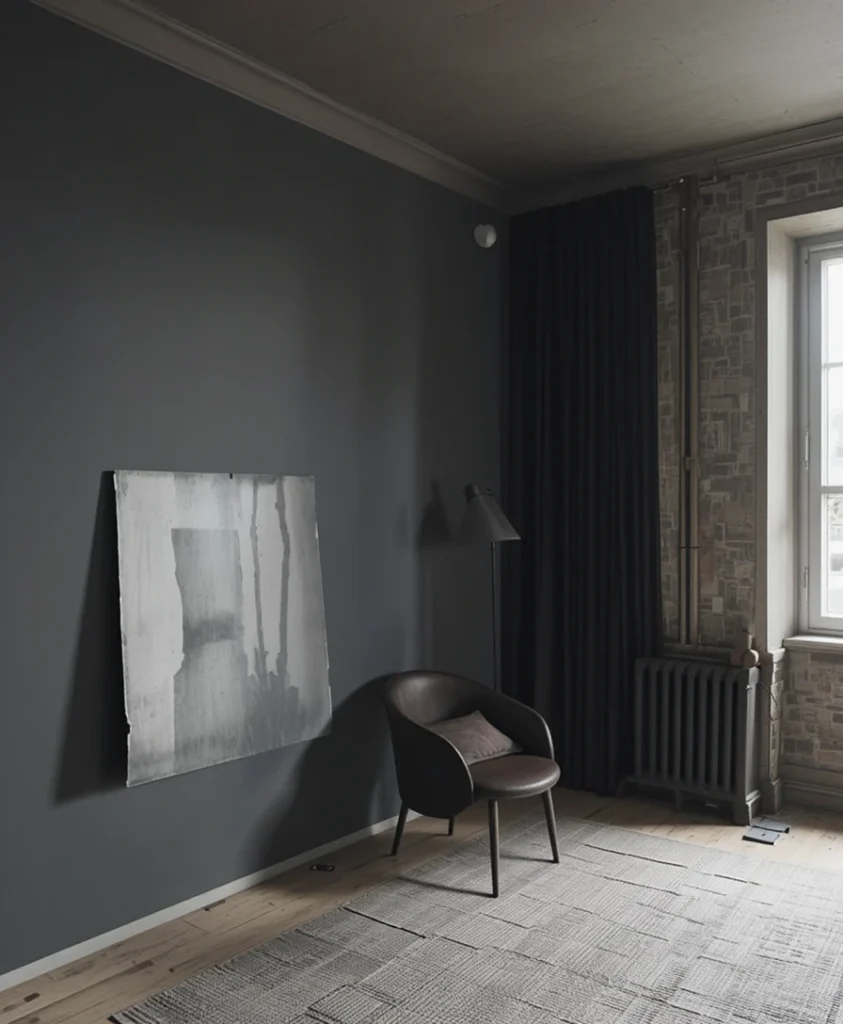
Minimalism often gets reduced to “less stuff,” but I think of it as more breathing room. Leaving a wall intentionally bare, or a corner empty, lets the darker palette do its quiet work without competition. It’s restraint as a design choice, not an accident.
8. Warm Wood Tones to Soften the Edge
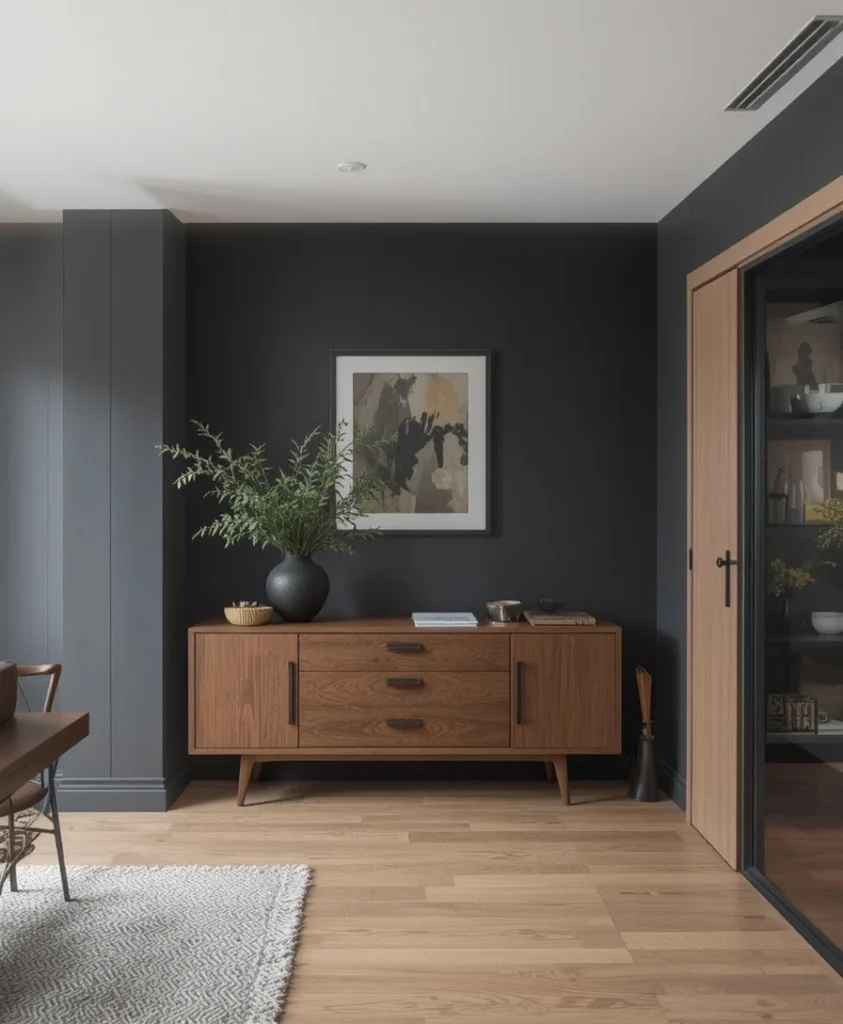
Without warmth, dark interiors can tip into cold territory fast. I always bring in a single warm wood element — a walnut console, an oak floor — to keep things grounded. It’s the contrast that keeps moody minimalist interiors from feeling unwelcoming.
9. Smoked Glass for Subtle Mystery
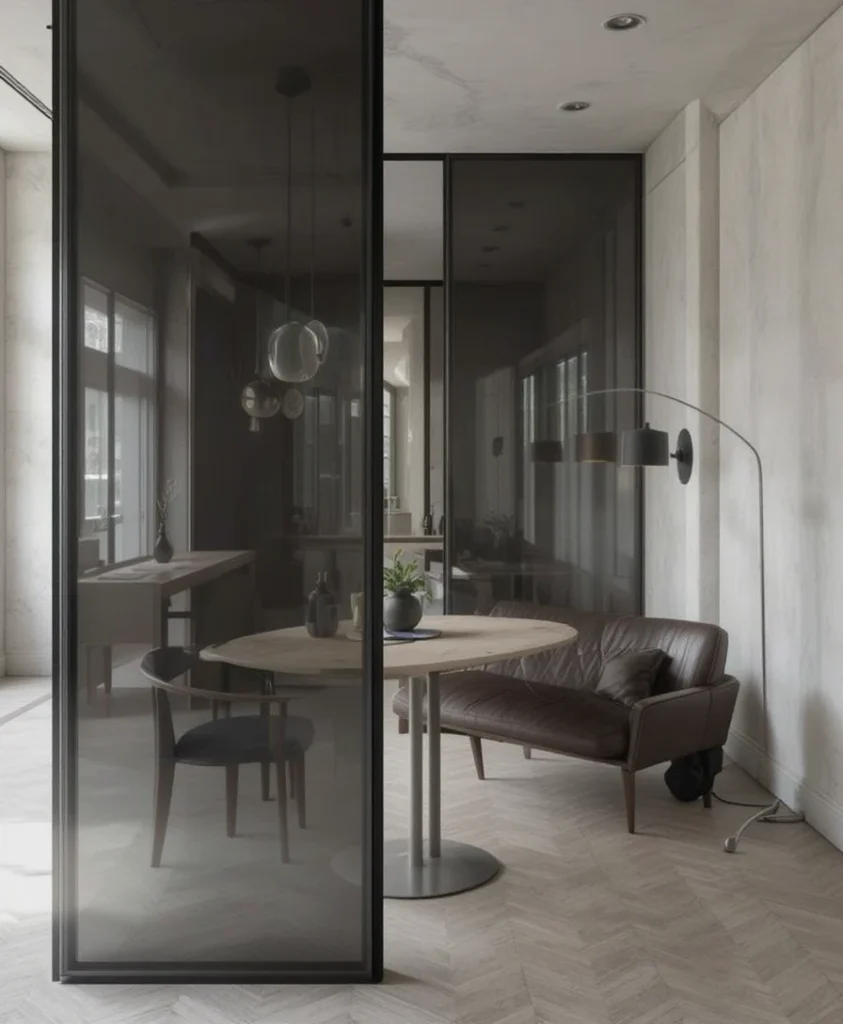
I’m a little obsessed with smoked glass dividers and tabletops lately. They obscure just enough to feel mysterious while still letting light filter through. It’s one of those materials that photographs differently depending on the angle, which keeps a room feeling dynamic rather than static.
10. Low-Profile Furniture Silhouettes
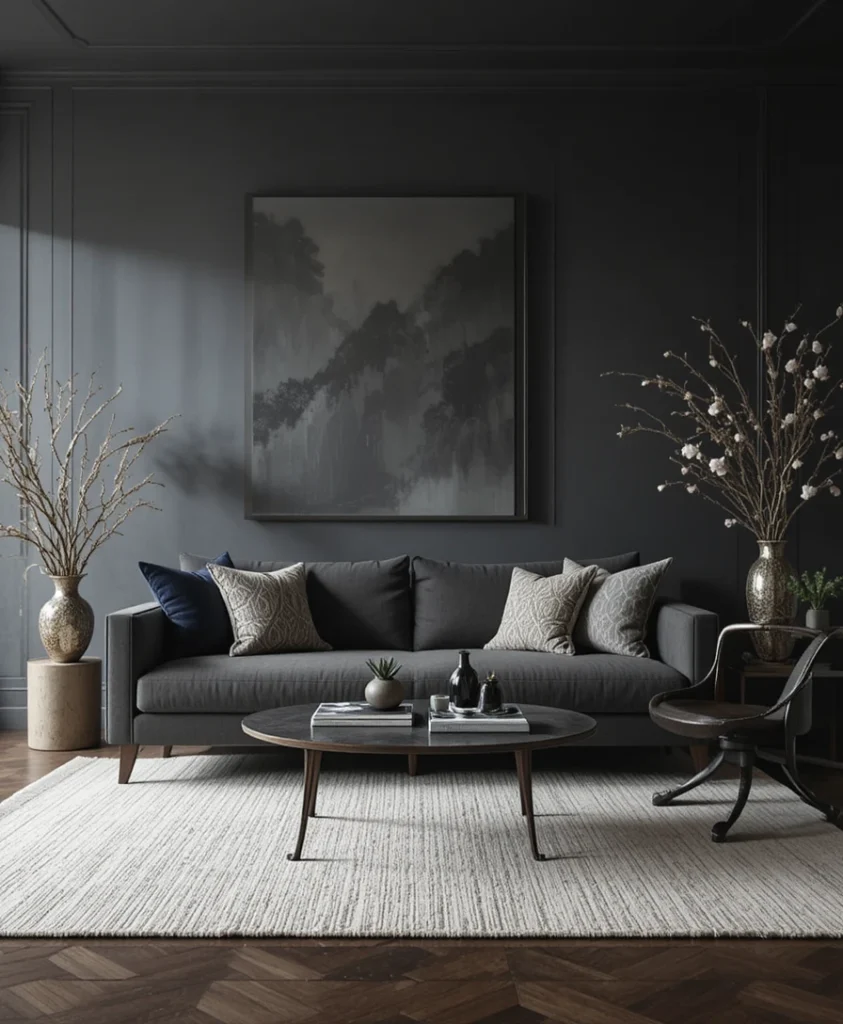
Heavy, ornate furniture fights against minimalism, so I gravitate toward low, horizontal silhouettes instead. A sofa that sits closer to the ground visually expands a room and lets darker walls feel intentional rather than oppressive. It’s a small proportion shift with an outsized effect.
11. One Statement Art Piece, Nothing More
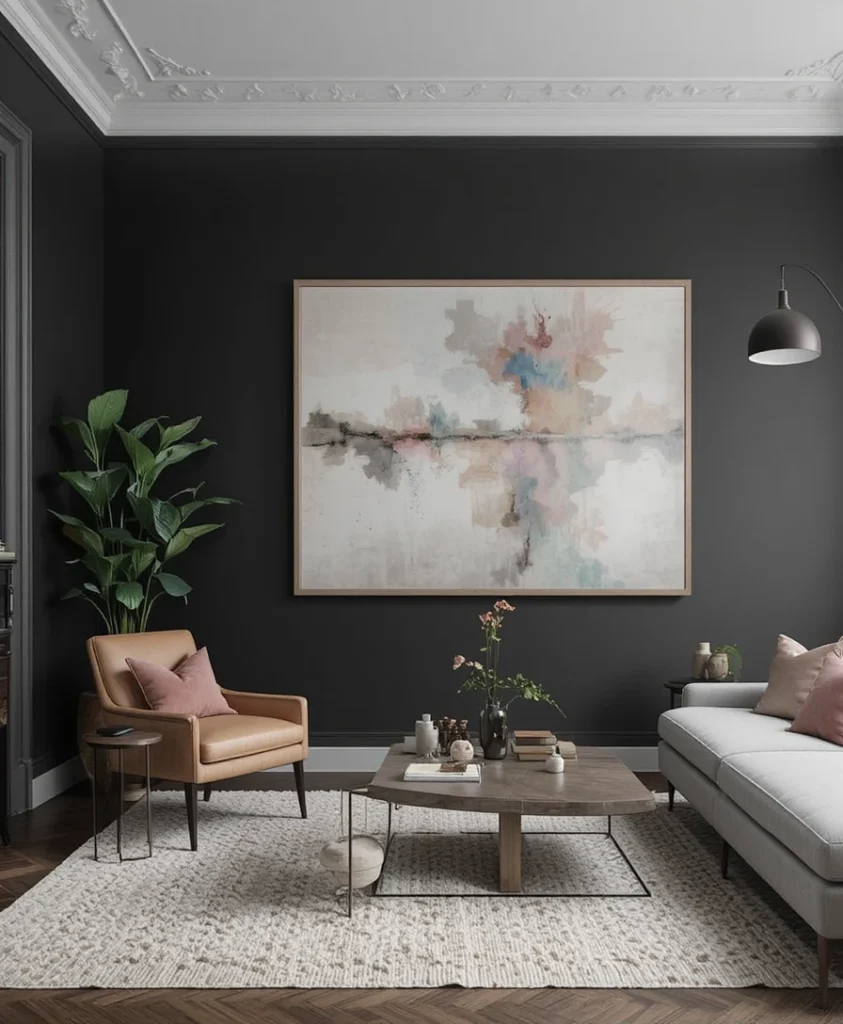
I used to think more art meant more personality. Now I believe in choosing a single, oversized piece and letting it breathe against a dark backdrop. It becomes the room’s focal point instantly, without the visual clutter a gallery wall can sometimes create.
12. Brass Hardware Against Dark Backdrops
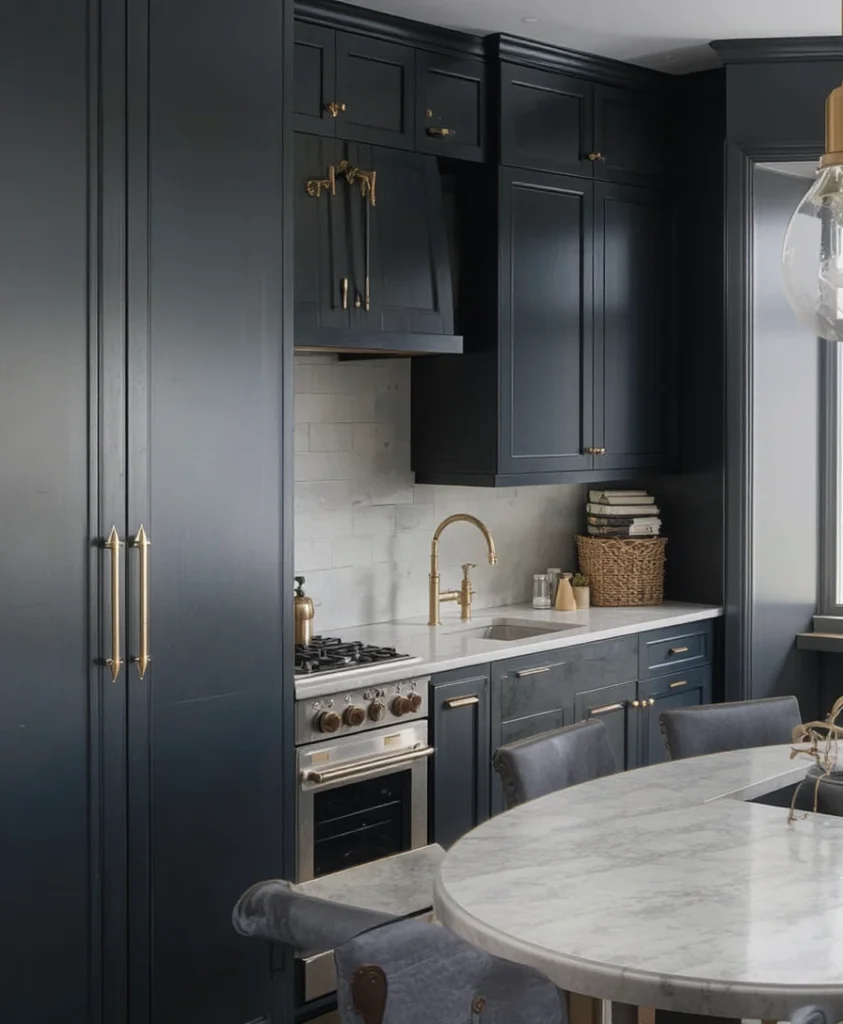
Where black hardware whispers, brass hums quietly in the background. Against charcoal or deep navy cabinetry, it adds just enough warmth and shine to keep things from feeling flat. I’ve found a little goes a long way — too much, and the moodiness disappears entirely.
13. Floor-to-Ceiling Drapery for Soft Drama
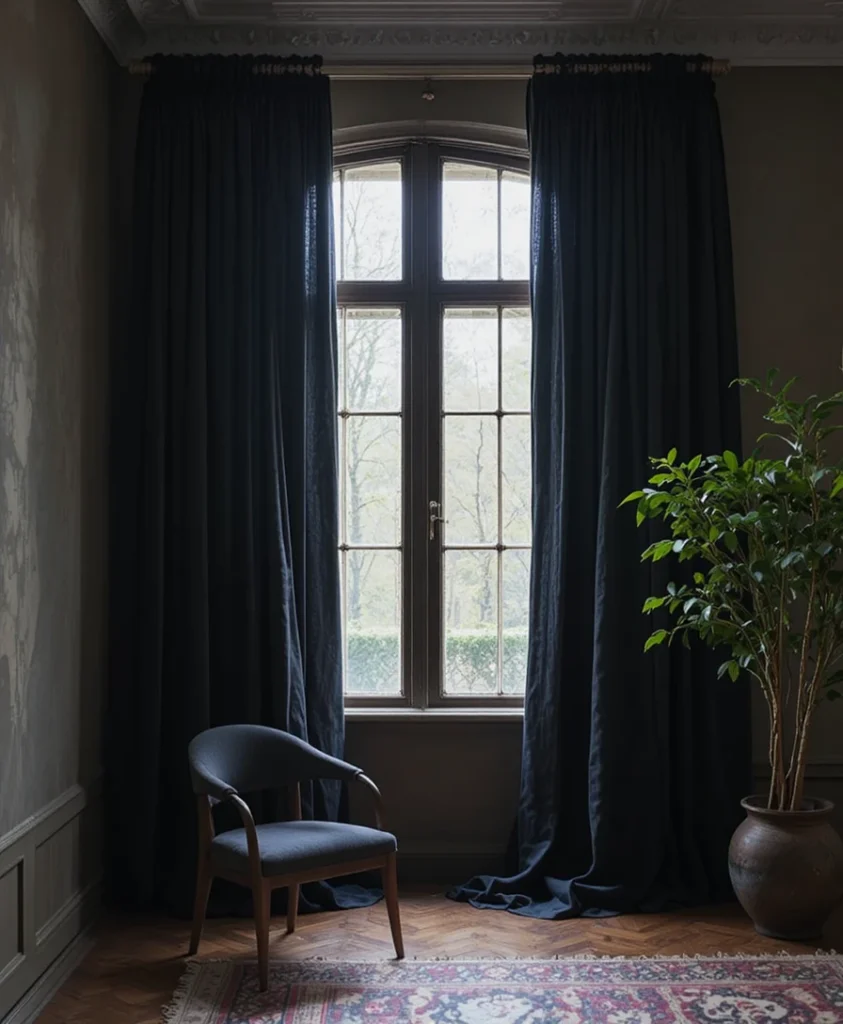
Heavy linen or velvet curtains pooling slightly at the floor instantly elevate a room’s atmosphere. I prefer deep, saturated tones over black — aubergine, forest, ink blue — because they filter light in a way that feels cinematic rather than harsh.
14. Concrete and Stone for Industrial Calm
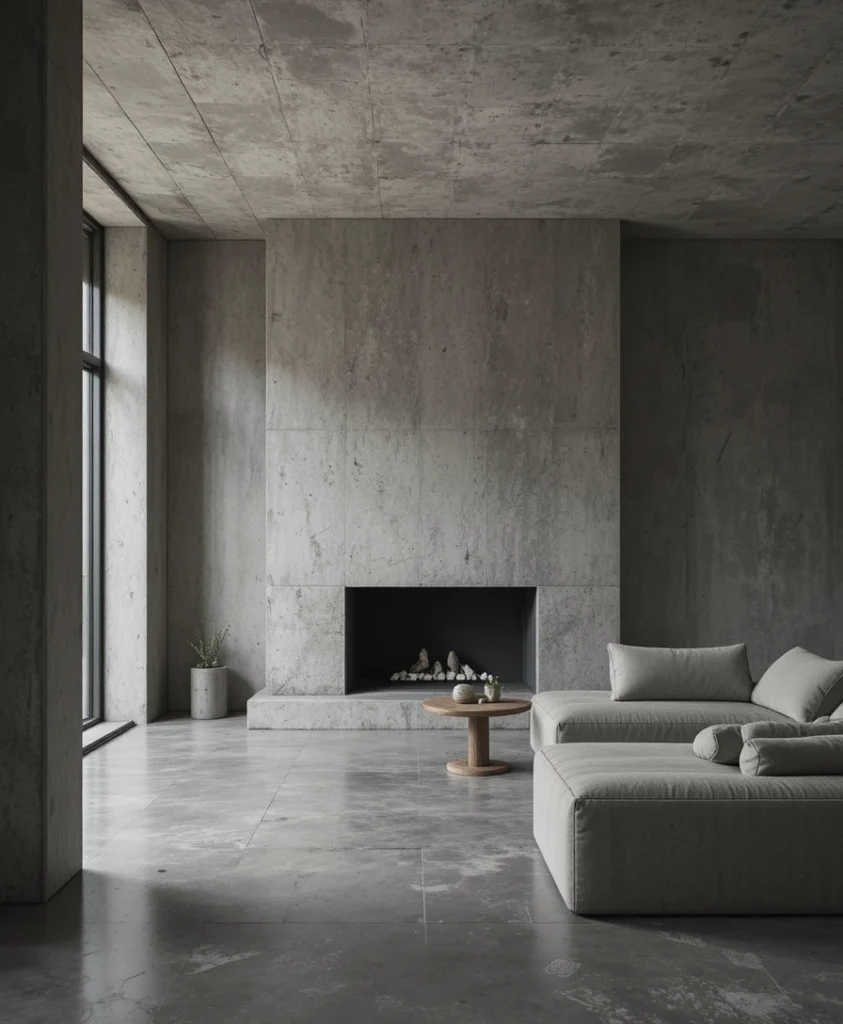
There’s an honesty to raw materials that fits moody minimalist interiors perfectly. Polished concrete floors or a stone fireplace surround bring texture without ornamentation. I love how these materials age — they only seem to deepen in character over time.
15. Color-Drenching for Total Immersion
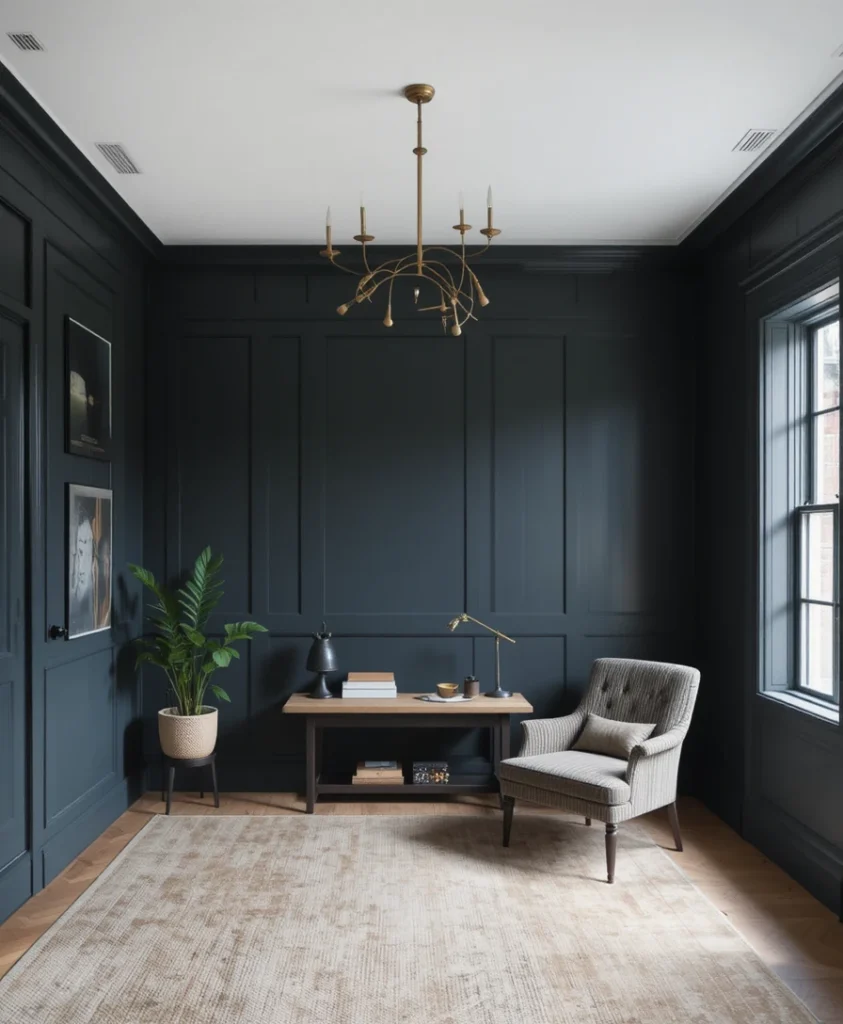
This is the technique I recommend most often now: painting walls, trim, and ceiling the exact same dark shade. It removes visual breaks entirely, making a small room feel enveloping rather than cramped. The effect is almost meditative once you step inside.
16. Hidden Storage to Protect Visual Calm
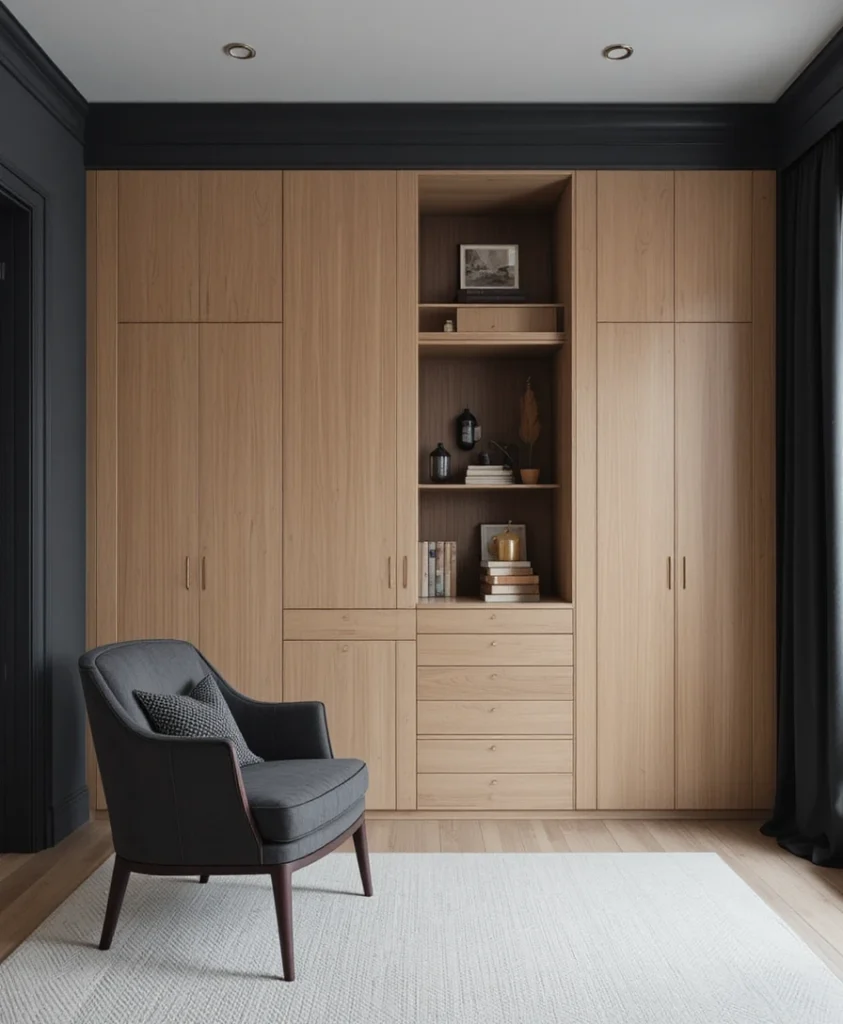
Clutter is the enemy of any minimalist space, but it’s especially jarring against dark backdrops. I design with concealed cabinetry and built-ins so nothing disrupts the room’s quiet rhythm. It’s a practical choice that pays off in atmosphere.
17. Candlelight and Warm-Toned Bulbs
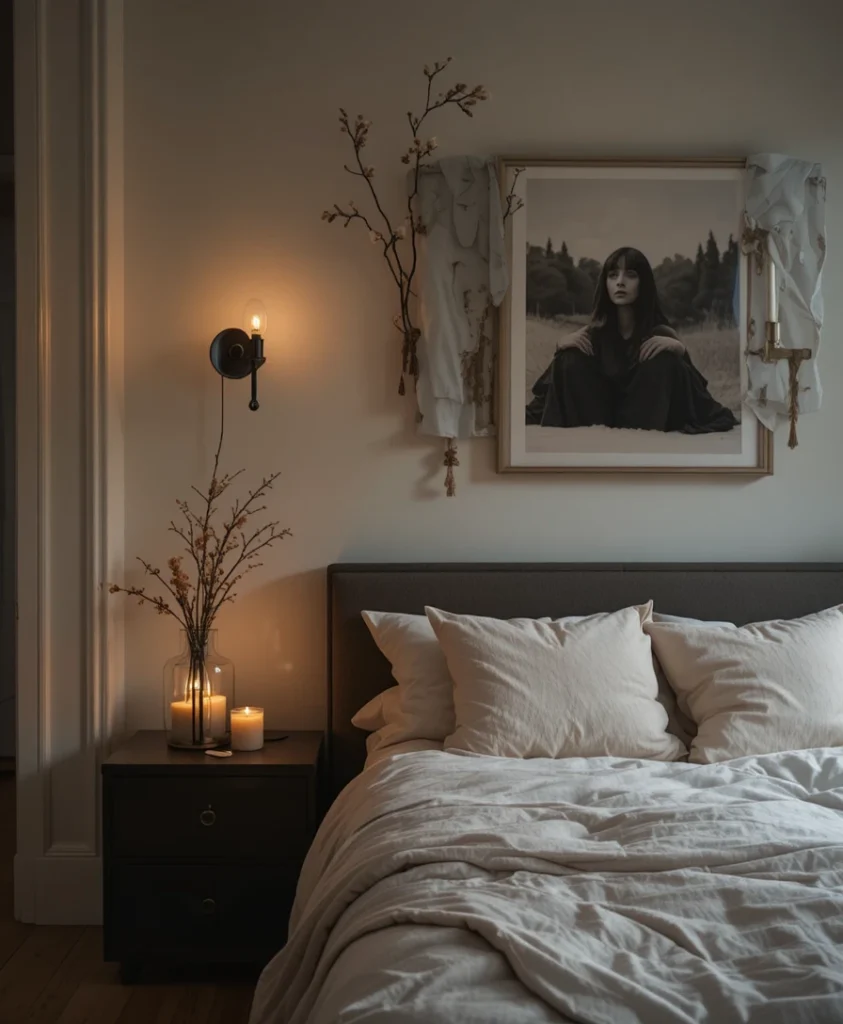
Cool white lighting kills mood instantly, so I stick to warm bulbs around 2700K and real candles whenever possible. The flicker and amber glow do more to create intimacy than any furniture choice could. It’s the cheapest mood upgrade I know.
18. Velvet and Boucle for Touchable Texture
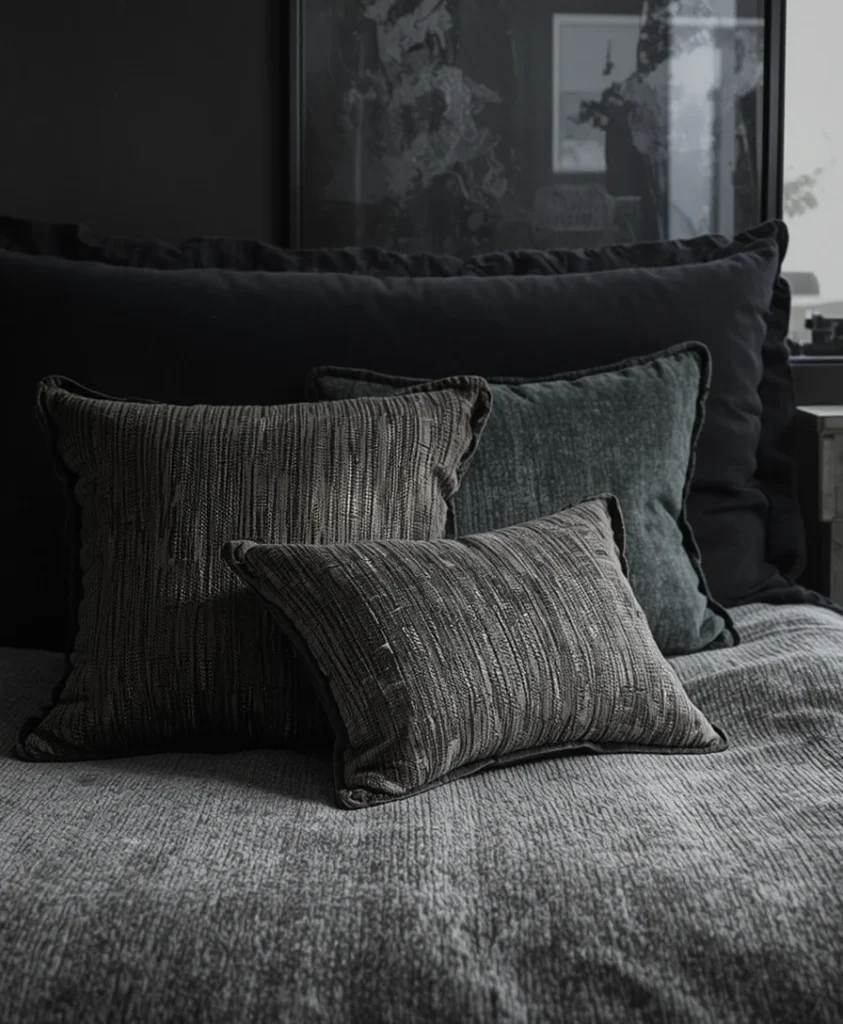
Fabric choice matters enormously in dark rooms. I reach for velvet and boucle because they catch light in soft, uneven ways, adding richness without pattern. Running a hand across a velvet cushion in a dim room is its own small luxury.
19. Dark Ceilings to Lower the Mood Literally
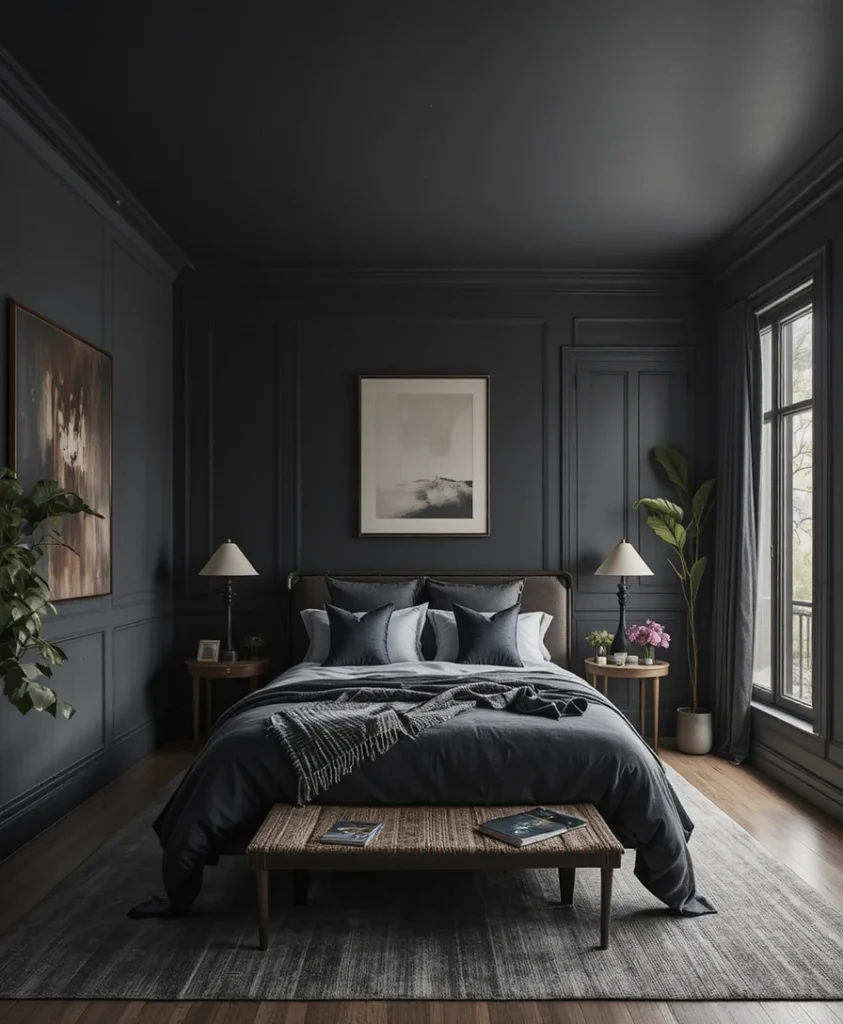
Painting a ceiling dark feels counterintuitive until you try it. It pulls the room inward, creating an almost cocoon-like intimacy that white ceilings simply can’t replicate. I’ve used this trick in bedrooms especially, where the goal is comfort over openness.
20. Curated Vignettes Over Full Displays
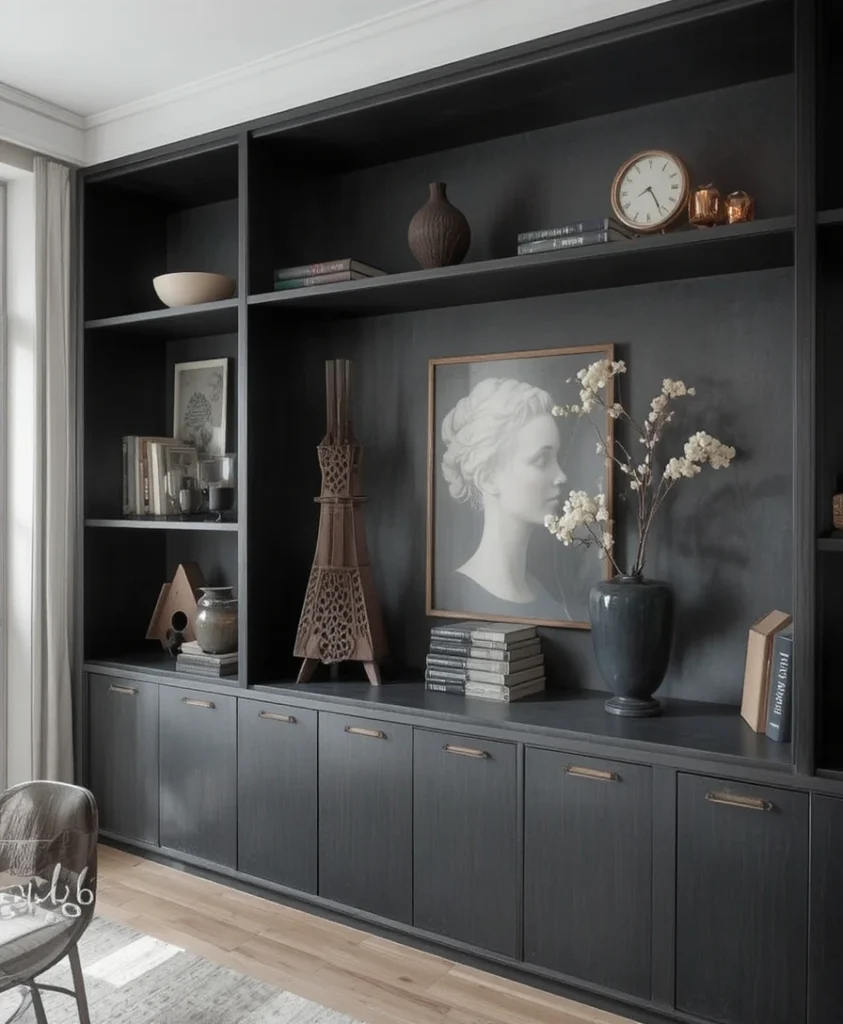
Rather than filling shelves, I style small, deliberate groupings — a vase, a single book, one sculptural object. Against a darker palette, these vignettes feel like quiet exhales in the room. It reinforces that moody minimalist interiors thrive on selectivity, not abundance.
Final Thoughts
After all these years experimenting with shadow, texture, and restraint, I keep landing on the same conclusion: moody minimalist interiors aren’t a trend I’m chasing, they’re a philosophy I’ve grown to trust. Every idea here proves that darkness, used thoughtfully, doesn’t shrink a space — it deepens it.
If you take away nothing else, let it be this: start with one element, live with it, and let the rest of the room follow its lead.