
Living with architectural dead zones in a modern home used to frustrate me deeply. Early in my design career, I noticed how the empty space under and around a staircase became a sad collection spot for dust bunnies, discarded shoes, and forgotten clutter. However, when you reframe this transitional architecture, you unlock extraordinary spatial potential. Transforming these forgotten nooks with vibrant greenery fundamentally alters the energy, air quality, and visual rhythm of your residence. Modern home design heavily prioritizes Biophilic elements, and Indoor Staircase Gardens represent the ultimate union of form and function.
If you have ever wondered how to decorate your staircase into a thriving vertical oasis, you are in the right place. Over the past decade, I have retrofitted dozens of stairwells into lush botanic features. Designing a staircase plant layout requires careful thought regarding light levels, irrigation accessibility, structural integrity, and plant sizing. Whether you possess an open-riser contemporary steel staircase or a traditional wooden structure, this curated design guide reveals how to elevate your interior aesthetic with 20 distinct design concepts.
Quick Overview: Top Staircase Garden Concepts
Prerequisites & Tools You Need Before Installation
Before embarking on your biophilic home upgrade, compile this essential technical kit. Proper planning prevents moisture damage to your architectural frame and ensures your flora thrives long-term.
Waterproofing Membrane: 40-mil EPDM rubber liner or liquid elastomeric sealant for under-stair planter boxes.
Full-Spectrum LED Grow Lights: 12W to 24W ultra-slim strip lights (4000K-5000K daylight spectrum) with automated smart timers.
Drainage Substrate: Expanded clay pebbles (Leca) or coarse pumice for sub-irrigation layering.
Precision Irrigation System: Micro-drip irrigation line with an integrated silent water pump, or self-watering sub-irrigated insert pots.
Structural Hardware: Heavy-duty toggle bolts, ceiling anchors rated for at least 50 lbs, and rust-resistant stainless steel mounting brackets.
Soil Mix: Premium well-draining potting blend containing coco coir, perlite, orchid bark, and worm castings.
20 Unique Concepts for Indoor Staircase Gardens
1. Cascading Pothos Run Beneath Open Risers
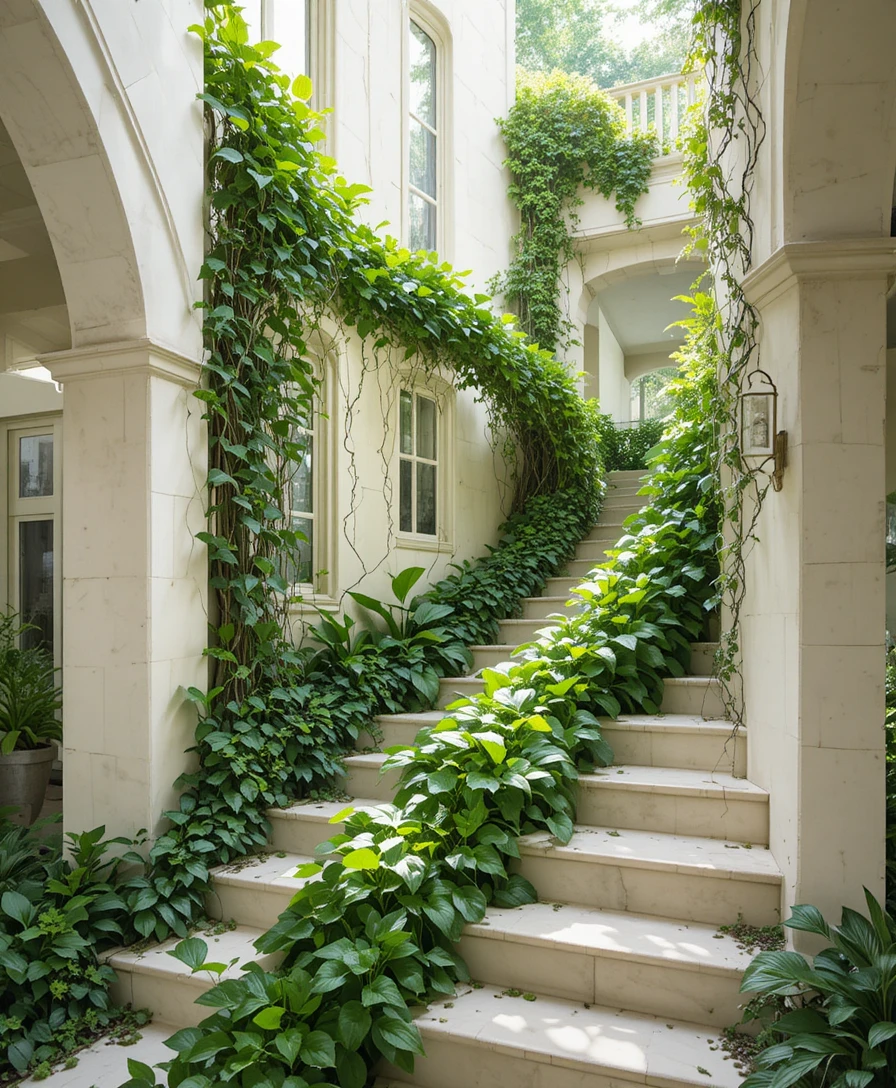
I love installing long, trailing Marble Queen and Neon Pothos directly along the interior ledger board of open-riser stairs. As light filters through the open steps, the vines weave through the structural gaps, creating a sun-dappled waterfall of green foliage. I always advise using subterranean micro-drip lines hidden inside the stringer channels so you never have to drag a heavy watering can up the steps. The trailing vines catch cross-breezes generated by human movement, creating a gentle, dynamic sense of motion that softens rigid architectural lines.
2. Recessed Under-Stair Rainforest Bed with Sunken Lighting
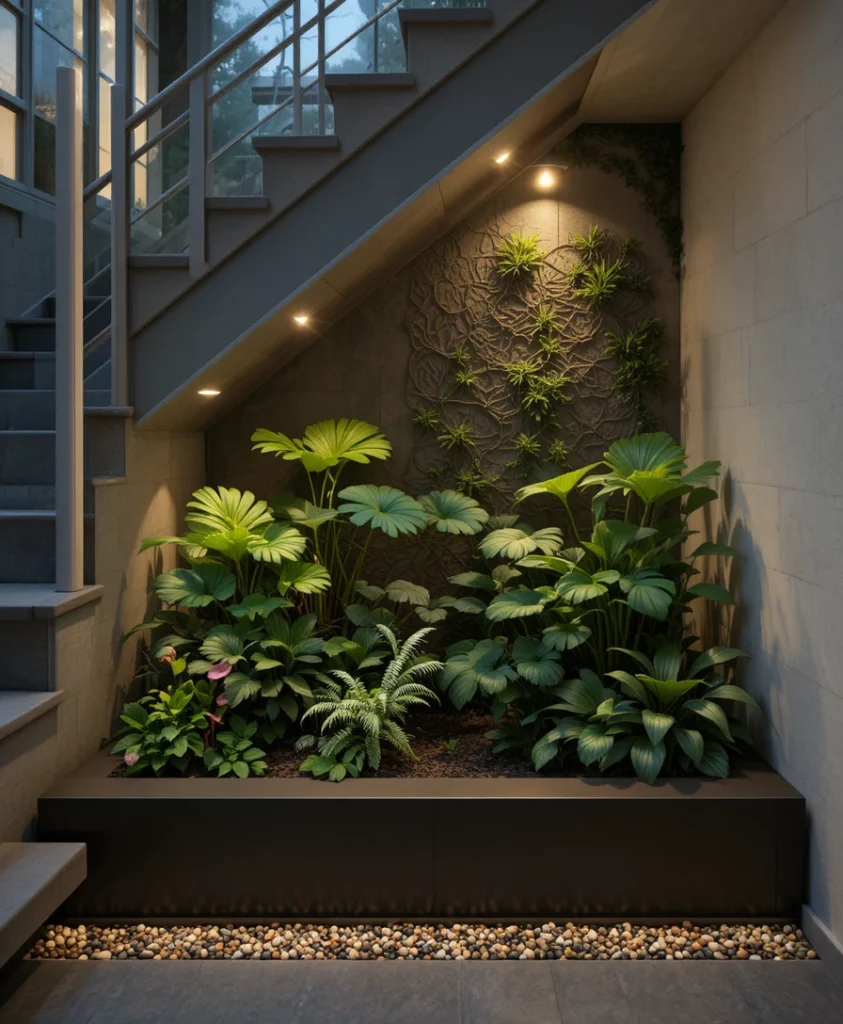
Transforming the dark void beneath closed stairs into a fully recessed, waterproofed planting bed is one of my signature design moves. I specify a 10-inch deep sunken trough lined with EPDM membrane, filled with lightweight Leca drainage pebbles and nutrient-dense soil. I plant dramatic, broad-leafed Monstera Deliciosa paired with velvety Anthurium Clarinervium to create layered depth. Installing 3000K warm LED uplighting around the interior perimeter of the planter casts dramatic, structural shadows onto the underside of the stair treads every evening.
3. Floating Tiered Wooden Shelf Steps
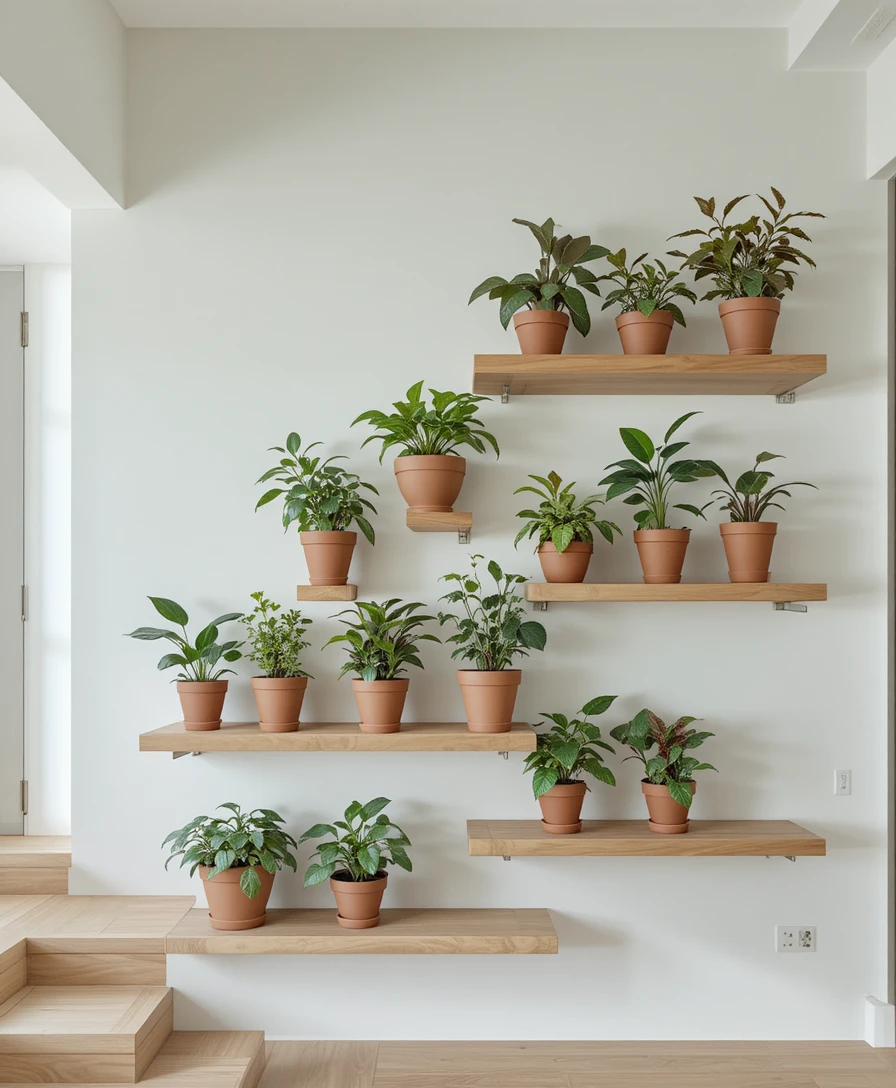
For minimalist homes, I regularly design custom white oak floating shelves that mirror the exact angle and rise of the existing staircase. Securing these shelves directly into the wall studs with concealed steel brackets provides a seamless, weightless aesthetic. I stock these steps with a curated collection of small-scale terra cotta pots holding rare Hoyas and Peperomias. This vertical layout allows each plant individual access to ambient natural light while turning a blank perimeter wall into a gallery of architectural botanicals.
4. Vertical Modular Felt Pocket Living Wall
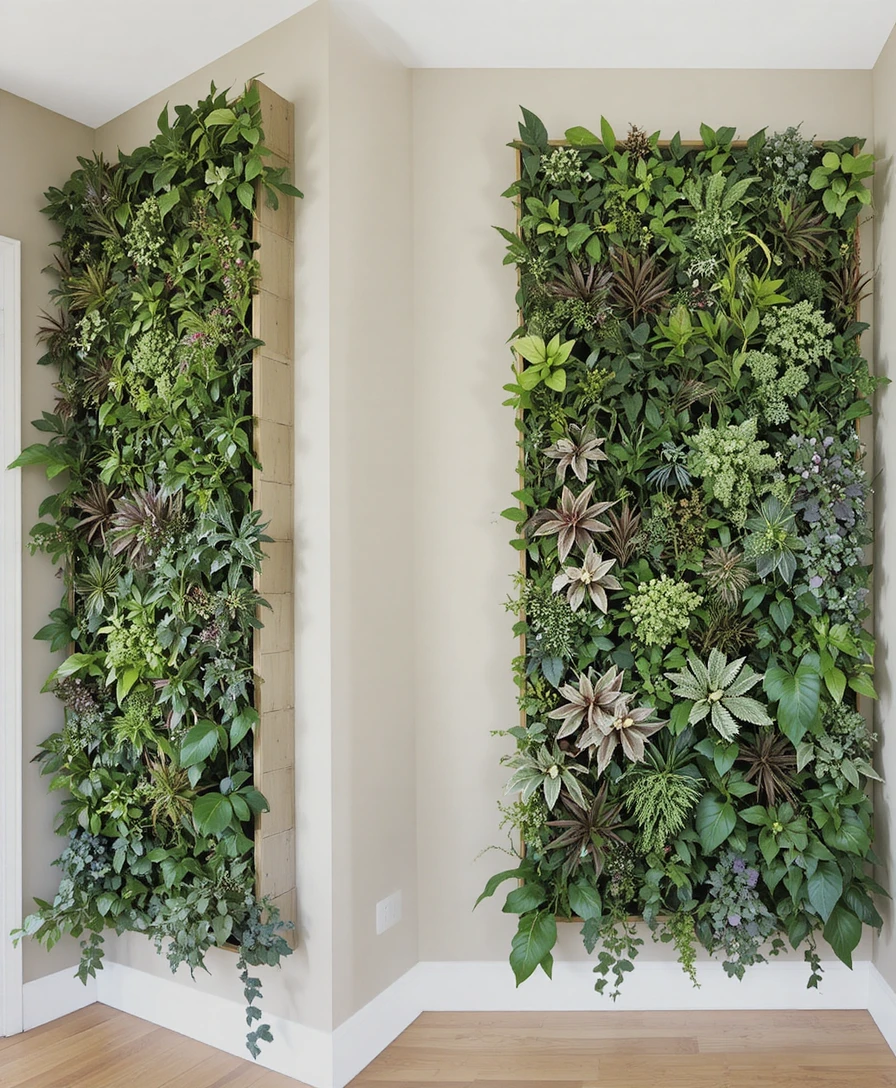
When space around the stairs is tight, building upward onto the flanking structural wall is the smartest move. I install modular, rot-proof felt living wall panels featuring built-in rear irrigation channels directly onto the wall board over a protective PVC backing sheet. I pack these pockets dense with humidity-loving Boston Ferns, Marantas, and Philodendron Cordatum. Within six weeks, the individual pockets fill in completely, creating a continuous, plush blanket of living green foliage that dramatically improves interior indoor air quality.
5. Architectural Snake Plant Trough Along the Landing
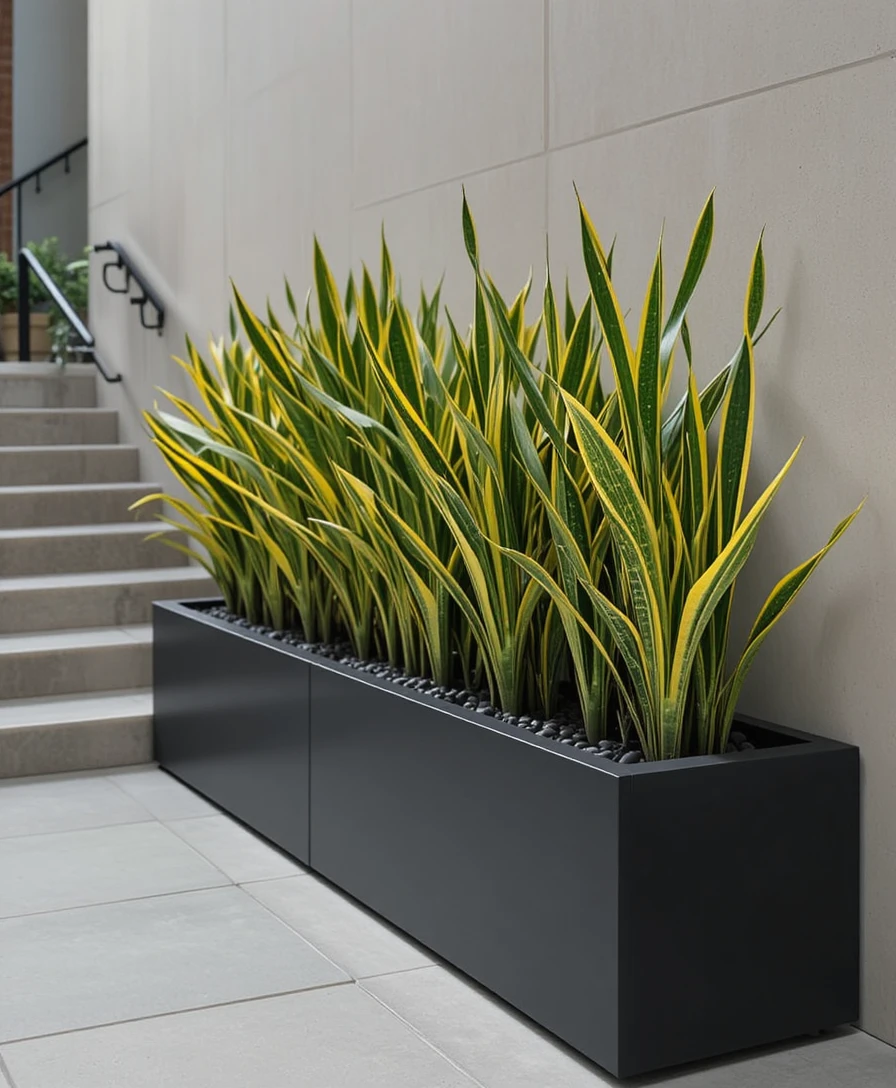
If your stair landing feels empty or utilitarian, a long, custom-fabricated powder-coated steel planter box filled with Sansevieria Trifasciata provides an immediate solution. Snake plants offer striking verticality and structural rigidity that clean up chaotic architectural lines. Their slow growth rate and minimal water requirements make them ideal for high-traffic zones where complex maintenance is impractical. I fill the base with dark river stones to contrast the vibrant, sword-like yellow and green leaves.
6. Suspended Kokedama Canopy Above Floating Stairs
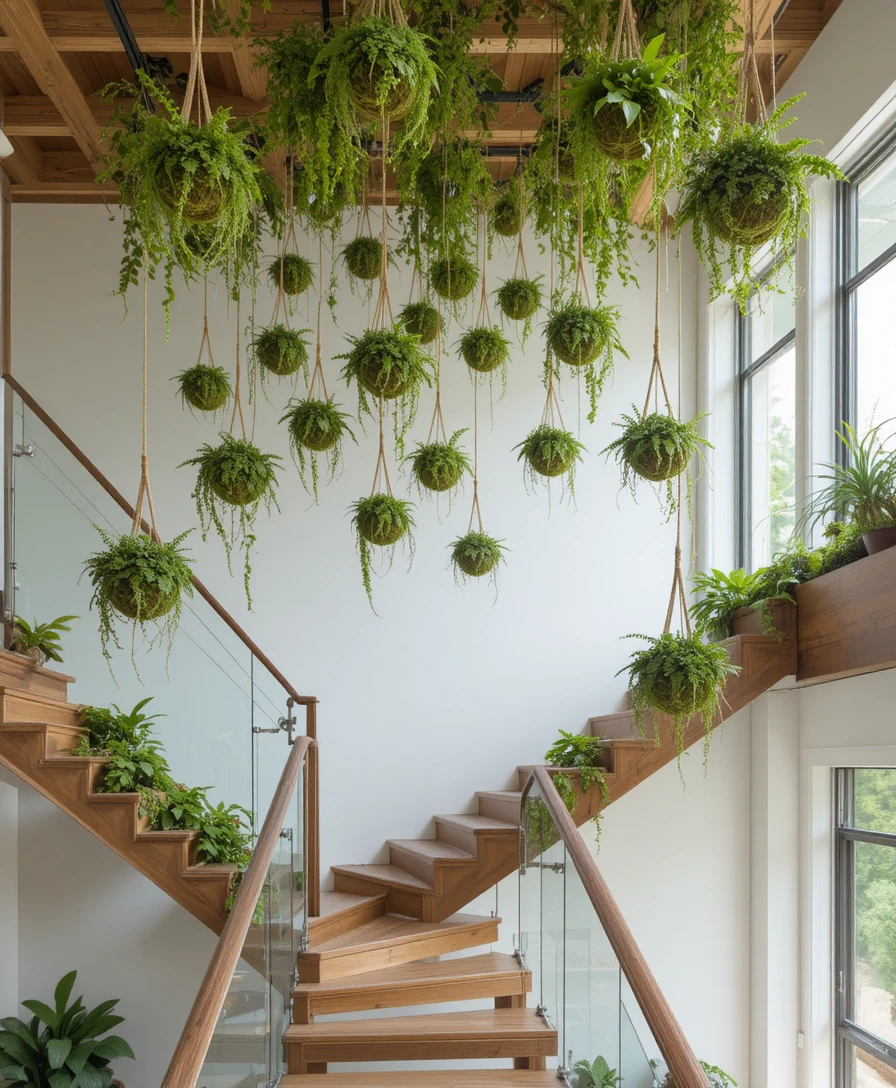
One of the most artistic approaches I use for open, floating staircases involves hanging Japanese moss balls (Kokedama) at varying heights directly from the ceiling framing above. Using high-tensile aircraft cable or natural jute twine, I suspend robust Ferns and Rhipsalis species within the void space. As you walk up and down the stairs, you travel through a living, floating canopy of suspended botanicals. This spatial layering draws the eye upward, celebrating the verticality of your home’s architecture.
7. Integrated Stair Balustrade Planter Trough
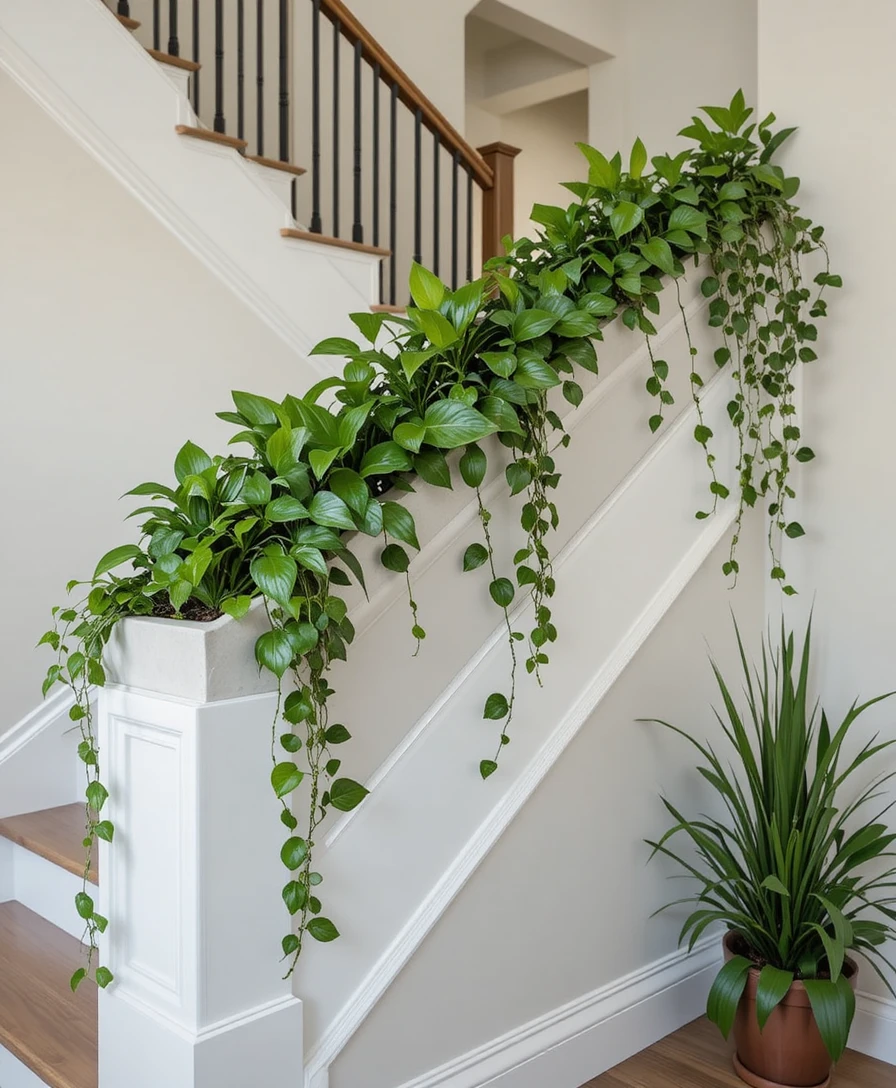
Replacing standard wooden spindles or cold glass balustrades with a custom-molded planter wall changes the whole dynamic of a home. I design these integrated troughs out of lightweight reinforced concrete or custom carpentry lined with poly-sealant. The top rail doubles as a flourishing planter box filled with trailing Heartleaf Philodendron and erect Calathea Lanceolata. The leaves spill gently down the outer face of the staircase, acting as a soft, organic safety barrier that feels far more welcoming than conventional metal railings.
8. Desert Succulent Oasis in Glass Tread Nooks
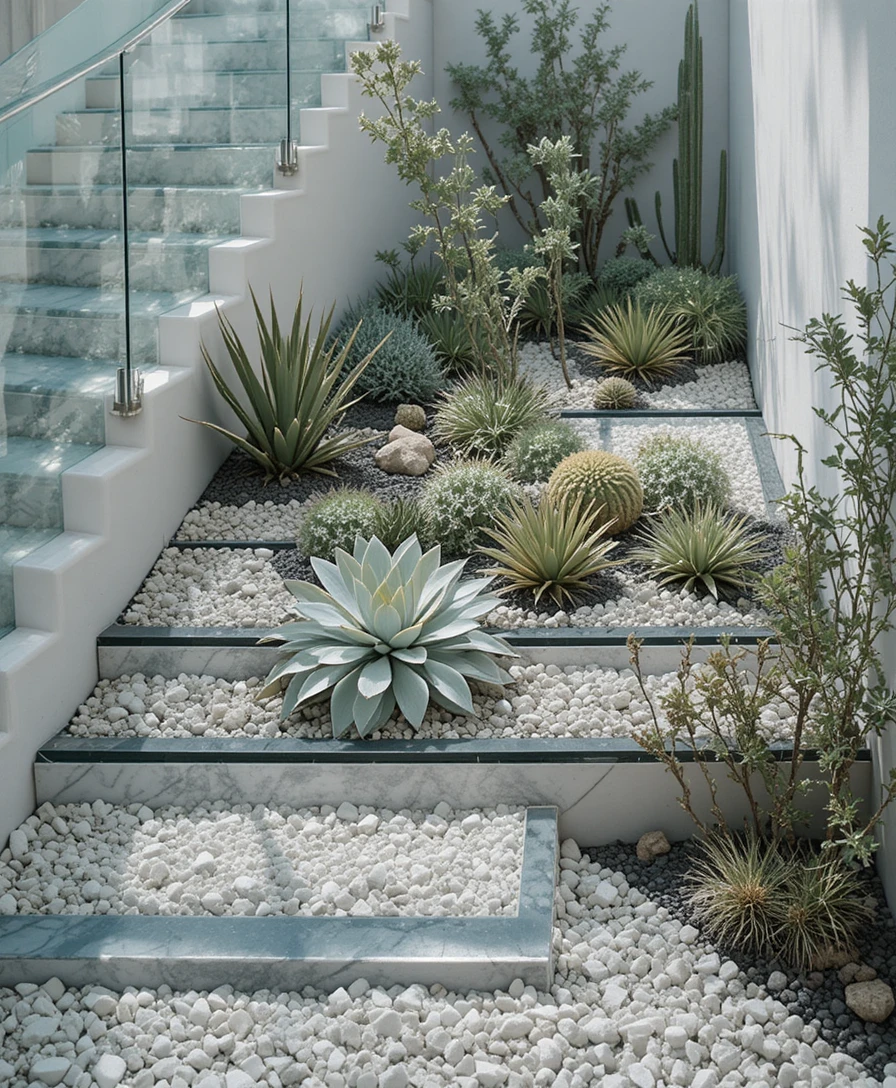
For homeowners blessed with bright, south-facing stairwells, creating an arid desert landscape underneath glass stair treads delivers breathtaking impact. I lay down a multi-layered substrate of crushed white marble chips, black volcanic cinder, and gritty succulent soil mix. Within this clean geometric canvas, I nestle architectural Agaves, Echeverias, and golden Barrel Cacti. The glass treads above shield these drought-tolerant specimens from physical disruption while allowing 100% of incoming light to penetrate deep into the garden bed.
9. Wall-Mounted Hexagonal Geometric Terrarium Gallery
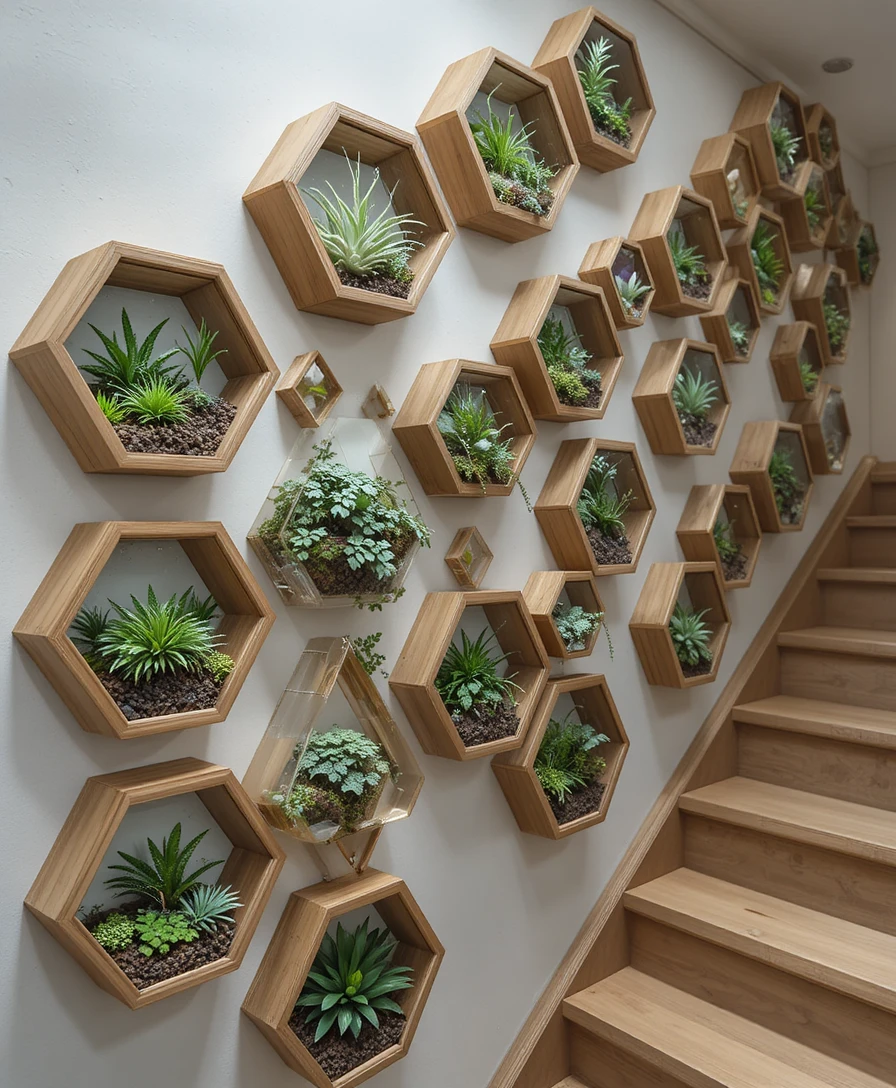
I frequently turn staircase walls into interactive art installations by arranging geometric wooden and glass hexagonal planters in a honeycomb layout along the incline. Each individual wall pod houses a micro-ecosystem, ranging from delicate Tillandsia air plants to lush Cushion Moss and dwarf Fittonia species. This arrangement allows you to inspect unique botanical details close up as you climb the steps. It offers total flexibility, as individual pods can be easily removed for quick maintenance or plant rotation.
10. Zen Pebbles and Cast Iron Plant Under-Stair sanctuary
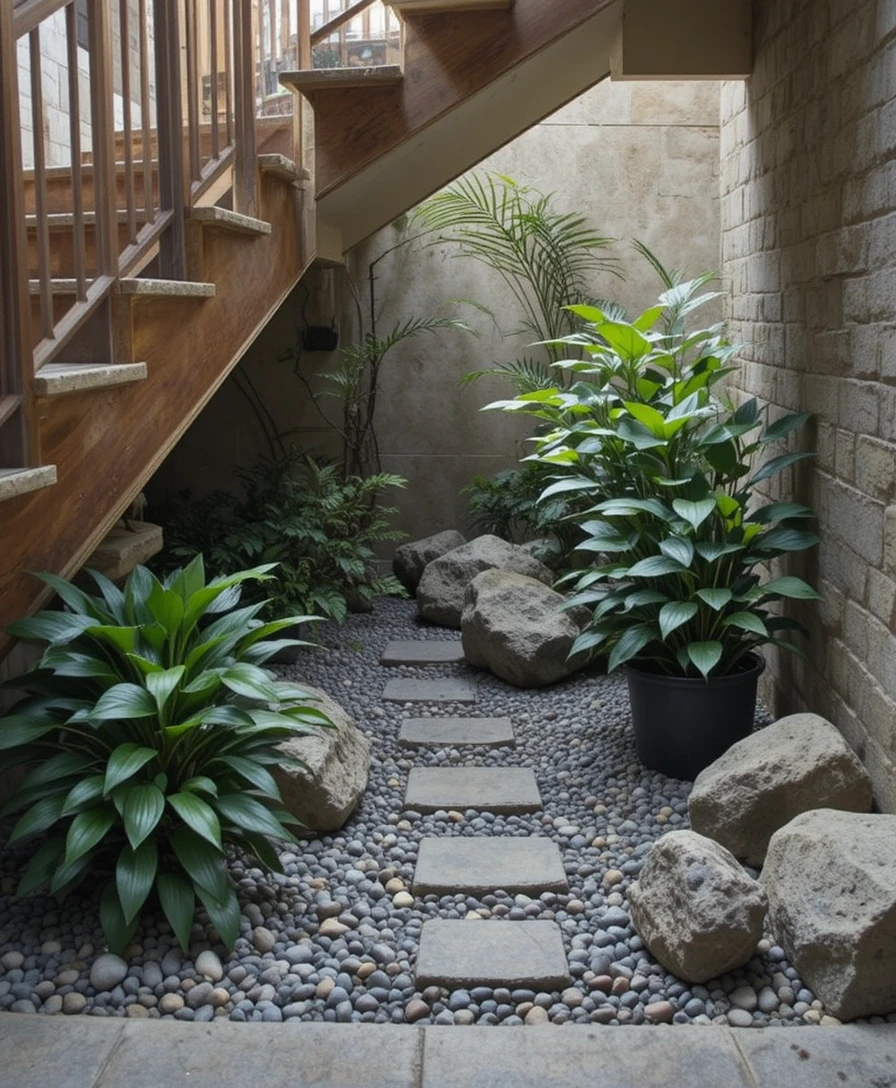
When designing for low-light staircases where complex electrical wiring for grow lights is out of the budget, I lean into Japanese-inspired Zen aesthetics. I lay down a smooth bed of raked gray river stones punctuated by large, natural granite boulders. Into hidden subterranean containers, I plant hardy Cast Iron Plants (Aspidistra Elatior) and broad ZZ Plants (Zamioculcas Zamiifolia). These virtually indestructible species handle heavy shade with ease, creating a calm, meditative sanctuary that turns a dark architectural dead space into a soothing visual focal point.
11. Cascading Ivy Runner Down Side Stringers
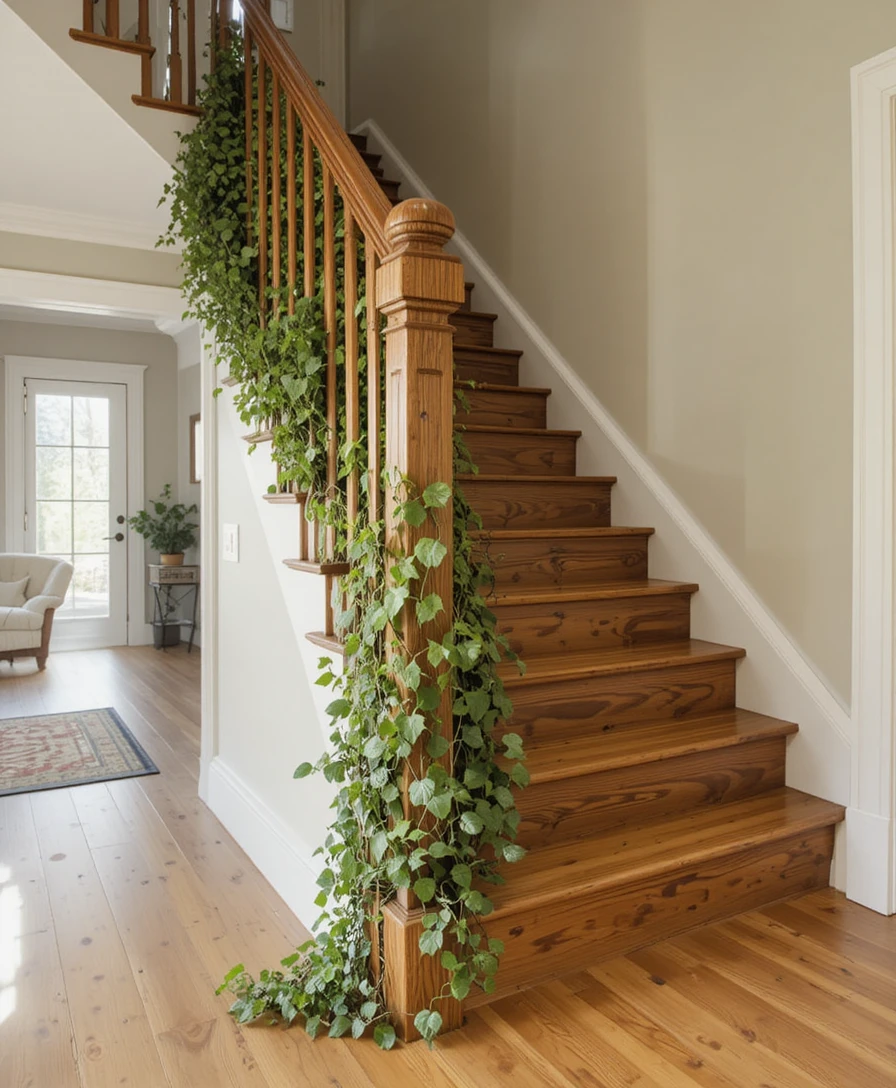
Learning how to decorate your staircase with natural organic runners does not mean using traditional fabric carpets. Instead, I mount hidden narrow trough channels along the outer wood stringer of the stairs, running parallel to the steps. Planting dense Hedera Helix (English Ivy) or Scindapsus Pictus in these troughs creates a continuous, living green frame that traces the exact step geometry of your staircase. It softens hard timber or cold concrete steps, guiding the eye up the staircase with natural organic movement.
12. Modernist Herb Garden Embedded in Kitchen-Adjacent Stairs
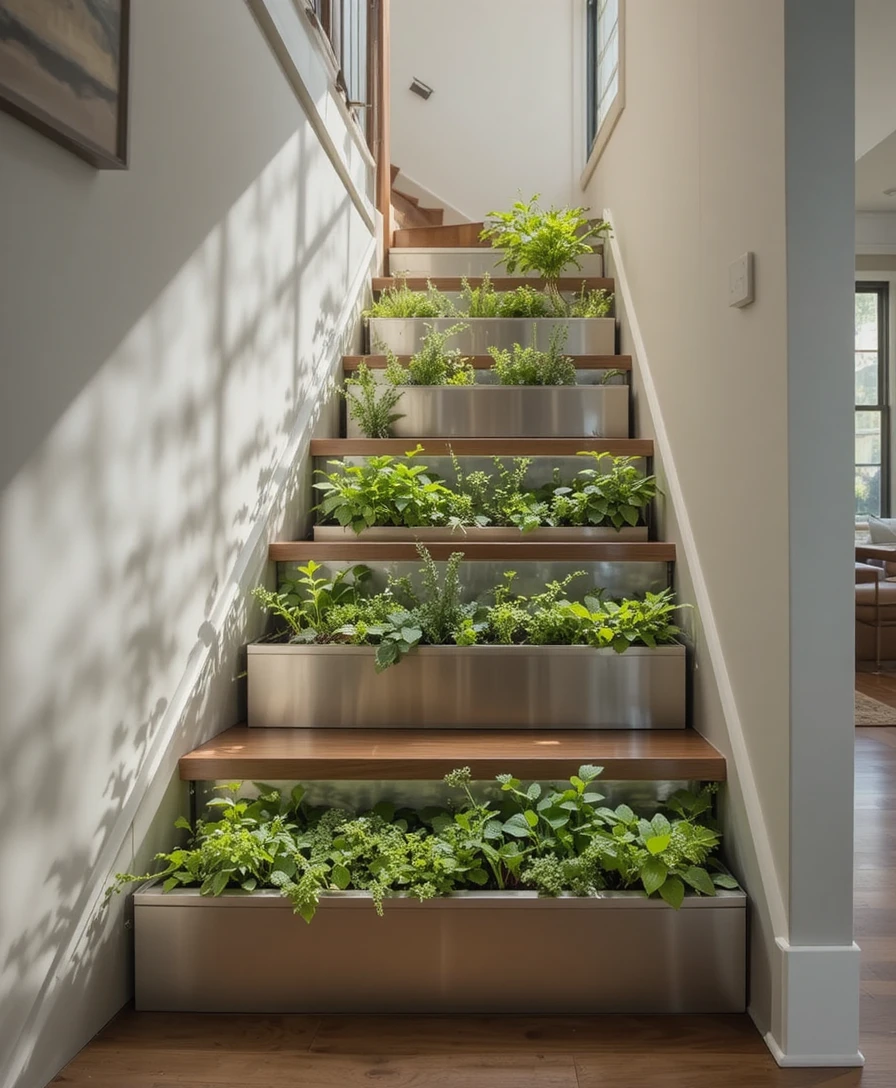
When a client’s staircase sits adjacent to their open-concept kitchen, I love turning the lower stair structure into an edible culinary garden. I fit stainless steel, self-watering planter liners into the side ledges or built-in stair drawers. I stock these sunlit spots with aromatic herbs like Rosemary, Thyme, Genovese Basil, and Mint. Integrated micro-LED grow strips mounted under each step keep the herbs producing heavily year-round while filling the surrounding living space with fresh, natural scents every time you step past.
13. Double-Height Tropical Tree Well with Skylight Feature
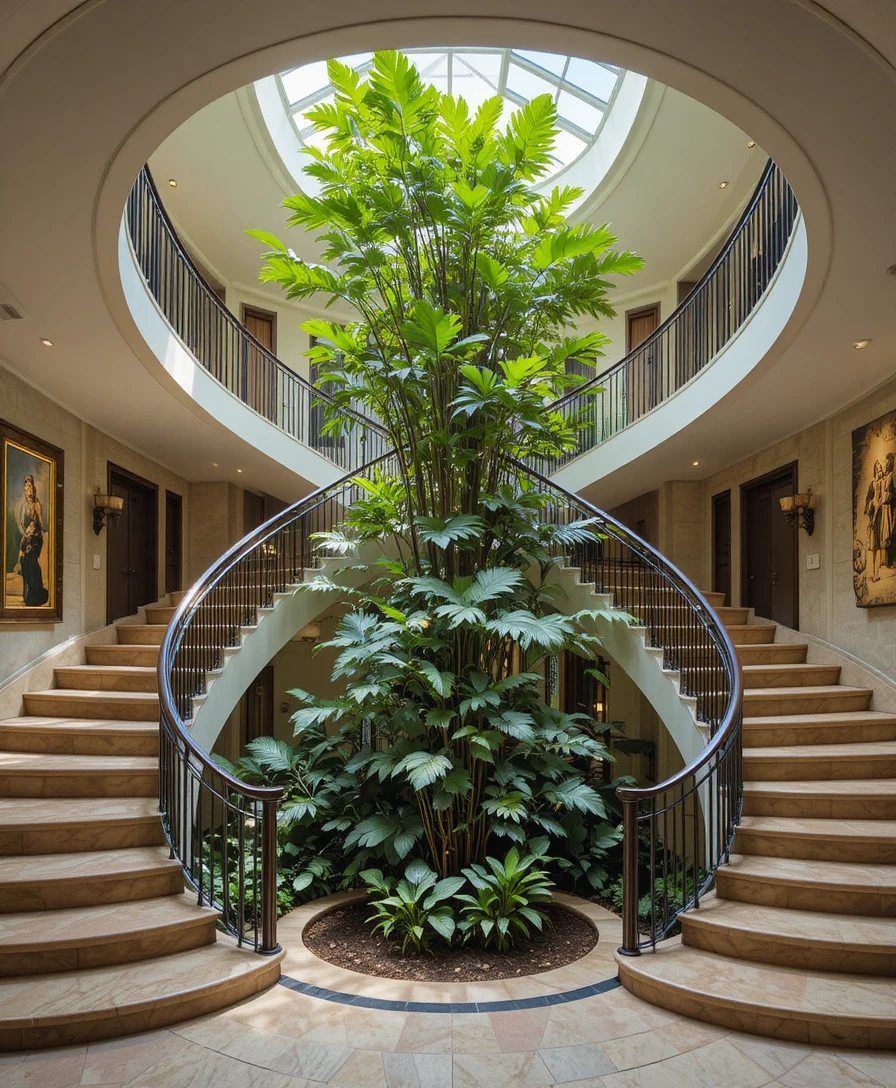
If your staircase wraps around a central open well with an overhead skylight, planting a full-scale specimen tree creates a striking luxury centerpiece. I design a deep floor pit beneath the lowest step landing, complete with dedicated drainage and rich organic soil. I plant tall, elegant structural trees like a Ficus Lyrata, Bucida Buceras (Shady Lady), or Strelitzia Nikolai (White Bird of Paradise). The tree grows up through the center of the stair void, allowing you to experience its lush foliage from multiple elevations as you move between floors.
14. Minimalist Air Plant Suspension on Steel Cables
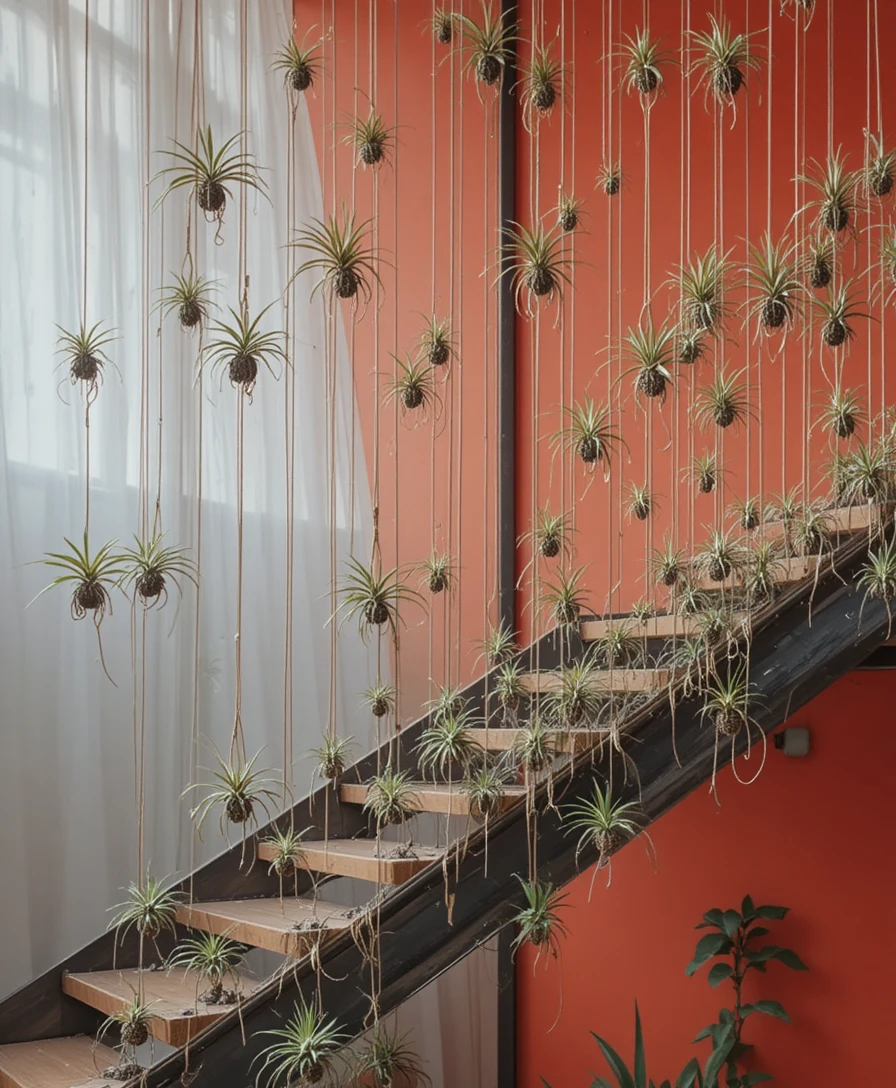
For ultra-contemporary or industrial loft staircases made of exposed steel and wire ropes, delicate soil-based plants can feel out of place. I prefer attaching dozens of Tillandsia Xerographica and Tillandsia Ionantha air plants directly to the vertical tension cables using invisible jewelry wire or custom brass clips. These rootless wonders absorb atmospheric moisture and require only light misting or weekly soaking. They look like floating green sculptures suspended in mid-air, complementing the architectural lines of modern steel framing.
15. Sunken Moss Wall Panels Under Riser Overhangs
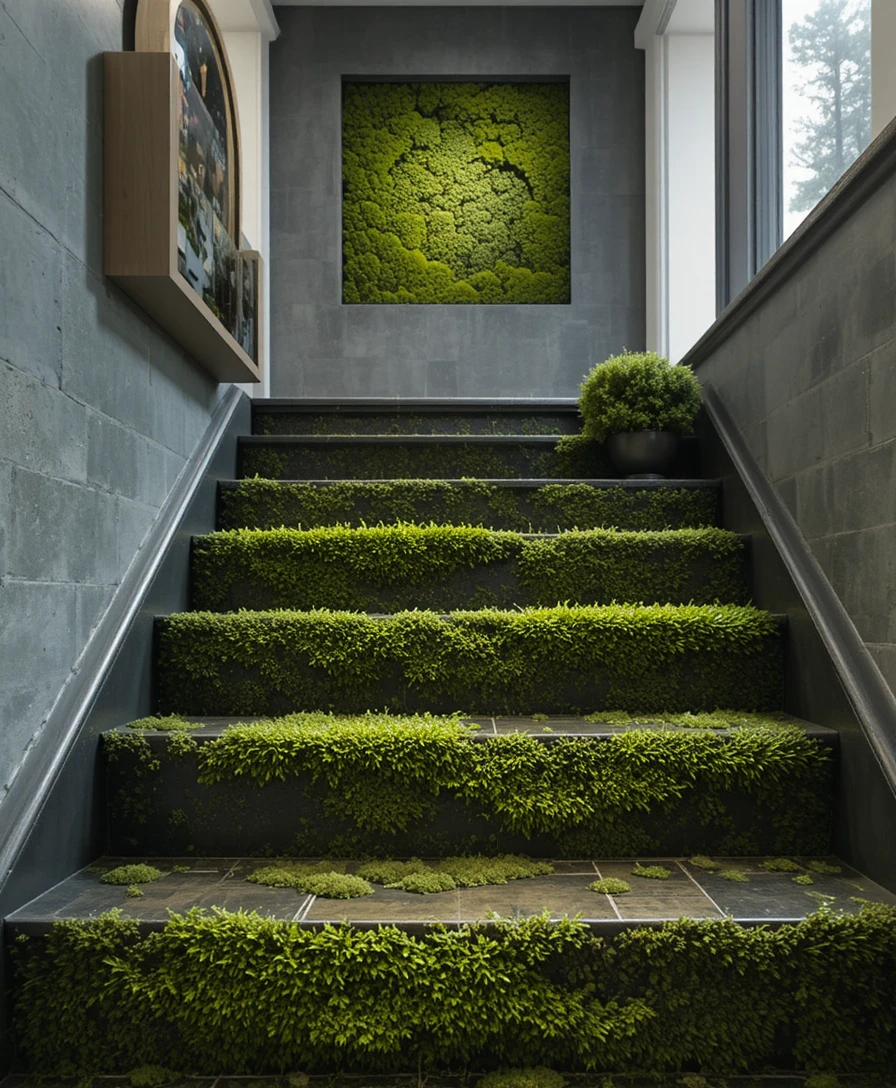
Moss walls offer maximum visual impact with virtually zero ongoing maintenance. I fabricate custom, recessed framing panels beneath the overhang of individual stair steps, filling them with preserved Sheet Moss, Reindeer Moss, and Mood Moss in varying shades of chartreuse and deep emerald. Because preserved moss requires no sunlight or irrigation, this approach is ideal for completely enclosed, dark stairwells. The textured, velvety surfaces absorb sound, significantly reducing echoes and footstep noise throughout your home.
16. Stepped Terracotta Pot Display on Tread Ends
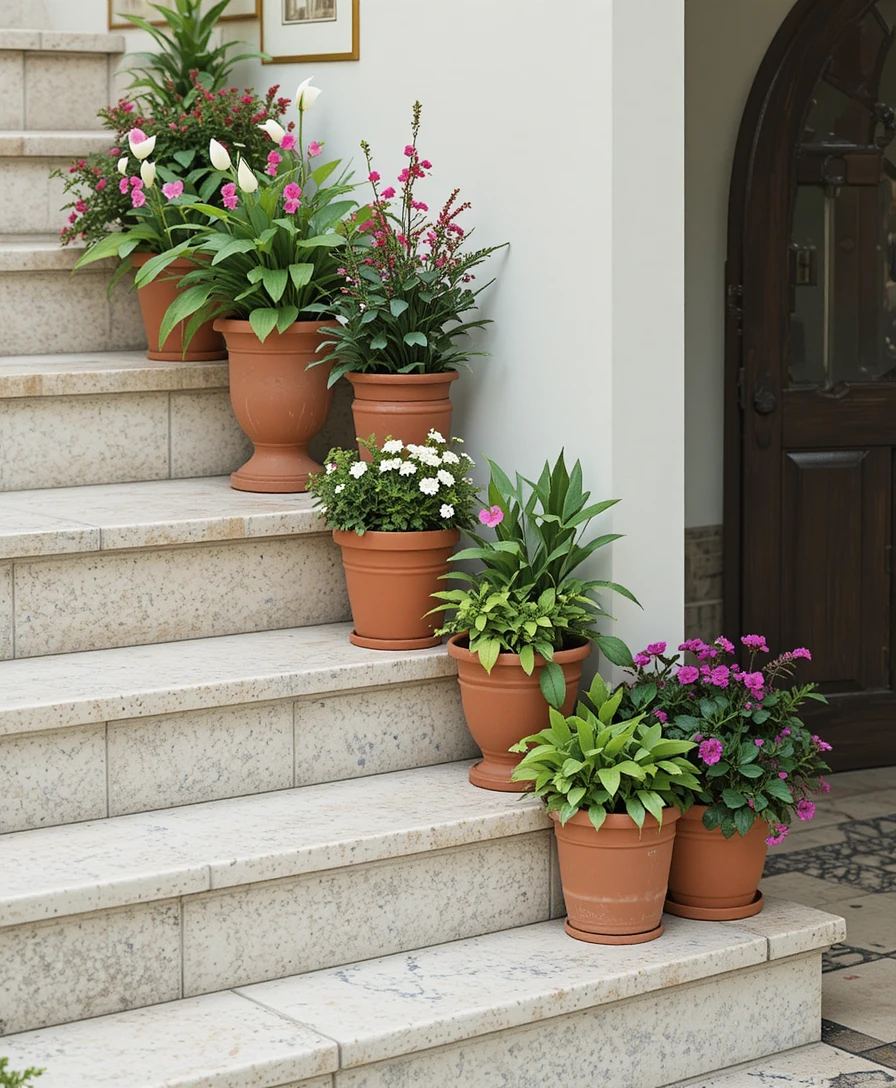
If you want a charming, adaptable approach without permanent structural alterations, use the outer edges of wide stair treads. I select a collection of handmade Italian terracotta pots in varying heights and diameters, seal their bases to protect the flooring, and arrange them neatly along the edge of each step. I plant a mix of upright Peace Lilies, trailing String of Pearls, and colorful Calathea Velvet Touch. This classic layout can be reconfigured instantly whenever you want to update your interior color palette.
17. Industrial Pipe Framework with Hanging Trailing Pots
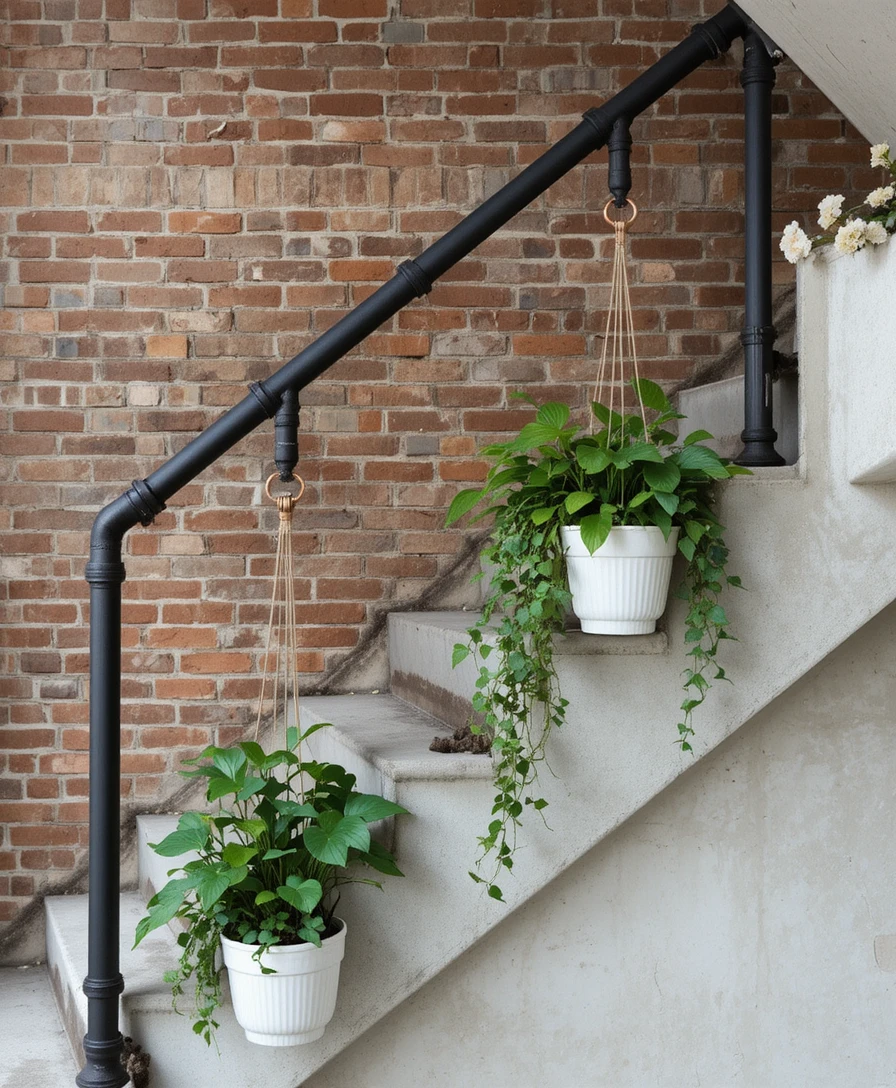
For modern, urban spaces with exposed brick and concrete staircases, I build custom matte-black industrial iron pipe framing that wraps alongside the stair stringer. Using S-hooks and copper rings, I suspend lightweight ceramic pots holding lush Trailing Heartleaf Philodendrons and Tradescantia Zebrina. The contrast between raw industrial iron and soft foliage generates fantastic visual texture. The modular pipe structure also serves as an additional, sturdy handrail support along the wall.
18. Built-In Bench Planter Combo at Stair Base
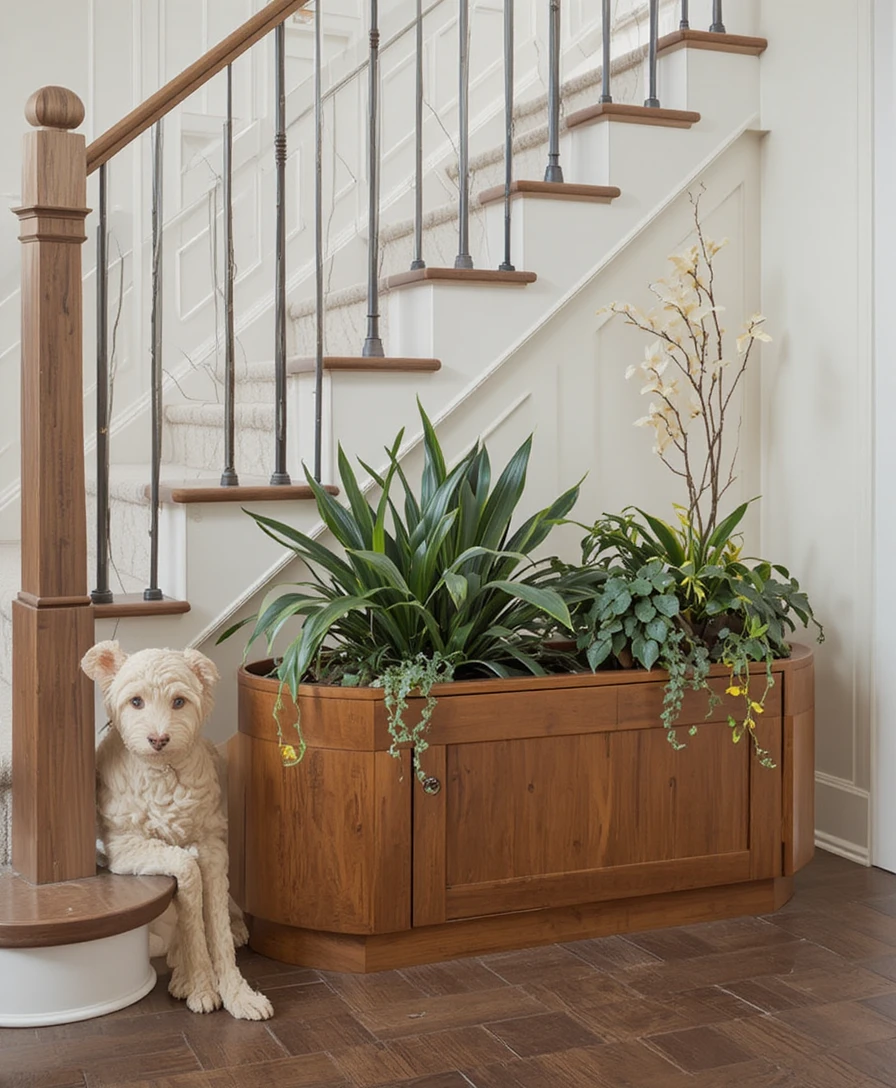
I frequently design custom built-in cabinetry at the base of a staircase that integrates seating and plant space. I extend the lowest two stair treads outward into a wide, custom oak bench flanked by a deep, built-in planter box. The bench offers a comfortable spot to remove shoes, while the adjacent planter features upright Sansevieria and soft, cascading Peperomia Hope. This functional integration ensures the transition between floors feels intentional, cozy, and thoroughly integrated into your home’s layout.
19. Backlit Acrylic Planter Boxes Set into Stair Risers
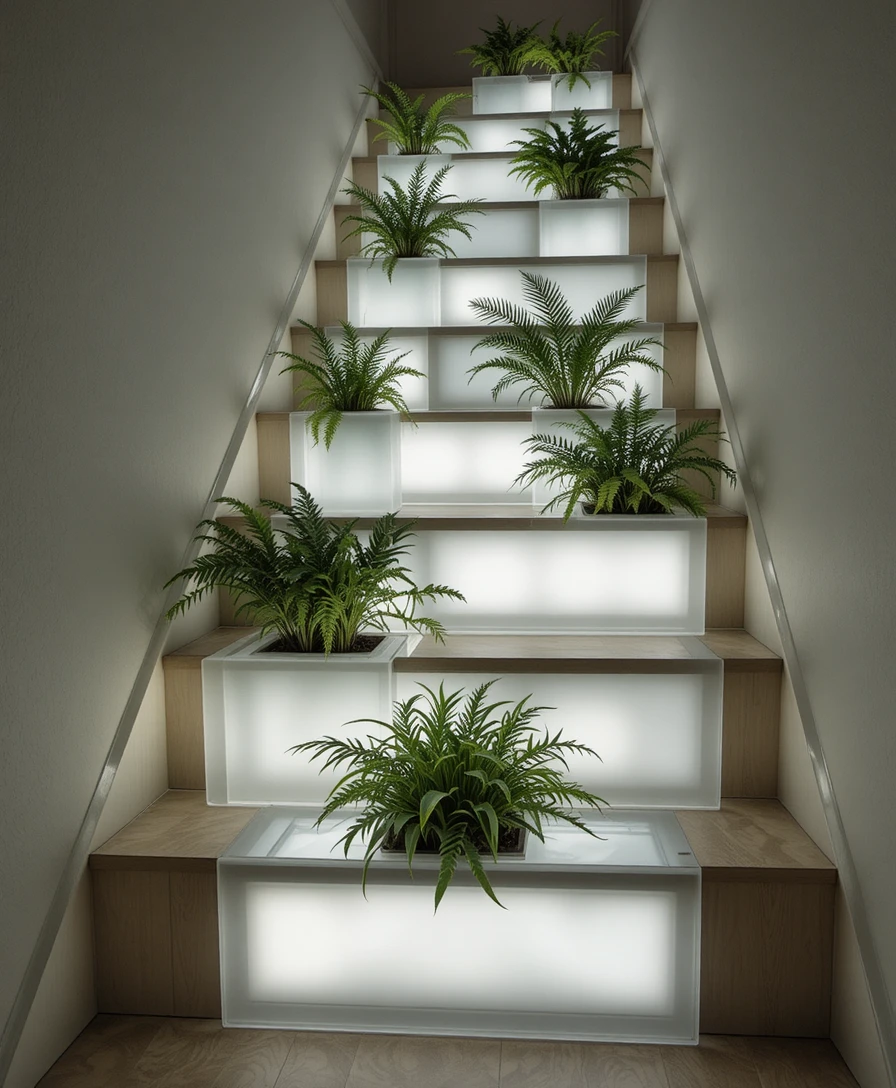
For a futuristic look, I replace solid vertical stair risers with custom frosted acrylic light boxes that feature integrated plant troughs. Sealed LED strip lighting sits at the back of the box, casting a soft, warm glow through light-transmitting acrylic panels. Thin, moisture-loving indoor plants like Ferns and Dwarf Palms sit within the illuminated risers, casting dramatic botanical silhouettes whenever the lights turn on at night. This setup doubles as an ambient safety nightlight for the entire staircase.
20. Glass Enclosed Under-Stair Atrium with Automated Microclimate
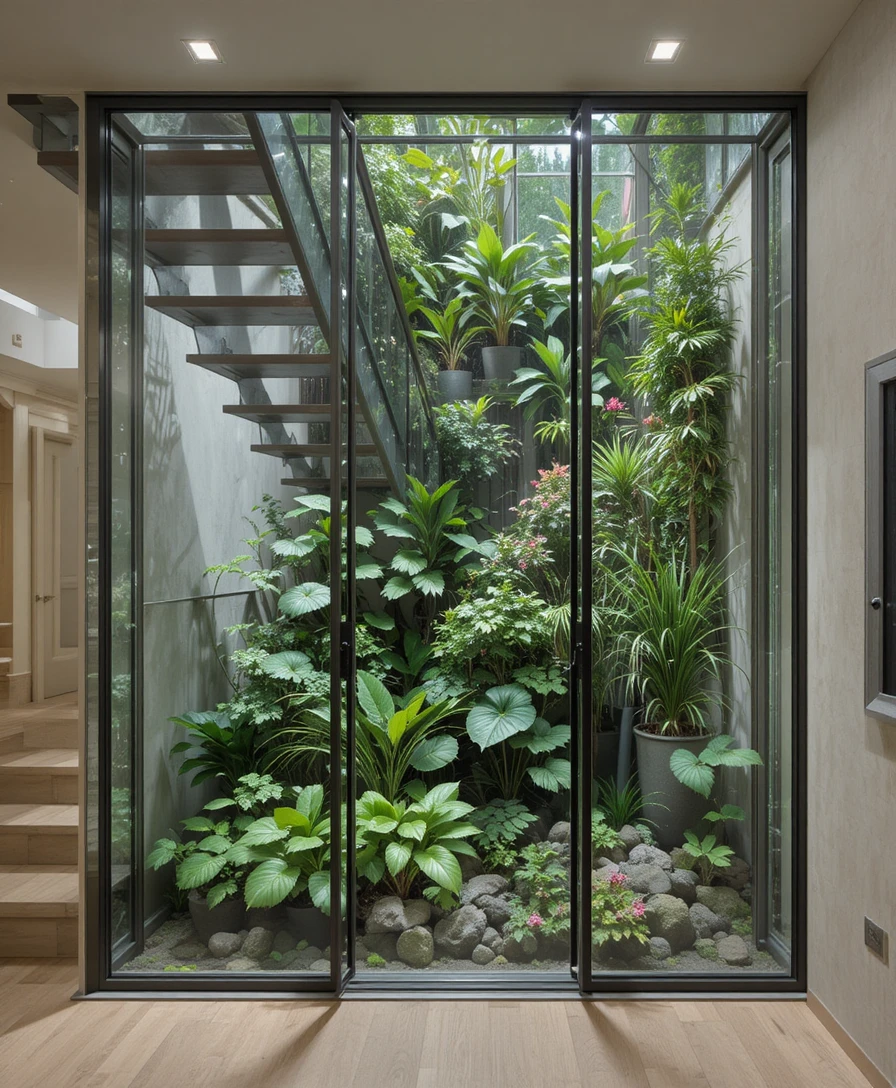
The pinnacle of luxury stair design is a fully sealed, glass-enclosed under-stair atrium complete with automated environmental controls. I specify floor-to-ceiling glass panels with sliding access doors installed underneath a main staircase framework. Inside, an automated system controls misting nozzles, full-spectrum grow lights, and silent ventilation fans. This allows you to cultivate delicate tropical orchids, rare Philodendrons, and sensitive Ferns regardless of your local climate, turning the space beneath your stairs into a living museum piece.
Optical Design Tricks for Staircase Botanicals
Mirror Refraction: Mount low-iron mirrors behind under-stair plant beds to visually double the perceived depth of your garden and reflect light into dark corners.
Vertical Line Extensions: Use tall, columnar plants like Snake Plants or Horsehead Philodendrons along narrow stairs to draw the eye upward and make low ceilings feel higher.
Color Temperature Contrast: Pair cool white foliage lights (5000K) with warm architectural step lighting (2700K) to make plant greens pop while keeping your living space cozy.
Proportional Scaling: Keep plant sizes scaled to your step width; leaves should never extend into the primary walking path to prevent tripping or foliage damage.
The Science Behind Staircase Biophilia
Integrating living plants into architectural transit zones like stairwells yields measurable physiological and psychological benefits:
Sound Attenuation: Plant foliage, soil substrates, and organic materials naturally diffuse high-frequency sound waves. Studies show indoor foliage can reduce ambient echoes along hard stairwell surfaces by up to 15%.
Air Purification Performance: NASA Clean Air Studies confirm that common staircase species like Snake Plants, Pothos, and Peace Lilies filter volatile organic compounds (VOCs) such as formaldehyde and benzene from indoor air currents.
Thermal Regulation & Microclimates: Through transpiration, dense indoor garden installations increase localized ambient humidity by 10% to 15%, reducing airborne dust particles and creating healthier living environments.
Frequently Asked Questions
How do I provide enough light for plants under dark staircases?
You can install low-profile LED grow lights (4000K daylight spectrum) under stair risers or flush-mounted into flanking drywall. Run them on a 12-hour automated timer to provide adequate light for shade-tolerant species like Pothos, ZZ Plants, and Snake Plants.
Will an indoor staircase garden cause moisture damage or mold?
No, provided you apply a continuous 40-mil EPDM rubber waterproof liner inside custom planter boxes, use double-sealed pots, and maintain a 2-inch bottom layer of Leca pebbles. Proper drainage and adequate room airflow prevent standing water and surface mold growth.
Which plants are best for low-maintenance staircase gardens?
Sansevieria (Snake Plant), Zamioculcas Zamiifolia (ZZ Plant), Epipremnum Aureum (Pothos), and Aglaonema (Chinese Evergreen) are ideal choices. They require infrequent watering, tolerate fluctuating ambient light, and adapt well to restricted root spaces without constant pruning.
How do I water plants installed on high stair walls or ceiling suspenders?
Use sub-irrigated self-watering pots with built-in reservoirs, or integrate micro-drip irrigation lines powered by a quiet subterranean pump. For high hanging pots, lightweight telescoping watering wands with manual shut-off valves allow easy watering from floor level.
Final Thoughts
Rethinking the blank space around your staircase is one of the most satisfying home design upgrades you can make. When you merge living foliage with structural interior framing, you turn a purely functional transition zone into an engaging, beautiful architectural highlight. Indoor Staircase Gardens provide an opportunity to express your personal design style while bringing the soothing, air-purifying benefits of nature directly into your daily home life.
Start small by placing a few potted trailing plants along an open step ledge, or go all-in with a custom-lit under-stair planting bed. Assess your ambient light levels, pick the right moisture barriers and irrigation setup, and choose plant varieties that fit your daily lifestyle. With a thoughtful approach, your staircase can easily become the most memorable feature in your home.