
Corners are often the most underutilized real estate in any home. Throughout my ten years as an interior designer, I have lost count of how many times a client has pointed to a shadowy, awkward angle in their living room or hallway and asked, “What on earth do I do with this spot?” My answer is always the same: turn it into a striking visual focal point. Creating a corner wall gallery is one of my absolute favorite ways to breathe life, personality, and depth into a room without sacrificing floor space.
When you learn how to decorate wall corners properly, you stop viewing awkward architecture as a design flaw and start seeing it as a canvas. A well-curated gallery wrapped around a 90-degree angle softens harsh lines, draws the eye upward, and makes your entire room feel visually expansive. Today, I am sharing my exact blueprint—along with 20 of my tested, design-forward corner wall gallery ideas—to help you turn those forgotten nooks into stunning art displays.
| Gallery Style | Best Room / Location | Key Aesthetic / Vibe | Ideal Frame Material |
| L-Shaped Wrap | Living Room Angles | Clean, continuous flow | Matching sleek wood or metal |
| Floor-to-Ceiling | High-Ceiling Dining Rooms | Dramatic, tall, architectural | Uniform matte black |
| Floating Shelf Corner | Home Offices / Dens | Layered, dimensional, informal | Light oak or walnut |
| Asymmetrical Grid | Modern Bedrooms | Eclectic, organic, relaxed | Mixed metals and woods |
| Vintage Salon Style | Hallways & Stairwells | Nostalgic, story-rich, cozy | Ornate gold and antique brass |
Tools & Materials Checklist Before You Begin
Before hammer touches drywall, gather your tools. Precise measurement is critical when working on two intersecting planes.
Measuring Tape & Pencil: Essential for marking centerline sightlines (aim for 57 to 60 inches from the floor).
Laser Level or Torpedo Level: Standard levels can be tricky in tight angles; a cross-line laser level works best.
Painter’s Tape & Kraft Paper: Trace your frames onto paper, cut them out, and tape them to the walls first.
Picture Hanging Hardware: Heavy-duty drywall anchors, D-rings, picture wire, or museum gel for stabilizing lower frame edges.
Frame Spacers: Keep a 2-inch spacer block handy to ensure uniform gaps across both walls.
20 Inspiring Corner Wall Gallery Ideas
1. Seamless L-Shaped Wrap Gallery
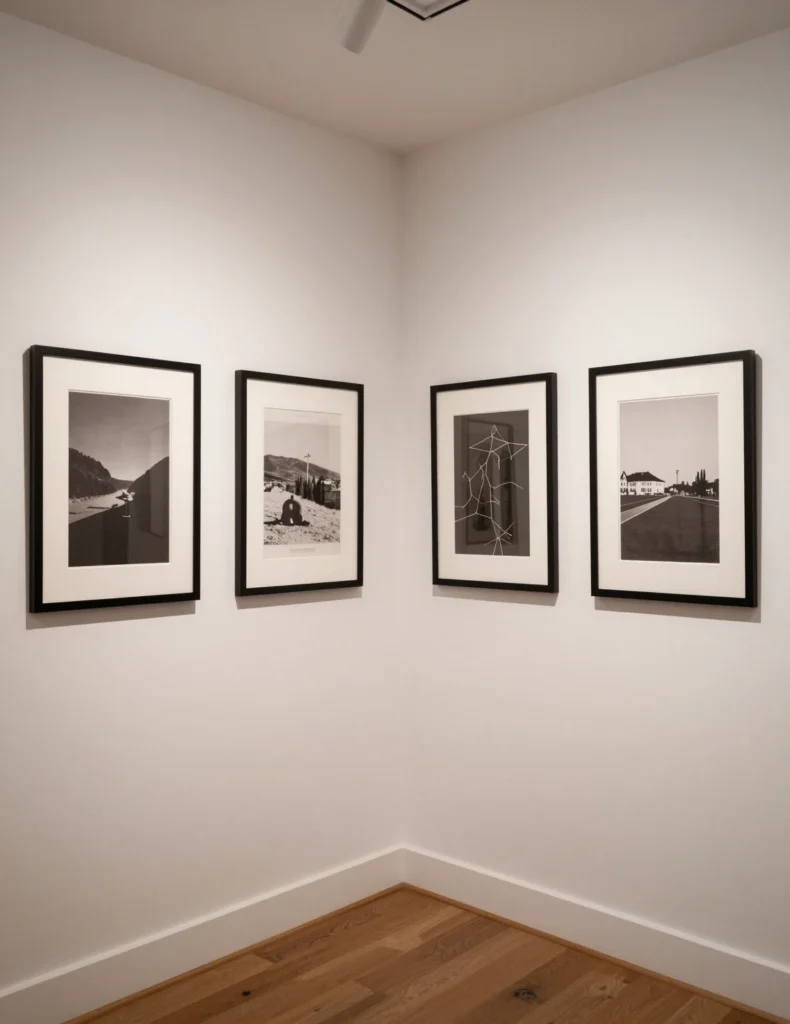
I love using this technique when I want to create the illusion of continuous flow across two adjacent walls. You place frames on both sides of the inner corner, maintaining an exact two-inch gap right down the central crease. This connects two distinct living areas seamlessly while turning a sharp visual break into a smooth architectural curve. Choose cohesive art prints with matching mats to keep the layout feeling deliberate, sleek, and exceptionally tailored.
2. Vertical Floor-to-Ceiling Stacks
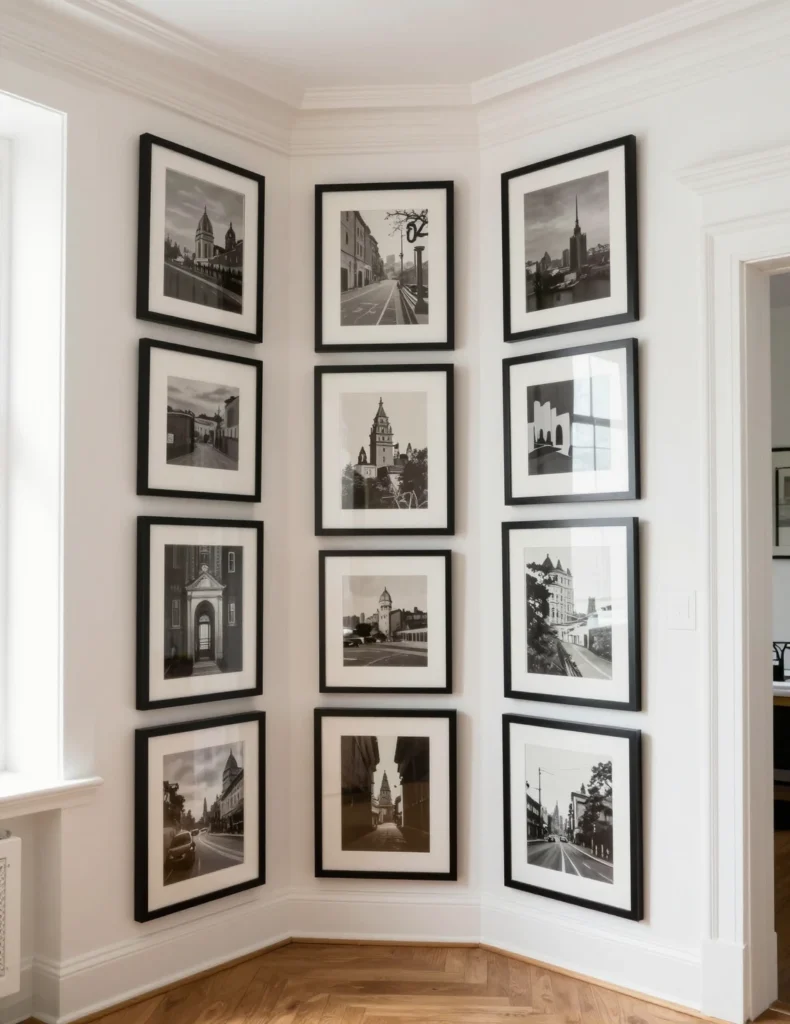
If you have low ceilings or a tight corner that feels cramped, this vertical approach is your best friend. By stacking art frames vertically from just above the baseboard all the way up toward the crown molding, you force the eye to travel upward. I frequently recommend this to my clients who live in city apartments because it maximizes vertical height without clogging floor real estate. Use slim black frames to keep the look razor-sharp and sophisticated.
3. Floating Corner Shelves with Layered Art
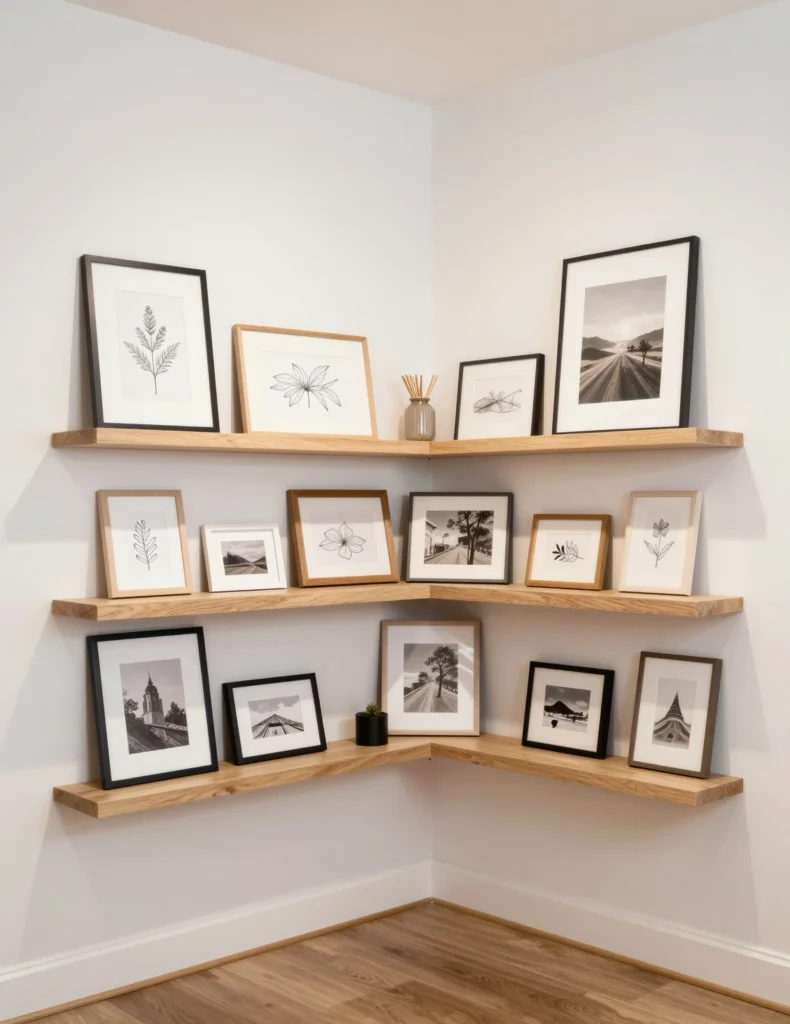
Who says you have to put nails in the wall for every single picture frame? Floating corner ledges let you lean, layer, and swap artwork whenever the mood strikes without creating endless wall holes. I like pairing light oak shelves with overlapping frames of varying sizes, mixing small line drawings with larger landscape photography. It creates an organic, relaxed vibe that feels lived-in, curated, and completely effortless.
4. Symmetrical Grid Wrap Across Angles
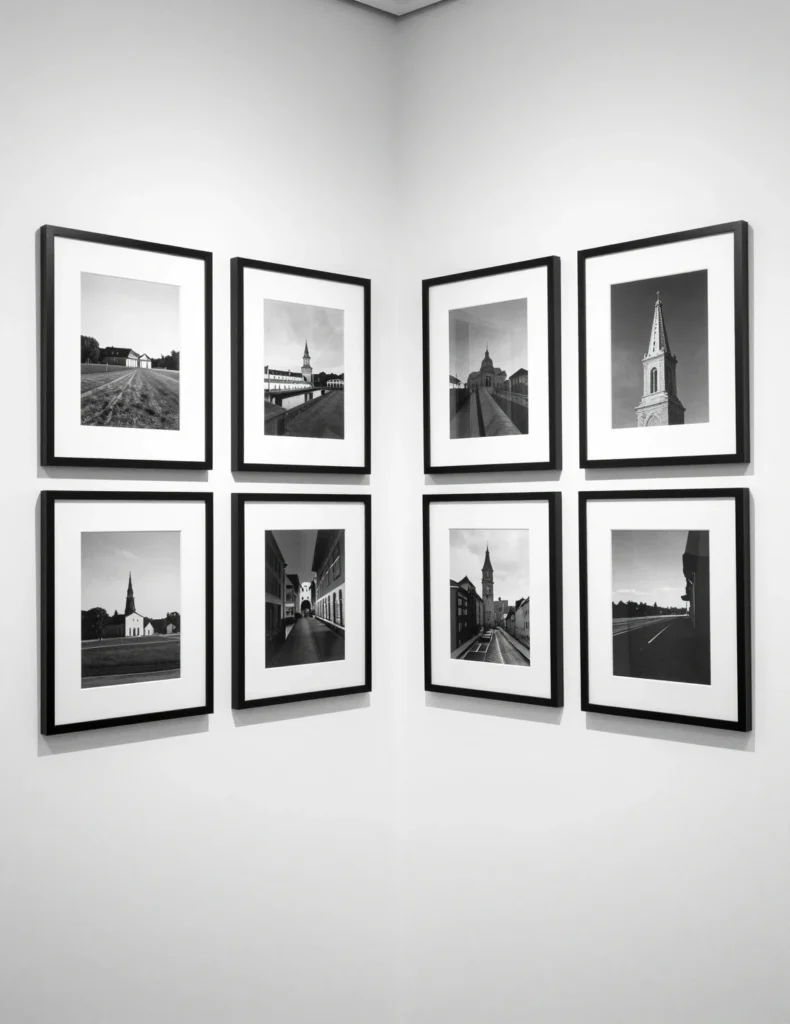
For lovers of modern minimalism and tidy lines, an intersecting grid layout brings immediate order and calming structure to a chaotic corner. You arrange identical frames in a strict grid—such as six on the left wall and six on the right—ensuring every horizontal line lines up perfectly across the seam. I suggest using monochrome black-and-white photography with generous white matting to pull off this crisp, high-end gallery aesthetic.
5. Floor-Anchored Oversized Art Duo
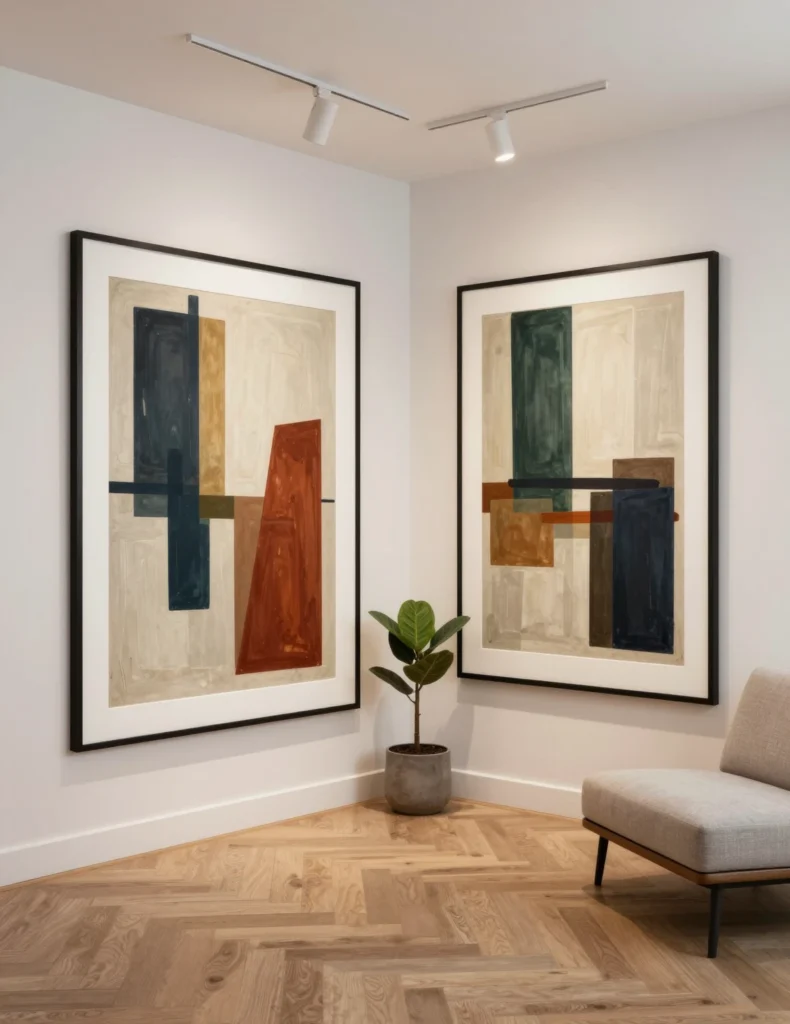
Sometimes two massive, high-impact pieces speak louder than a dozen small ones. You take two large, oversized framed canvases or art prints and place one on each side of the corner, positioning them close to the floor line. In my styling work, this low-slung arrangement anchors a room beautifully, especially when paired with a low-profile lounge chair or an sculptural indoor plant right in the nook.
6. Mixed Media Vintage Mirror & Frame Collage
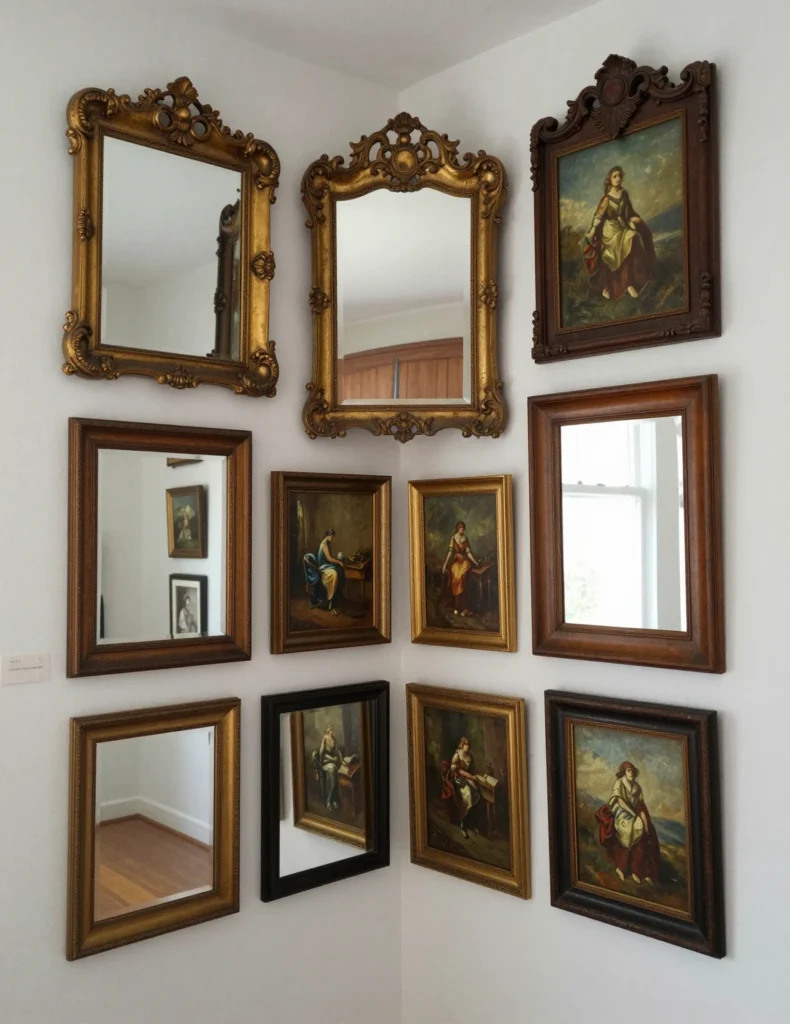
Break away from standard paper prints by blending antique gilded mirrors, architectural wood carvings, and small framed oil paintings. The reflective glass in the mirrors bounces light out from the dark corner, making the entire room feel brighter and roomier. I hunt for unique vintage frames at flea markets, combining warm brass, tarnished gold, and distressed wood for a charming, old-world salon feel.
7. Modern Asymmetrical Offset Arrangement
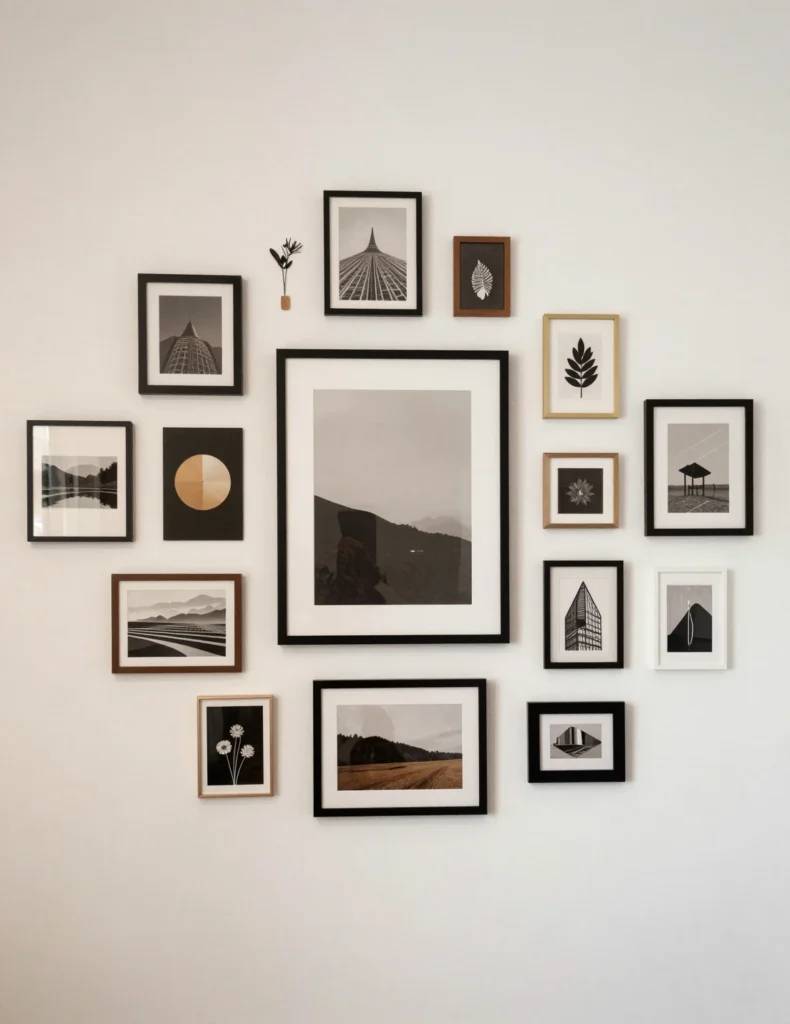
If strict symmetry feels too stiff for your personal taste, embrace an asymmetrical collage that organically spreads out from the corner crease. Start with your largest anchor frame offset from the center line, then build outward on both walls with medium and smaller pieces. The trick here is balancing visual weight rather than matching lines, resulting in a playful, dynamic gallery that feels completely personalized and artistically spontaneous.
8. Architectural Corner Shadow Box Display
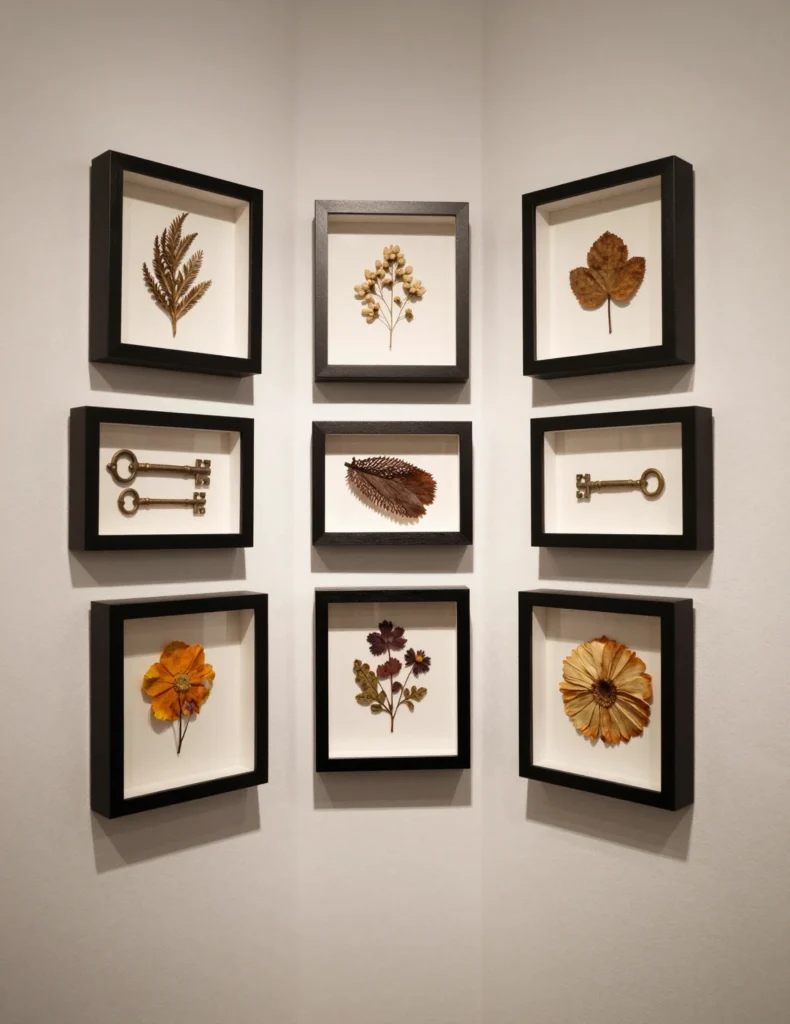
Shadow boxes introduce three-dimensional depth, which works wonders inside a flat 90-degree corner space. Fill these deep frames with tactile items like dried botanical specimens, vintage keys, sculptural textiles, or preserved pressed flowers. I find that the physical depth of shadow boxes catches ambient side lighting beautifully, creating soft, natural shadows that make your wall art feel interactive and sculptural.
9. Curved Art Display Surrounding Inner Angles
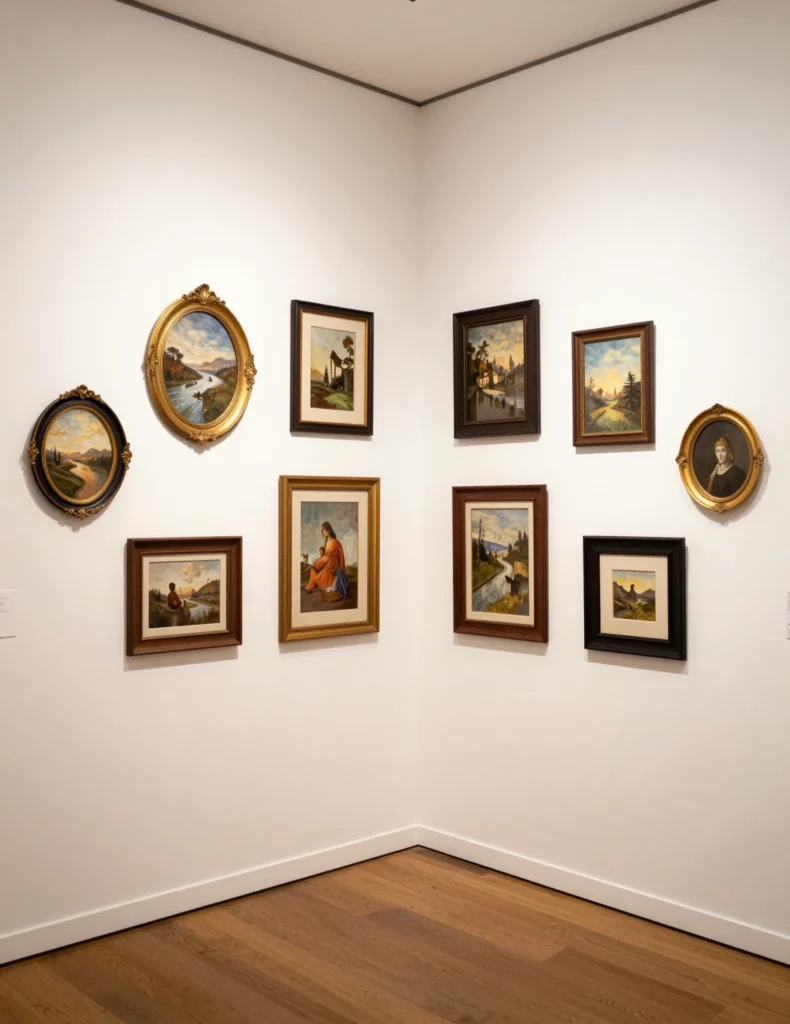
Contrasting straight architectural lines with soft curves is a classic design trick I use constantly. Instead of standard rectangular frames, curate a collection of round, oval, and arched frames that climb up both sides of the wall corner. The rounded edges break up the harsh right-angle junction of the drywall, softening the entire room and adding a whimsical, gentle aesthetic.
10. Monochromatic Color Block Gallery
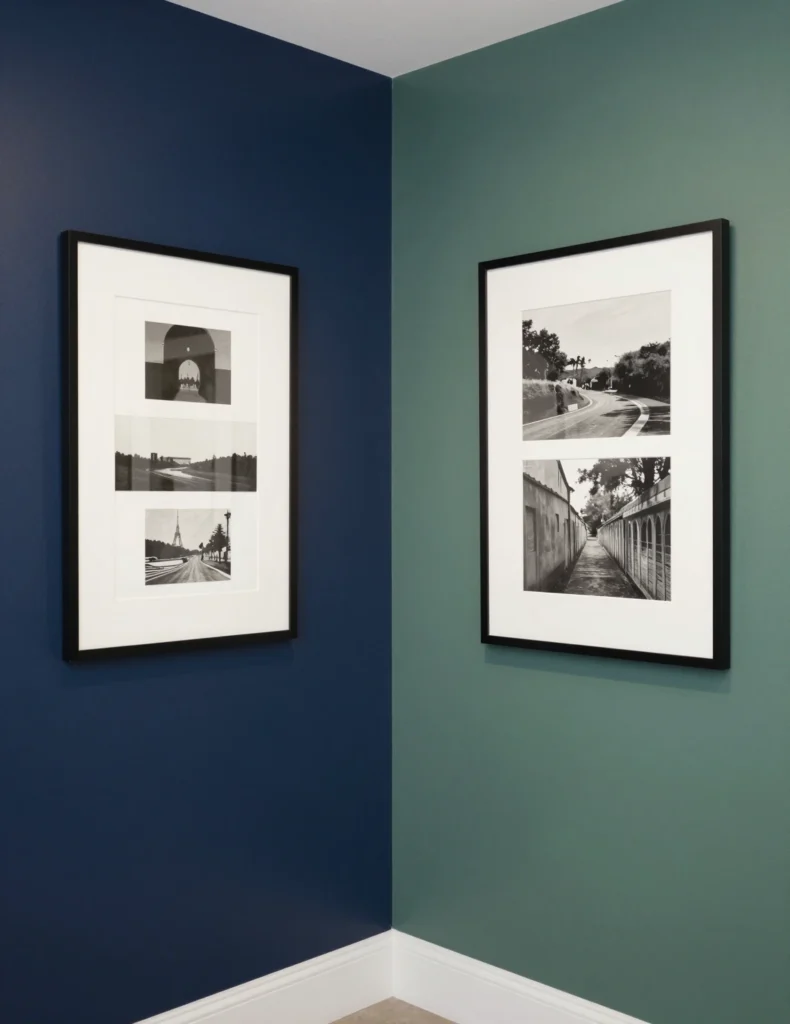
Transform your corner with a bold paint application before hanging a single frame. Paint a vertical strip of rich navy, sage green, or deep charcoal directly into the corner across both walls, then mount artwork on top of it. Matching your frame colors to the background paint creates a dramatic tonal display that feels like a custom built-in feature wall straight out of a boutique hotel.
11. Wrap-Around Wooden Floating Ledges
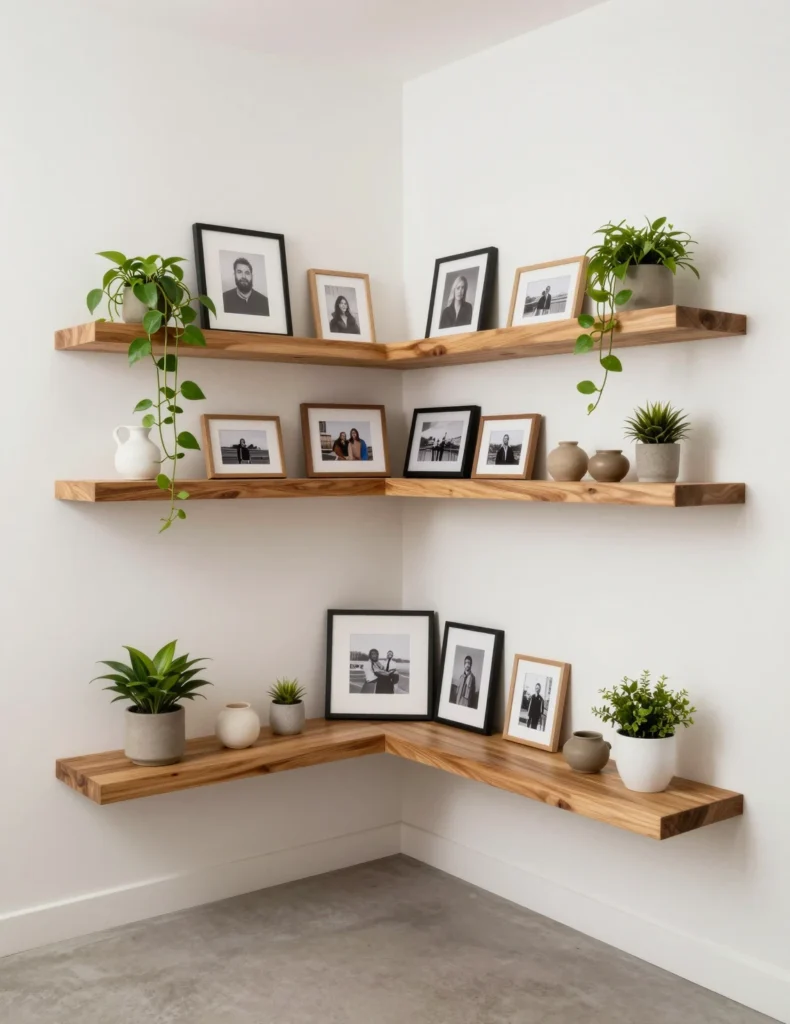
Unlike isolated floating shelves, wrap-around corner ledges are custom-fitted to hug the 90-degree turn as a single continuous piece. This creates a striking linear path that draws your eyes straight around the corner. I love styling these custom ledges with a mix of framed personal photos, small trailing vines like pothos, and small ceramic pottery pieces to create a rich, layered lifestyle nook.
12. Diptych and Triptych Corner Spans

A diptych or triptych split across a room corner creates an extraordinary visual bridge between two walls. Take a single large artwork or panorama split across two or three panels, mounting panel one on the left wall and panel two on the right. The artwork physically folds around the room’s architecture, turning an ordinary wall junction into a custom installation that leaves guests asking how you did it.
13. High-Contrast Gallery Wall with Integrated Sconces
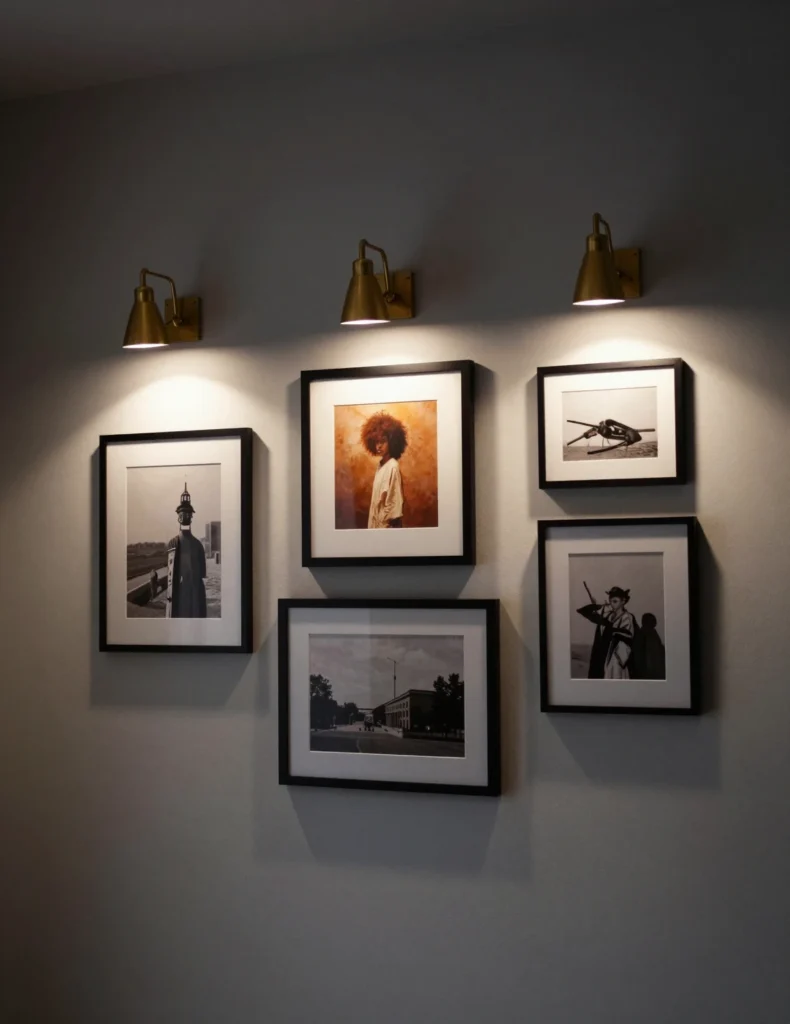
Lighting can make or break any gallery wall, particularly inside shadowy corners. Integrate hardwired or plug-in brass swing-arm wall sconces directly above your framed gallery layout. The focused downward glow highlights the artwork’s textures and colors while turning a dim, forgotten corner into a cozy, illuminated reading nook or accent area during evening hours.
14. Corner Gallery Surrounding Built-In Seating

If you have a corner banquette, breakfast nook, or accent bench, build your gallery wall upward from the top of the seat back. Frame the seating area with a cozy arrangement of family heirlooms, travel photography, or abstract art. This creates a defined “room within a room” feeling, anchoring the furniture to the architecture and making the dining or lounging experience feel vastly more intimate.
15. Botanical and Herbarium Gallery Cluster

Bring the serenity of nature indoors by dedicating your corner space to a botanical-themed gallery. Use matching slim oak frames filled with pressed green fern fronds, vintage botanical sketches, or leaf prints spread across both walls. The natural greens against warm wood frames soften hard drywall joints, infusing your room with an organic, calming greenhouse atmosphere.
16. Ceiling-Hanging Frame Array
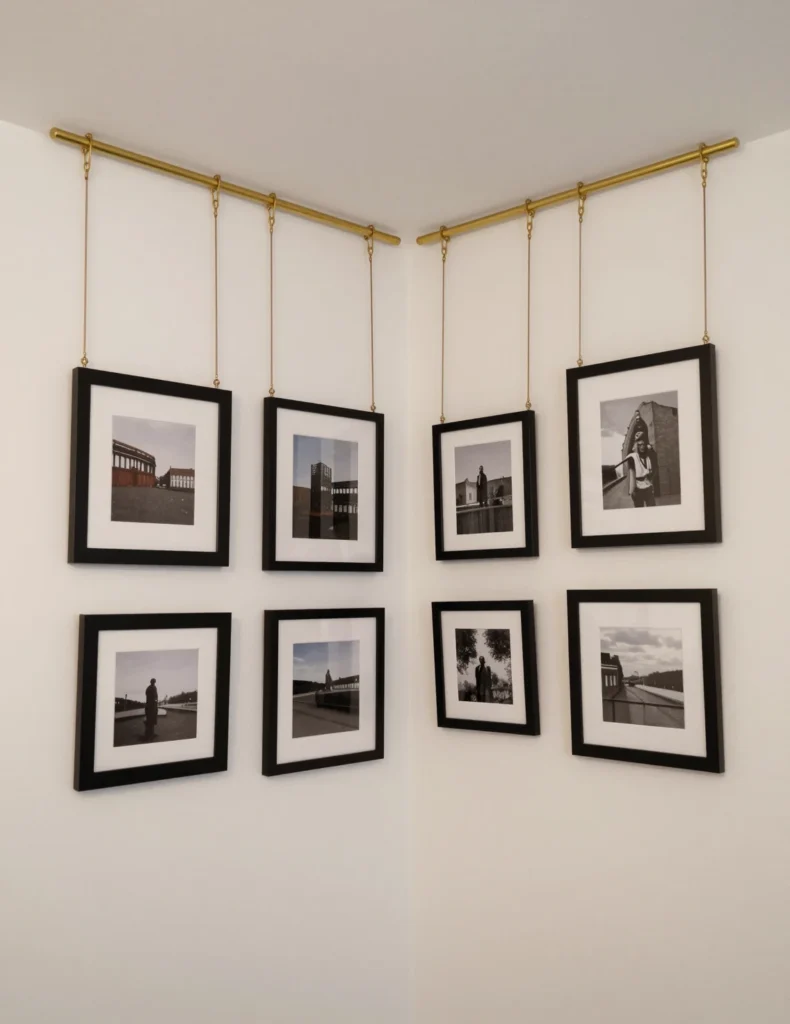
When wall space is limited or drilling is tricky, suspend your picture frames directly from decorative hooks or rails mounted at the ceiling line. Using delicate brass chains or slim leather cords, hang frames at varying staggered heights along the inner corner. This suspended floating effect adds incredible vertical movement, airiness, and a distinct gallery-grade sophistication to modern spaces.
17. Typography and Graphic Art Corner
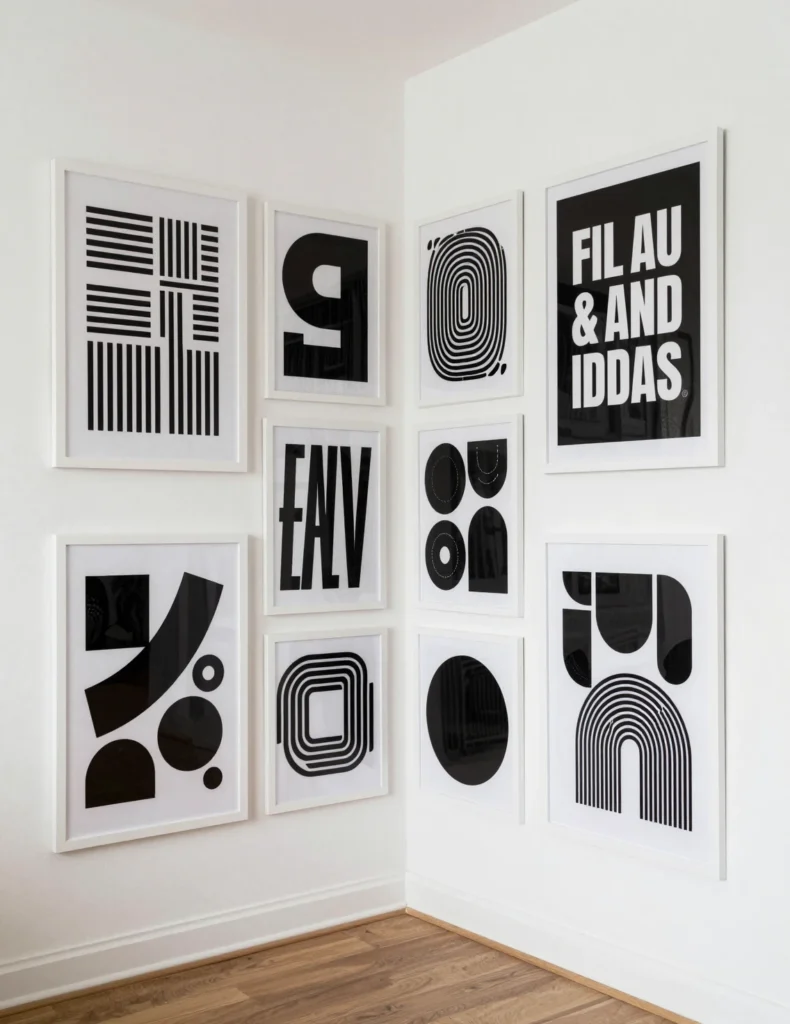
For contemporary apartments and modern homes, combine bold graphic prints, typographic art, and black-and-white minimalist posters. Mixing energetic word art with abstract geometric shapes creates a youthful, inspiring visual hub. Keep the framing uniform—such as all thin white aluminum frames—to ensure the energetic prints look curated rather than chaotic.
18. Outer Corner Edge Wrap
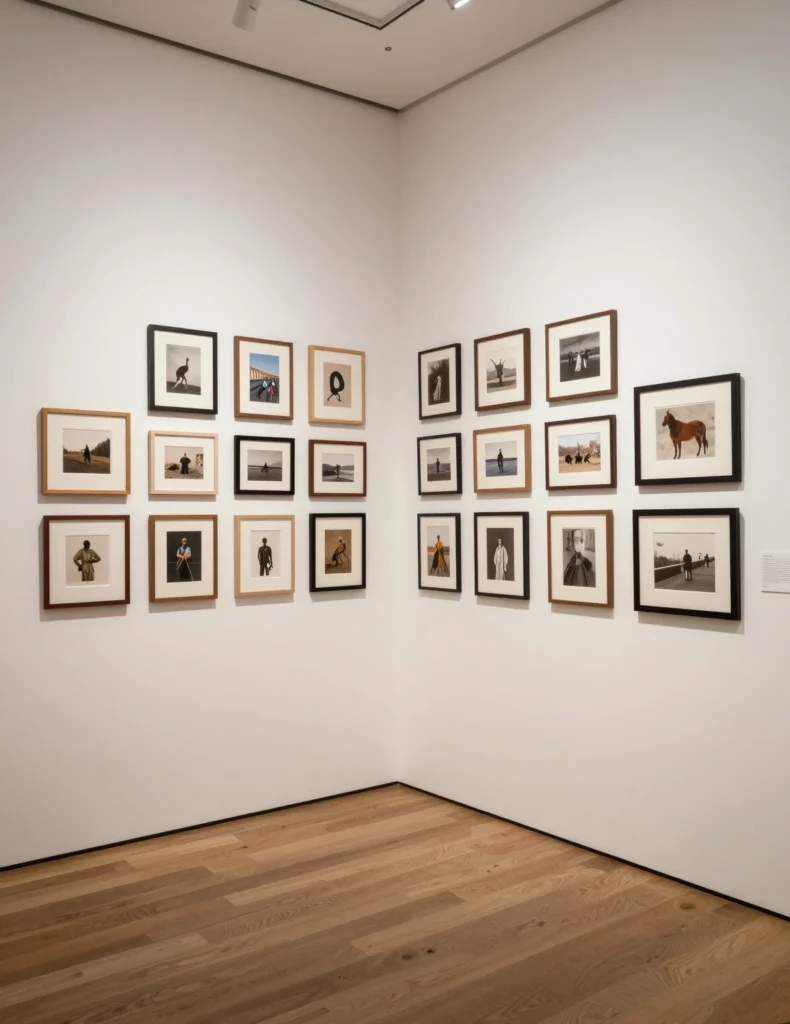
Most gallery walls focus on inner corners (concave angles), but wrapping artwork around an outer corner (convex wall turn) is a brilliant design move. Hang small, closely spaced frames that physically trace around the projecting wall edge from one room or hallway into another. This clever layout guides foot traffic naturally through your floor plan while transforming a high-traffic corner into an engaging visual walkway.
19. Linear Mid-Century Modern Horizontal Band
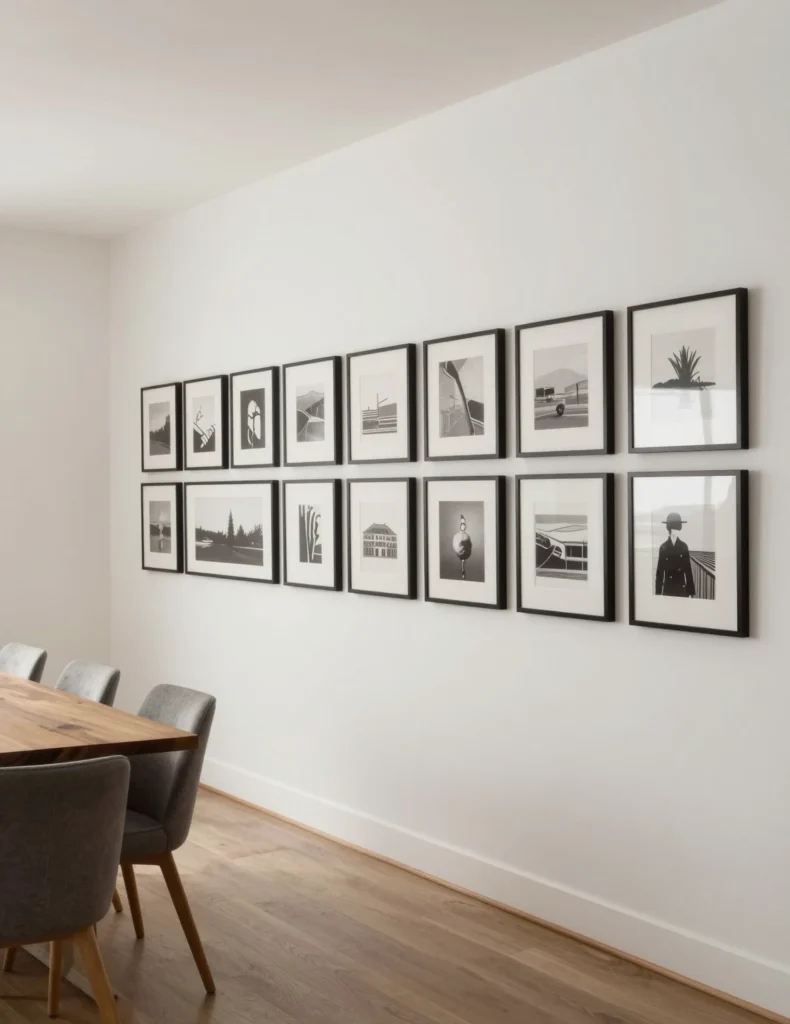
If you prefer a sleek, streamlined look, arrange a single horizontal row of medium-sized frames that wraps continuously around the corner at eye level. This creates a clean, mid-century modern ribbon of artwork that unifies two distinct spaces. I find this horizontal band technique works exceptionally well in dining rooms or long open-plan living areas where you want subtle sophistication without overpowering the space.
20. Eclectic Travel and Memory Wall
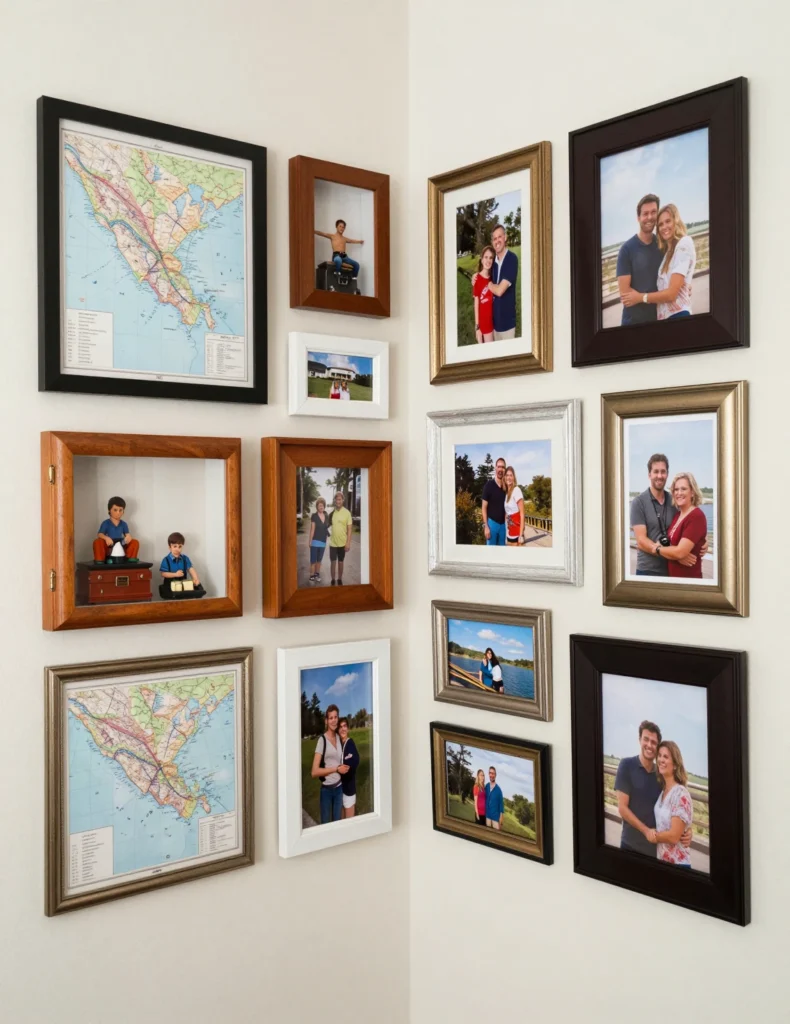
Turn your corner into a deeply personal storytelling space by combining framed travel maps, souvenir shadow boxes, postcard collections, and candid family photos. Mix different frame materials—warm cherry wood, brushed silver, painted white, and antiqued bronze—to reflect the diverse places you have visited. It makes the corner feel naturally built over time rather than styled overnight in a showroom.
Pro Styling Hacks & Optical Tricks for Corner Spaces
Decorating wall junctions requires a slightly different approach than styling a flat accent wall. Here are three professional tricks I use on every job site:
The Sightline Rule: Always hang the focal center of your gallery at eye level—roughly 57 to 60 inches from the floor. When wrapping a corner, ensure the horizontal baseline remains perfectly level on both walls so the artwork flows smoothly across the crease.
Managing Corner Shadows: Inner corners naturally trap shadows and receive less natural light. Counter balance this by using lighter matting inside your frames (crisp white or off-white) and selecting reflective metallic or light-toned wood frame finishes.
The 2-Inch Gap Standard: Keep the vertical gap right in the corner crease consistent. I find that a two-inch space on either side of the interior angle creates enough breathing room so frames don’t bump into each other while maintaining visual unity.
Spatial Design Data & Color Psychology in Galleries
Understanding how the human brain processes color and spatial geometry helps you build a far better gallery wall layout:
Spatial Perception: Studies in visual architecture reveal that vertical elements placed at room intersections break up rigid room boundaries, making small spaces feel up to 15% larger to the human eye by tricking visual depth perception.
Color Psychology: Placing warm tone artwork (terracottas, warm ambers, soft corals) inside dim corners actively counteracts cool ambient shadows. Research in environmental psychology shows warm hues stimulate visual interest and make cozy architectural nooks feel physically more inviting and intimate.
Frequently Asked Questions
How far apart should frames be in a corner gallery wall?
Maintain a consistent 2-inch gap between individual frames on flat walls, and leave 2 to 3 inches of breathing room from the central corner crease on both sides. This prevents your frames from looking crowded or hitting each other at the angle.
What is the best way to plan a corner gallery layout before hanging?
Trace every frame onto kraft paper, cut out the templates, and label them. Use painter’s tape to arrange and adjust the paper cutouts on both corner walls until you achieve perfect balance before driving nails into your drywall.
Can I mix different frame colors and materials in a corner?
Yes! Mixing frame materials like wood, brass, and black metal works brilliantly for eclectic or vintage salon-style galleries. To maintain harmony, ensure your artwork shares a common thread, such as a consistent color palette or matting style.
How do I light a corner wall gallery without hardwiring lights?
Use battery-operated or rechargeable puck lights with magnetic mounts, or install stylish plug-in picture lights. Wireless swing-arm sconces are also an easy way to illuminate dark corners without hiring an electrician.
Final Thoughts
Transforming an unused, awkward corner into a striking gallery is one of the most rewarding home design projects you can tackle. It takes an architectural element that most people ignore and turns it into a personal narrative that brings warmth, character, and artistic balance to your living space.
When learning how to decorate wall corners, remember that there are no rigid rules—only guidelines to help your vision shine. Whether you prefer clean, symmetrical grids wrapped around polished corners or an eclectic mix of vintage frames bubbling over with memories, trust your instinct. Pull out your measuring tape, trace your templates, and turn that neglected nook into your home’s newest conversation starter.